

What are the advantages of using ASME SA515 Grade 65 ?
ASME SA515 Grade 65 is a high-performance carbon-silicon steel plate, specifically designed for welded pressure vessels and boilers in intermediate to higher temperature service. Its main advantages include superior tensile strength (450–585 MPa) compared to Grade 60, excellent weldability, high-temperature durability, and cost-effectiveness, making it ideal for the oil, gas, and power generation industries.

ASME SA515 Grade 65 is recognized as a standard carbon steel for boiler-quality applications. This grade is specifically certified for use in ASME-stamped vessels, ensuring that every plate has been tested to meet the high-temperature performance criteria mandated by international safety codes. Because it is a silicon-killed, coarse-grained material, it offers an optimal cost-to-performance ratio for power plants and refineries that require elevated temperature durability without the extreme costs associated with high-chrome alloys. It is widely used in the construction of stationary storage units and steam-generating shells where intermediate tensile strength is sufficient.
Key Characteristics
Certified Pedigree: Supplied with full Mill Test Reports (MTR) verifying chemical and physical properties.
Through-Thickness Quality: Maintains consistent strength regardless of the plate's thickness.
Long-Term Durability: Proven track record in industrial service lives exceeding 30 years.
Economical Sourcing: Readily available from major steel mills worldwide.
Grade Designation
Nomenclature: SA-515 / SA-515M Grade 65.
Material Grouping: Ferritic Carbon Steel.
UNS ID: K02800.
Comparison with ASME SA299
Manganese Content: SA299 has much higher manganese to reach its higher strength levels (75 ksi min).
Target Service: SA515-65 focuses on heat resistance; SA299 focuses on maximum pressure at moderate heat.
Yield Point: SA299 offers a higher yield (47 ksi) than the 35 ksi of SA515-65.
Common Applications
Pressure Vessel Ends: Formed domed heads for high-temperature tanks.
Hot-Gas Scrubbers: Industrial vessels used to remove impurities from hot exhaust.
Steam Distribution Headers: Main manifolds for power plant steam lines.
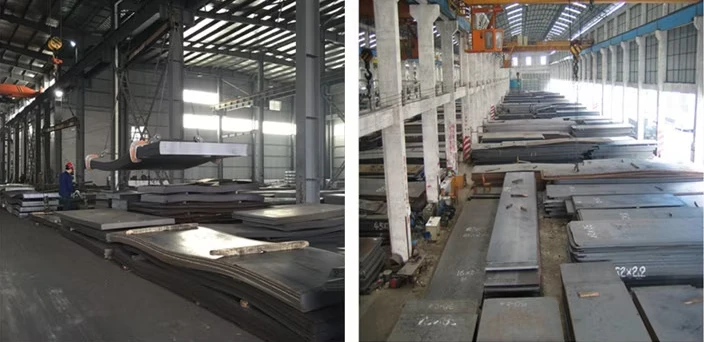
What are the mechanical properties of ASME SA515 Grade 65?
The mechanical properties of ASME SA515 Grade 65 include:,Tensile Strength: 70-90 ksi (483-621 MPa),Yield Strength: 45 ksi (310 MPa) minimum,Elongation: 20% (for plates with thickness ≤ 1.5 inches),These properties indicate its good tensile strength, ductility, and ability to withstand considerable stress and strain, particularly in high-temperature environments.
What are the benefits of using ASME SA515 Grade 65 in pressure vessels?
Using ASME SA515 Grade 65 in pressure vessels offers benefits such as high tensile strength, excellent weldability, and good resistance to high-temperature and high-pressure environments. Its ability to withstand the stresses associated with industrial processes makes it a reliable material for constructing pressure vessels used in power generation, chemical plants, and other industries requiring robust equipment.
What are the inspection requirements for ASME SA515 Grade 65?
The inspection requirements for ASME SA515 Grade 65 typically include visual inspection, ultrasonic testing (UT), and sometimes magnetic particle or dye penetrant testing for surface defects. Mechanical tests such as tensile, impact, and hardness tests are also carried out to ensure the material meets the specified strength and toughness requirements. Inspection and certification are essential for ensuring the material is suitable for use in pressure vessels and other critical applications.
SA515 Grade 65 pressure vessel steel chemical composition %
| Grade | Thickness | C max | Mn max | P max | S max | Si |
| SA515 Grade 65 | t≤25 | 0.28 | 0.90 | 0.025 | 0.025 | 0.15-0.40 |
| 25﹤t≤50 | 0.31 | |||||
| 50﹤t≤100 | 0.33 | |||||
| 100﹤t | 0.33 |
SA515 Grade 65 pressure vessel steel Mechanical properties
| Grade | Yield strength ReH MPa min | Tensile strength Rm MPa | Elongation A% min | |
| 200mm | 50mm | |||
| SA515 Grade 65 | 240 | 450-585 | 19 | 23 |
1. Can ASME SA515 Grade 65 be used for cryogenic applications?
No, ASME SA515 Grade 65 is not suitable for cryogenic applications. Its impact toughness and low-temperature properties are not designed for extremely cold environments, like those found in liquefied natural gas (LNG) tanks or cryogenic storage systems. Materials with higher toughness and low-temperature resistance, such as SA516 Grade 70 or other specialized low-temperature steels, would be more appropriate.
2. What are the applications of ASME SA515 Grade 65?
ASME SA515 Grade 65 is primarily used for manufacturing boilers, pressure vessels, and heat exchangers, especially in power plants, refineries, and chemical processing plants. Its high-temperature strength and ability to withstand pressure make it ideal for such applications. It is also used in the production of large pressure vessels, tanks, and pipes for thermal processing systems.
3. What is the tensile strength of ASME SA515 Grade 65?
The tensile strength of ASME SA515 Grade 65 typically ranges from 70 ksi to 90 ksi (483 MPa to 621 MPa). This high tensile strength makes it ideal for use in pressure vessels and other applications where the material must withstand both internal pressure and high-temperature environments. The ability to resist deformation under stress is crucial for the safe operation of industrial equipment.
4. What is the yield strength of ASME SA515 Grade 65?
The yield strength of ASME SA515 Grade 65 is typically around 65 ksi (448 MPa) at room temperature. This makes it suitable for high-stress environments, particularly in pressure vessel applications. It ensures the material can handle internal pressures without yielding or deforming, making it reliable for use in boilers and pressure vessels that operate under extreme conditions.
5. What is the chemical composition of ASME SA515 Grade 65?
The chemical composition of ASME SA515 Grade 65 typically includes carbon, manganese, phosphorus, sulfur, silicon, and copper. The specific composition is as follows:,Carbon (C): 0.18–0.24%,Manganese (Mn): 0.60–1.35%,Phosphorus (P): ≤0.035%,Sulfur (S): ≤0.035%,Silicon (Si): 0.15–0.40%,This composition ensures the steel's strength and resistance to heat and pressure.
6. What is the impact test requirement for ASME SA515 Grade 65?
For ASME SA515 Grade 65, impact testing is typically required at low temperatures to ensure the material's toughness. The impact test is often performed at temperatures ranging from -20°F to -40°F (-29°C to -40°C), depending on the application. The material is expected to pass these tests with a minimum of 20 ft-lbs (27 J) of energy absorption, ensuring its durability and resistance to brittle fracture.
7. What is the hardness range for ASME SA515 Grade 65?
The hardness of ASME SA515 Grade 65 is typically between 130 and 170 Brinell hardness (BHN). This hardness range ensures the material has a good balance of strength and ductility, which is essential for pressure vessel applications that experience both high temperatures and internal pressures. This hardness range also contributes to its resistance to wear and deformation under stress.
Full specification and details are available on request. The above information is provided for guidance purposes only. For specific design requirements please contact our technical sales staff


