

ASME SA387 Grade 11 Class 1 is primarily used for pressure vessels, boilers, and heat exchangers in high-temperature applications, especially in the oil, gas, and petrochemical industries, due to its chromium-molybdenum alloy composition providing excellent creep, oxidation, and corrosion resistance, making it ideal for storing and processing hot liquids and gases. Common products include high-temperature piping, storage tanks, and components in power generation plants.

ASME SA387 Grade 11 Class 1 is a ASTM A387 Grade 11 Class 1 chrome-molybdenum alloy steel plate for pressure vessels and boilers used in high-temperature service, offering excellent resistance to oxidation and corrosion, especially in sour (hydrogen sulfide) gas environments, thanks to its chromium and molybdenum content, with Class 1 indicating specific mechanical properties like tensile strength and elongation.
Alloy steel plates have found their utility across a diverse spectrum of industries owing to their enhanced properties. These plates exhibit a range of attributes including but not limited to high strength, wear resistance, corrosion resistance, toughness, and hardness. The versatility of alloy steel stems from its inherent capacity to be expertly machined and transformed into plates, thereby catering to the intricate demands of industrial applications. The manufacturing process of alloy plates adheres rigorously to international standards, a practice of paramount significance.
Key Characteristics:
Material Type: Alloy Steel plate (Chrome-Moly).
Primary Use: Welded boilers and pressure vessels in elevated temperature service.
Key Elements: Contains chromium (Cr) and molybdenum (Mo) for improved high-temperature strength and corrosion resistance.
Class 1: Denotes specific mechanical test requirements (tensile strength, yield, elongation).
Benefits: Excellent resistance to creep, oxidation, and corrosion, making it ideal for oil, gas, and petrochemical applications.
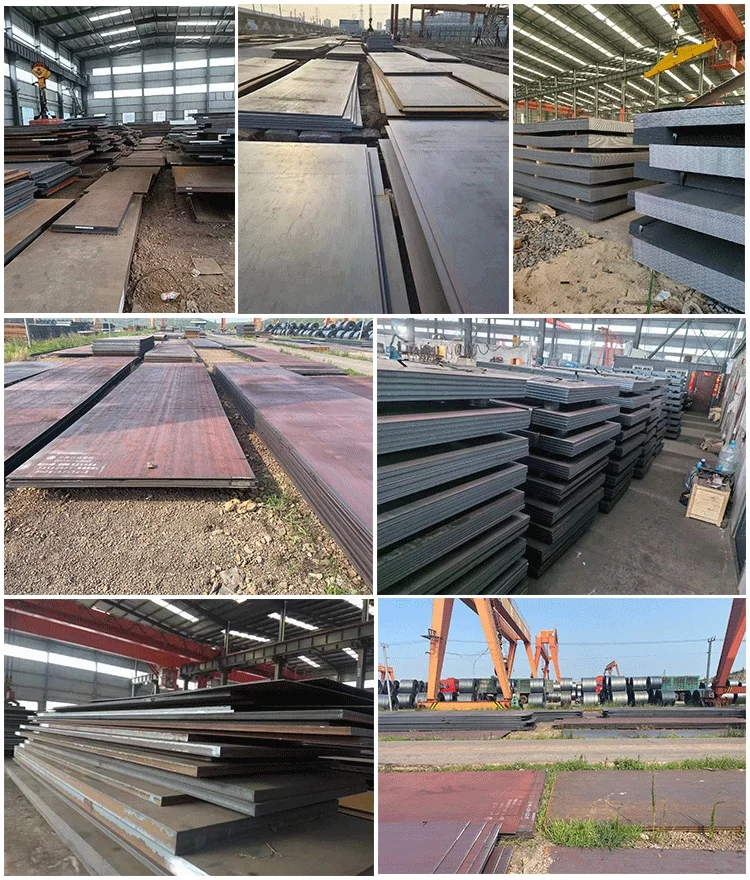
What are the typical application fields of ASME SA 387 Grade 11 Class 1?
ASME SA 387 Grade 11 Class 1 is a chromium-molybdenum alloy steel primarily used for pressure vessels, boilers, and heat exchangers in high-temperature environments, especially in the oil, gas, and petrochemical industries, due to its excellent corrosion, oxidation resistance, and high tensile strength at elevated temperatures. It's also found in power generation, chemical processing, and other heavy industries requiring robust materials for extreme conditions.
What is ASME SA 387 Grade 11 Class 1 material?
ASME SA 387 Grade 11 Class 1 is a chromium-molybdenum (Cr-Mo) alloy steel plate, specified for welded boilers and pressure vessels requiring high-temperature service, featuring approximately 1.25% Chromium and 0.5% Molybdenum for enhanced strength and corrosion resistance at elevated temperatures, with Class 1 denoting a specific tensile strength level. It's widely used in the oil, gas, and petrochemical industries for equipment like heat exchangers and industrial boilers.
Equivalents
| BS | EN | ASTM/ASME | DIN |
| 621 B | ––– | SA387-11-1 | ––– |
Dimension Range SA 387 GR. 11 CL. 1 Alloy Steel
| Grade | Product type | Thickness in |
Width | Length in |
|---|---|---|---|---|
| Grade 11 | Plate | 0.185 - 3.60 4.70 - 91.4 |
60 - 131.9 1500 - 3350 |
73 - 590 1900 - 15000 |
Tensile Requirements for ASTM A387 Grade 11 Alloy Steel Plates Class 1 Plates
| Designation: | Requirement: | Grade 11 |
| A387 Grade 11 | Tensile strength, ksi [MPa] | 75 to 100 [515 to 690] |
| Yield strength, min, ksi [MPa]/(0.2% offset) | 43 [310] | |
| Elongation in 8 in. [200mm], min % | 18 | |
| Elongation in 2 in. [50mm], min, % | 22 | |
| Reduction of area, min % | ––– |
Chemical Requirements for ASME SA387 Grade 11 Alloy Steel Plates
| Element | Chemical Composition (%) | |
| SA387 Grade 11 | ||
| Carbon: | Heat Analysis: | 0.05 - 0.17 |
| Product Analysis: | 0.04 - 0.17 | |
| Manganese: | Heat Analysis: | 0.40 - 0.65 |
| Product Analysis: | 0.35 - 0.73 | |
| Phosphorus: | Heat Analysis: | 0.035 |
| Product Analysis: | 0.035 | |
| Sulphur (max): | Heat Analysis: | 0.035 |
| Product Analysis: | 0.035 | |
| Silicon: | Heat Analysis: | 0.50 - 0.80 |
| Product Analysis: | 0.44 - 0.86 | |
| Chromium: | Heat Analysis: | 1.00 - 1.50 |
| Product Analysis: | 0.94 - 1.56 | |
| Molybdenum: | Heat Analysis: | 0.45 - 0.65 |
| Product Analysis: | 0.45 - 0.70 |
1. Will the material be delivered in a Normalized and Tempered (N+T) condition requirements for ASME SA 387 Grade 11 Class 1?
Yes, ASME SA 387 Grade 11 Class 1 material is commonly supplied in the Normalized & Tempered (N+T) condition, as this heat treatment refines grain structure and improves mechanical properties for high-temperature pressure vessel service, though purchasers can specify other treatments like Quenched & Tempered (Q+T) if required. The N+T condition provides a good balance of strength, ductility, and toughness, making it ideal for elevated temperature applications.
2. What is the composition of ASME SA387 | Grade 11 Class 1?
ASME SA387 Grade 11 Class 1 is a chromium-molybdenum (Cr-Mo) alloy steel with approximately 1.25% Chromium (Cr) and 0.5% Molybdenum (Mo), designed for high-temperature pressure vessels and boilers, offering excellent oxidation and creep resistance, with key elements like Carbon (C), Manganese (Mn), Silicon (Si), Phosphorus (P), and Sulfur (S) also controlled within specified limits for high-temp strength and durability, especially in sour gas conditions.
3. What precautions should be taken when welding ASME SA 387 Grade 11 Class 1?
When welding ASME SA 387 Grade 11 Class 1, key precautions involve using appropriate compatible filler metals (like E8018-B2/ER80S-B2), ensuring thorough preheating (around 150-250°C is typical for similar low-alloy steels) and post-weld heat treatment (PWHT), controlling interpass temperatures, properly cleaning surfaces, and adhering strictly to a qualified Welding Procedure Specification (WPS) to manage cracking risks in this low-alloy chromium-molybdenum steel.
4. What are the primary advantages of ASME SA 387 Grade 11 Class 1?
ASME SA 387 Grade 11 Class 1 offers advantages in high-temperature, corrosive environments due to its chromium-molybdenum alloy composition, providing excellent strength, toughness, and resistance to creep, making it ideal for pressure vessels in power, petrochemical, and oil/gas industries, with good weldability for fabrication. Its durability and high performance lead to extended service life and lower maintenance costs in demanding conditions.
5. What is ASME SA 387 Grade 11 Class 1 equivalent to?
ASME SA 387 Grade 11 Class 1 is a chromium-molybdenum alloy steel for pressure vessels, with its main international equivalent being BS 621B, while its direct ASTM counterpart is ASTM A387 Grade 11 Class 1, sharing the same chemical composition (1.25% Cr, 0.5% Mo) but differing in mechanical properties (lower strength, higher elongation) from Class 2.
6. Which Ultrasonic Testing (UT) standard will be applied for ASME SA 387 Grade 11 Class 1?
For ASME SA 387 Grade 11 Class 1 steel plates, the applicable ultrasonic testing (UT) standards are typically ASTM A435/A435M for basic straight-beam examination or ASTM A578/A578M for straight-beam UT in special applications, but the specific standard depends on the project's requirements, often referencing general ASME Section V rules and potentially API RP 577 for pressure vessel integrity, ensuring procedure compliance with requirements like Table T-421 in ASME Section V.
7. What are Common Testing Requirements of ASME SA 387 Grade 11 Class 1?
ASME SA 387 Grade 11 Class 1 requires chemical analysis (Carbon, Manganese, Phosphorus, Sulfur, Chromium, Molybdenum), tensile tests (Tensile Strength, Yield Strength, Elongation), and often impact (Charpy V-notch) and ultrasonic testing (UT) for quality assurance, ensuring it meets standards for elevated temperature pressure vessel service, with Class 1 having lower strength requirements than Class 2.
Contact us at info@gneesteels.com for pricing, technical support, or customized solutions. We are always ready to support your project


