

What is the best way to cut ASME SA387 | Grade 5 Class 1?
For cutting ASME SA387 Grade 5 Class 1, the best methods often involve Plasma Cutting, Oxy-Fuel Cutting, or Waterjet Cutting, depending on thickness and desired edge quality; Waterjet offers precision for thinner sections, Plasma is fast for thicker plates, while Oxy-Fuel is cost-effective for very thick material, always considering the need for potential preheating and post-cut stress relief (PWHT) for critical applications like pressure vessels.

ASME SA387 Grade 5 Class 1 refers to a chromium-molybdenum alloy steel plate specifically designed for weldable boilers and pressure vessels used in high-temperature service, offering enhanced corrosion resistance (from chromium) and increased tensile strength (from molybdenum). It's a low-alloy steel with specific chemical compositions and mechanical properties (like tensile strength) defined by the ASME standard, requiring heat treatment (like normalization) to achieve its performance characteristics for industries such as chemical, petrochemical, and power generation.
Key Characteristics:
Material Type: Chromium-Molybdenum (Cr-Mo) Alloy Steel Plate.
Primary Use: Fabricating boilers and pressure vessels for elevated temperature applications.
Key Elements: Contains Chromium (for corrosion resistance) and Molybdenum (for high-temperature strength).
Properties: Excellent resistance to oxidation, improved corrosion resistance, and good strength at high temperatures.
Mechanical Properties: Has specific tensile strength (e.g., 75-100 ksi), yield strength, and elongation requirements, detailed in the ASME SA 387 standard.
Heat Treatment: Typically normalized and tempered to achieve desired mechanical properties.
Applications:
Petrochemical & Chemical Plants.
Oil & Gas Industry.
Power Generation (Boilers, Heat Exchangers).
Fertilizer Plants.
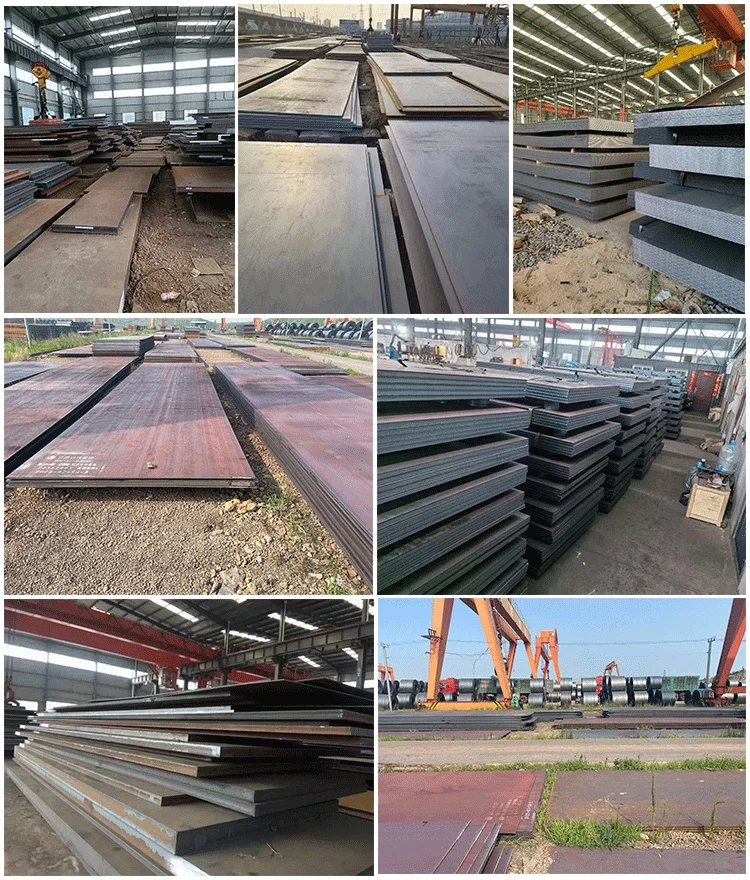
What are the typical application fields of ASME SA387 | Grade 5 Class 1 material?
Commonly used in the Oil & Gas and Petrochemical sectors for high-temperature equipment like reactors, heat exchangers, storage tanks, and high-pressure piping systems.
What are the primary advantages of ASME SA387 | Grade 5 Class 1 material?
The main advantages include exceptional high-temperature strength, resistance to hydrogen attack, and excellent oxidation resistance, which translates to enhanced safety and a longer lifecycle for critical industrial equipment.
Is ASME SA387 | Grade 5 Class 1 carbon steel?
No, it is an alloy steel. The addition of Chromium and Molybdenum makes it distinct from standard carbon steel, providing the necessary properties to resist degradation in high-heat and corrosive environments.
ASTM A387 GR 5 CLASS 1 Chemical Composition
| Grade | C | Si | Mn | P | S | Cr | Mo |
| A387 GR.5 CL.1 | 0.15 max | 0.55 max | 0.25-0.66 max | 0.035 max | 0.035 max | 3.90-6.10 max | 0.40-0.70 max |
Specifications ASME SA387 Grade 5 Alloy Steel Plates
| Designation | Nominal Chromium Content (%) |
Nominal Molybdenum Content (%) |
| SA387 Grade 5 | 5.00% | 0.50% |
Mechanical Properties( Mpa)
|
Grade/ Material |
Tensile Test |
Ksi/MPa |
|
SA387 Grade 5 Class 1/ SA387 Gr5 Cl1 |
Tensile Strength |
60-85/415-585 |
|
Yield Strengh |
30/205 |
|
|
Elongation |
I:18% |
|
|
Impact Test( if any) |
|
Specifications ASME SA387 Grade 5 Alloy Steel Plates
| Designation | Nominal Chromium Content (%) |
Nominal Molybdenum Content (%) |
| SA387 Grade 5 | 5.00% | 0.50% |
1What Common Testing Requirements ASME SA387 | Grade 5 Class 1?
For ASME SA387 Grade 5 Class 1, common testing includes chemical analysis, tensile testing (strength, yield, elongation), and impact testing, alongside visual inspection for surface defects, all performed after required heat treatment.
2What is the hardness of ASME SA387 | Grade 5 Class 1?
ASME SA387 Grade 5 Class 1 steel hardness is typically specified by the end-user or project requirements, often targeted around 200-235 BHN maximum after post-weld heat treatment (PWHT) to ensure ductility and weldability for boiler applications.
3What is the maximum allowable stress value for ASME SA387 | Grade 5 Class 1?
The maximum allowable stress varies with temperature; it requires a direct lookup in the official ASME Section II, Part D tables. It is typically the lesser of one-third tensile strength or two-thirds yield strength, with creep adjustments above certain temperatures.
4What is the best way to cut ASME SA387 | Grade 5 Class 1?
For cutting this material, Plasma Cutting, Oxy-Fuel Cutting, or Waterjet Cutting are the primary choices. Waterjet is used for precision, Plasma for speed on thick plates, and Oxy-Fuel for very thick sections, usually requiring preheating and post-cut stress relief (PWHT).
5What are the differences between ASME SA387 | Grade 5 Class 1 and ASME SA387 | Grade 5 Class 2?
Both share the same chemistry, but Class 2 has higher mechanical strength (tensile and yield) compared to Class 1. Class 2 is preferred for higher-stress applications, while Class 1 offers slightly better ductility.
6What are the precautions should be taken when weldingween ASME SA387 | Grade 5 Class 1?
Precautions include strict preheat and post-weld heat treatment (PWHT) protocols, use of matched filler metals, moisture control, controlled heat input, and comprehensive non-destructive testing (NDT) to ensure the integrity of the welded joint.
7What is ASME SA387 | Grade 5 Class 1 material?
This is a chromium-molybdenum alloy steel plate specifically designed for use in weldable pressure vessels and boilers operating at elevated temperatures, commonly found in the oil, gas, and power industries.
Get an valued quotation for ASME SA387 | Grade 5 Class 1 , Contact GNEE Steel


