

What Is 16Mo3 +N Steel Plate?
16Mo3 +N is a molybdenum-alloyed pressure vessel steel plate supplied in the normalized condition, specified under European standard EN 10028-2 (steel number 1.5415). The "16" refers to its approximate 0.16% carbon content, "Mo" denotes molybdenum alloying, "3" indicates approximately 0.30% molybdenum, and the +N suffix confirms normalized delivery.
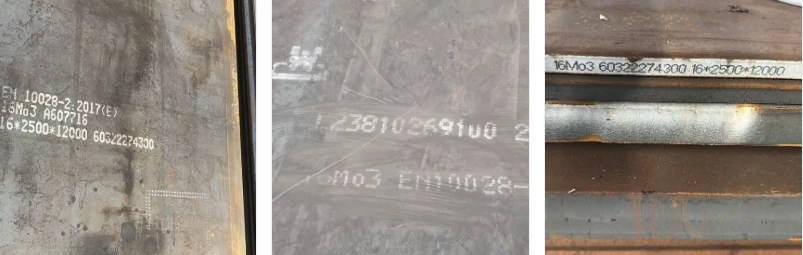
As a fine-grain killed steel, 16Mo3 +N is engineered specifically for elevated-temperature service up to 500–530°C (932–986°F). The molybdenum addition (0.25–0.35%) significantly improves creep strength and resistance to high-temperature hydrogen attack, making it one of the most widely used boiler and pressure vessel grades in European and international projects.
- Standard:EN 10028-2
- Steel Number:1.5415
- Delivery Condition:+N
- Max Service Temp:530°C
- Min Yield (≤16mm):275 MPa
- Molybdenum Content:0.25–0.35%
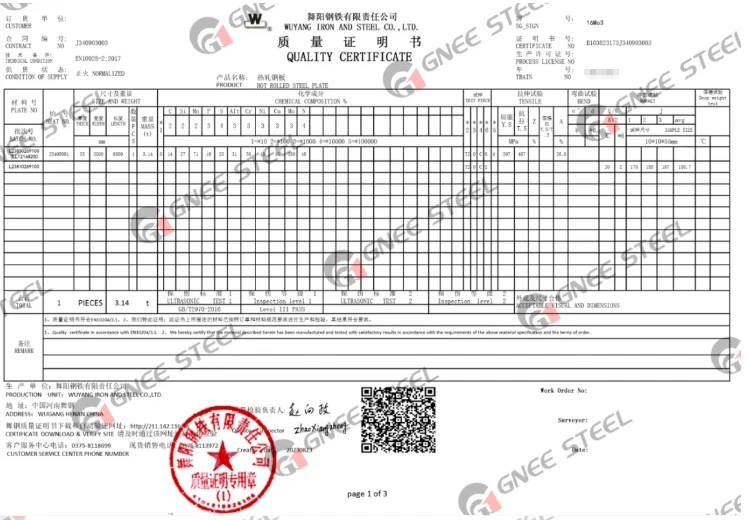
Normalizing Process: 890–950°C and Air Cooling
The normalizing process is a controlled heat treatment that gives 16Mo3 +N its characteristic fine-grained structure and uniform mechanical properties.
The procedure follows these steps:
- Heating: The plate is heated to a temperature of 890–950°C, above the upper critical temperature (Ac3) to fully austenitize the microstructure.
- Soaking: The plate is held at temperature for a duration proportional to thickness, ensuring complete phase transformation throughout the material.
- Air Cooling: The plate is cooled in still air to room temperature, allowing transformation to a fine ferrite-pearlite structure.
The normalized condition provides several important benefits over as-rolled or annealed material:
- Refined grain size - improved toughness and ductility at low temperatures
- Uniform properties - consistent mechanical properties through the full plate thickness
- Stress relief - reduction of residual stresses from rolling and forming
- Improved machinability - more predictable cutting behavior due to uniform microstructure
- Better weldability - finer grain structure reduces susceptibility to cracking
16Mo3 +N Chemical Composition
The 16Mo3 composition is precisely controlled per EN 10028-2 to ensure optimal high-temperature performance and weldability. The molybdenum alloying element is the key contributor to elevated-temperature strength and creep resistance. Below is the full 16Mo3 chemistry (cast analysis) for normalized plates:
| Element | Symbol | Range (%) | Role / Purpose |
|---|---|---|---|
| Carbon | C | 0.12 – 0.20 | Base strength, hardenability control |
| Silicon | Si | max 0.35 | Deoxidizer, solid solution strengthening |
| Manganese | Mn | 0.40 – 0.90 | Toughness, strength, deoxidation |
| Phosphorus | P | max 0.025 | Residual element - controlled for toughness |
| Sulfur | S | max 0.010 | Residual element - controlled for weldability |
| Chromium | Cr | max 0.30 | Residual - mild oxidation resistance |
| Molybdenum | Mo | 0.25 – 0.35 | Primary alloy - creep strength at high temperature |
| Nickel | Ni | max 0.30 | Residual - minor toughness improvement |
| Copper | Cu | max 0.30 | Residual element |
| Nitrogen | N | max 0.012 | Residual - controlled for strain aging |
| Aluminum (total) | Al | min 0.020 (typ.) | Grain refinement, deoxidation |
Need 16Mo3 +N plates with guaranteed chemistry and full mill test certificates? Get a competitive quote with fast delivery.
16Mo3 +N Mechanical Properties
The 16Mo3 mechanical properties are specified for both room-temperature and elevated-temperature service. Yield strength decreases with increasing plate thickness and with increasing service temperature. The data below is derived from EN 10028-2 and applies to the transverse direction of normalized (+N) plates.
Room-Temperature Properties by Thickness
The following 16Mo3 properties table shows the minimum yield strength (ReH), tensile strength range (Rm), minimum elongation (A), and Charpy V-notch impact energy at +20°C for six thickness groups:
| Thickness (mm) | Yield Strength ReH (MPa) min. | Tensile Strength Rm (MPa) | Elongation A (%) min. | Impact KV at +20°C (J) min. |
|---|---|---|---|---|
| t ≤ 16 | 275 | 440 – 590 | 22 | 31 |
| 16 < t ≤ 40 | 270 | 440 – 590 | 22 | 31 |
| 40 < t ≤ 60 | 260 | 440 – 590 | 22 | 31 |
| 60 < t ≤ 100 | 240 | 430 – 580 | 22 | 31 |
| 100 < t ≤ 150 | 220 | 420 – 570 | 22 | 31 |
| 150 < t ≤ 250 | 210 | 410 – 570 | 22 | 31 |
Key observation:
Elongation remains constant at 22% minimum across all six thickness ranges, reflecting the consistent ductility of normalized 16Mo3. Yield strength drops by approximately 24% from the thinnest (≤16mm, 275 MPa) to thickest (150–250mm, 210 MPa) plates due to grain size effects in heavier sections.
Elevated-Temperature Yield Strength (Rp0.2)
One of the most critical design parameters for 16Mo3 +N is its 16Mo3 high temperature proof strength (Rp0.2), which determines allowable stresses at operating temperature. The table below presents the minimum 0.2% proof strength at ten temperature points from 50°C to 500°C for two thickness ranges:
| Temperature | 50°C | 100°C | 150°C | 200°C | 250°C | 300°C | 350°C | 400°C | 450°C | 500°C |
|---|---|---|---|---|---|---|---|---|---|---|
| Thickness ≤ 16mm (MPa) |
273 | 264 | 250 | 233 | 213 | 194 | 175 | 159 | 147 | 141 |
| Thickness 16 < t ≤ 40mm (MPa) |
268 | 259 | 245 | 228 | 209 | 190 | 172 | 156 | 145 | 139 |
Design note:
At 500°C, 16Mo3 +N retains approximately 51% of its room-temperature yield strength (141 MPa vs. 275 MPa for ≤16mm plate). This remarkable retention is the primary reason 16Mo3 is preferred over carbon steels for high-temperature boiler and pressure vessel applications. For service above 500°C, consider upgrading to 13CrMo4-5 or ASTM A387 Gr. 11.
What Is 16Mo3 +N Used For?
The combination of good weldability, consistent normalized properties, and reliable performance at elevated temperatures makes 16Mo3 uses span across several high-demand industries. Below are the primary 16Mo3 applications:
Boilers and Steam Drums
As a boiler steel plate, 16Mo3 +N is one of the most common materials for fossil-fuel and biomass boiler components operating at moderate to high temperatures.
Key boiler applications include:
- Boiler drums and headers - primary pressure boundary components in water-tube boilers
- Steam drums - separation of steam from water/steam mixture at pressures up to ~160 bar
- Economizer and superheater headers - inlet/outlet manifolds for heat transfer sections
- Boiler tube plates and tube sheets - support structures for boiler tube bundles
- Steam piping and branch connections - high-pressure steam distribution within the boiler island
16Mo3 +N boiler plates are typically specified for steam temperatures up to 500°C, where the alloy's creep resistance provides a significant safety margin over unalloyed boiler grades like P265GH or P295GH.

Heat Exchangers and Refinery Vessels
In the oil & gas and petrochemical sectors, 16Mo3 +N is a proven heat exchanger plate and refinery steel grade.
Major applications include:
- Shell-and-tube heat exchangers - shell-side pressure vessels for process heating and cooling
- Refinery reactor vessels - medium-temperature reactors in hydroprocessing and reforming units
- High-pressure separators - two- and three-phase separators in oil and gas production
- Fractionation and distillation columns - medium-temperature process towers
- Storage tanks for hot process media - pressurized storage of hot hydrocarbons and chemicals
- Flue gas desulfurization equipment - components handling moderate-temperature flue gases

Working on a boiler, heat exchanger, or refinery project? We supply 16Mo3 +N plates from stock with EN 10204 3.2 third-party certification.
Why Source from Us?
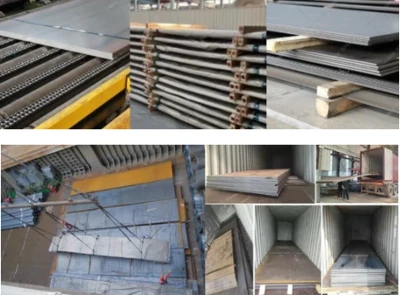
- Large stock of 16Mo3 +N plates in common thicknesses - fast delivery worldwide
- Direct mill relationships - competitive pricing for custom sizes and large tonnages
- Full quality documentation - every plate fully traceable with MTC
- Technical support - in-house engineers to assist with grade selection and code compliance
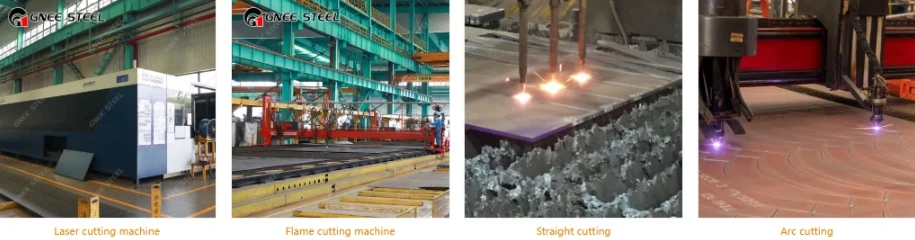
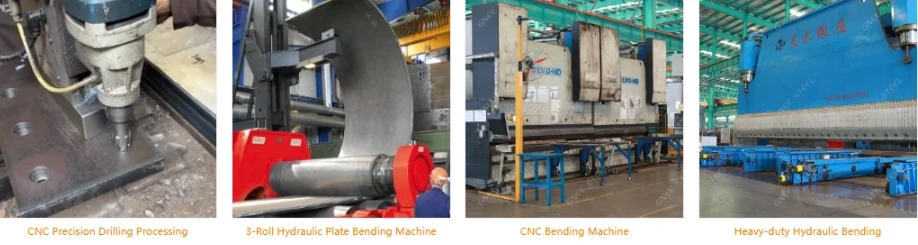
- Value-added services - cutting, machining, shot blasting, painting, and edge preparation
- Global shipping - FOB, CIF, or DDU/DDP terms to your project site
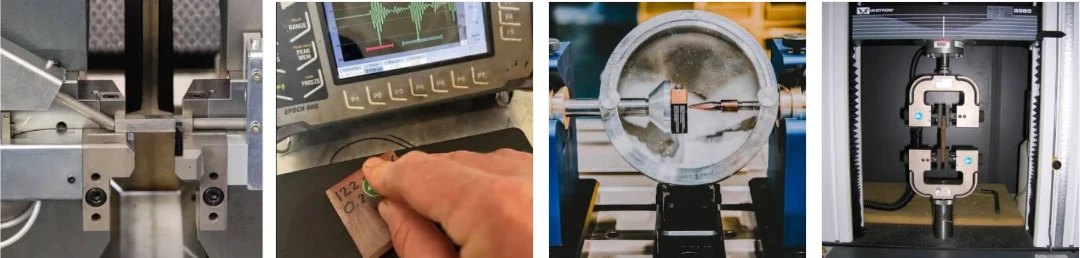
Ready to Source 16Mo3 +N Plates?
Send us your specification - thickness, width, length, quantity, and certification requirements - and we'll respond within 24 hours with a competitive quote.
FAQ
What does +N mean in 16Mo3 +N?
The +N designation in 16Mo3 +N means the steel plate is supplied in the normalized condition. Normalizing is a heat treatment process where the plate is heated to 890–950°C, held at temperature, and then air-cooled. This produces a fine-grained microstructure with improved toughness and uniform mechanical properties throughout the plate thickness.
What is the chemical composition of 16Mo3 steel?
16Mo3 steel has a chemical composition per EN 10028-2 with C 0.12–0.20%, Si ≤0.35%, Mn 0.40–0.90%, P ≤0.025%, S ≤0.010%, Cr ≤0.30%, and Mo 0.25–0.35%. The molybdenum addition provides enhanced creep resistance at elevated temperatures up to 500–530°C.
What is the yield strength of 16Mo3 +N?
The yield strength of 16Mo3 +N depends on plate thickness. Per EN 10028-2: ≤16mm = 275 MPa min, 16–40mm = 270 MPa min, 40–60mm = 260 MPa min, 60–100mm = 240 MPa min, 100–150mm = 220 MPa min, and 150–250mm = 210 MPa min. Tensile strength ranges from 410–590 MPa depending on thickness.
Does 16Mo3 require PWHT after welding?
Yes, 16Mo3 +N typically requires post-weld heat treatment (PWHT) after welding. Preheating at 150–250°C is required before welding, followed by PWHT at 600–680°C to relieve residual stresses and restore toughness. Low-hydrogen electrodes such as AWS E7018-A1 are recommended.
What is the difference between 16Mo3 +N and 16Mo3 as-rolled?
16Mo3 +N (normalized) has a refined, uniform grain structure achieved through controlled heating and air cooling, resulting in consistent mechanical properties through the full thickness and improved toughness. As-rolled 16Mo3 may have more variable properties, especially in thicker plates, and is generally not suitable for critical pressure vessel applications without normalization.


