

What is 16Mo3 / 1.5415 Steel?
16Mo3 is a European low-alloy steel grade designated by steel number 1.5415, specified under the EN 10028-2 standard for flat products made of steels for pressure purposes. As an alloy special steel, 16Mo3 material is specifically engineered for service at elevated temperatures, making it a cornerstone material in pressure vessel and steam boiler construction.
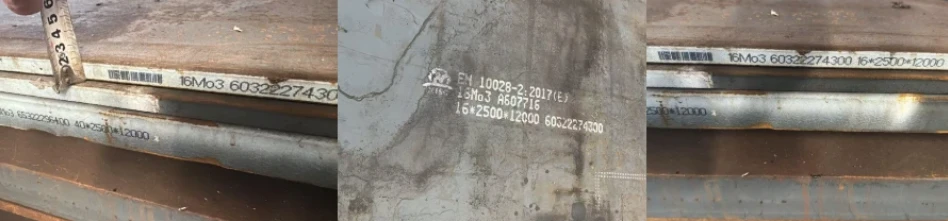
The "16" in 16Mo3 refers to the nominal carbon content (approximately 0.16%), while "Mo3" indicates the presence of molybdenum as the primary alloying element at approximately 0.30%. This molybdenum addition gives 1.5415 steel its characteristic creep resistance and elevated-temperature strength, enabling reliable performance in applications where carbon steels would fail.
Key characteristics of 16Mo3 steel include:
- Maximum continuous service temperature of 530°C
- Excellent weldability with proper preheat and post-weld heat treatment
- Good creep rupture strength at elevated temperatures
- Conformity with multiple EN standards for various product forms
- Density of 7.85 g/cm³, consistent with standard structural steels
- Steel Name:16Mo3
- Steel Number:1.5415
- Classification:Alloy special steel
- Primary Standard:EN 10028-2
- Density:7.85 g/cm³
- Max Service Temp:530°C
-
Delivery Condition:+N/+AR/+TMCP
Need 16Mo3 Steel Plates, Pipes, or Forgings?
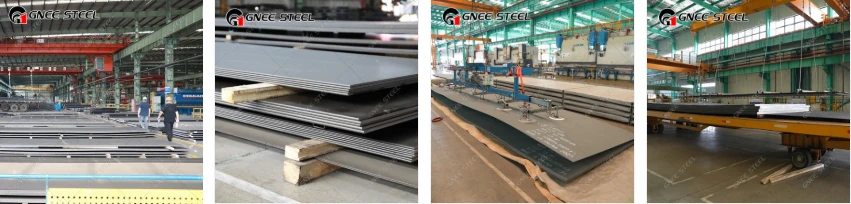
Get competitive pricing on 16Mo3 / 1.5415 steel products with full EN 10204 3.1/3.2 MTC. Fast quotation within 24 hours.
What is the chemical composition of 16Mo3?
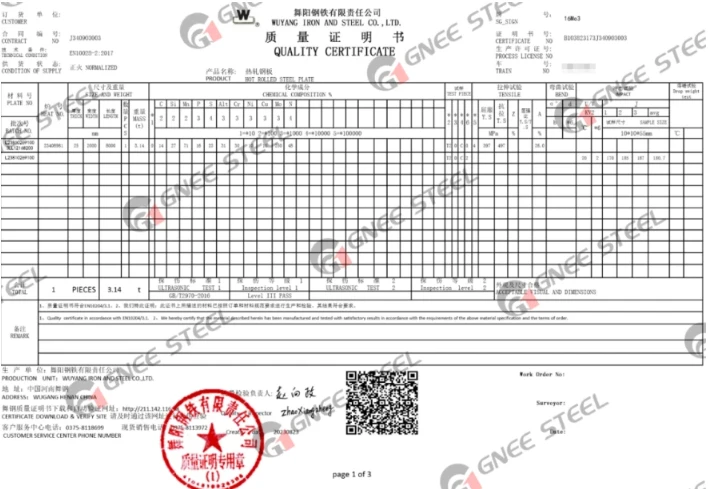
The chemical composition of 16Mo3 (1.5415) steel is defined by EN 10028-2. The controlled addition of molybdenum (0.25-0.35%) is the primary factor distinguishing 16Mo3 from plain carbon steels, providing enhanced creep resistance and high-temperature strength.
| Element | Symbol | Min (%) | Max (%) |
|---|---|---|---|
| Carbon | C | 0.12 | 0.20 |
| Silicon | Si | - | 0.35 |
| Manganese | Mn | 0.40 | 0.90 |
| Phosphorus | P | - | 0.025 |
| Sulfur | S | - | 0.010 |
| Chromium | Cr | - | 0.30 |
| Molybdenum | Mo | 0.25 | 0.35 |
| Nickel | Ni | - | 0.30 |
| Copper | Cu | - | 0.30 |
| Nitrogen | N | - | 0.012 |
Mechanical Properties of 16Mo3 Steel (1.5415)
The mechanical properties of 16Mo3 steel vary with nominal thickness and heat treatment condition. The values below are specified for the normalized (+N) delivery condition, which is the most common for pressure vessel applications.
| Nominal Thickness (mm) | Tensile Strength Rm (MPa) | Min. Yield Strength ReH (MPa) | Min. Elongation A (%) | Min. Impact Energy KV (J, +20°C) |
|---|---|---|---|---|
| ≤ 16 | 440 - 590 | 275 | 24 | 31 |
| 16 - 40 | 440 - 590 | 270 | 23 | 31 |
| 40 - 60 | 440 - 590 | 260 | 22 | 31 |
| 60 - 100 | 430 - 580 | 240 | 22 | 31 |
| 100 - 150 | 420 - 570 | 220 | 22 | 31 |
| 150 - 250 | 410 - 570 | 210 | 22 | 31 |
For the quenched and tempered (+QT) condition, 16Mo3 offers slightly different properties:
| Nominal Thickness (mm) | Tensile Strength Rm (MPa) | Min. Yield Strength ReH (MPa) |
|---|---|---|
| ≤ 250 | 440 - 570 | 265 |
| 250 - 500 | 420 - 550 | 250 |
Additional Mechanical Data
| Property | Value |
|---|---|
| Brinell Hardness | 150 HB |
| Young's Modulus | 190 GPa |
| Shear Modulus | 73 GPa |
| Poisson's Ratio | 0.29 |
| Fatigue Strength | 200 MPa |
| Shear Strength | 320 MPa |
Physical Properties of 1.5415 Steel
The physical properties of EN 1.5415 (16Mo3) steel are important for engineering calculations involving thermal stress, heat transfer, and electrical applications.
| Property | Value |
|---|---|
| Density | 7.85 - 7.90 g/cm³ |
| Melting Point (Solidus) | ~1420°C |
| Melting Point (Liquidus) | ~1460°C |
| Thermal Conductivity | 49 W/(m·K) |
| Specific Heat Capacity | 470 J/(kg·K) |
| Thermal Expansion Coefficient | 13 × 10⁻⁷ m/(m·K) |
| Electrical Conductivity (Volume) | 7.2% IACS |
| Electrical Resistivity | ~0.24 µΩ·m |
| Max Mechanical Temperature | 530°C (continuous) |
16Mo3 ASTM Equivalent and International Standards
16Mo3 (1.5415) steel has well-established equivalents across international standards. Understanding these cross-references is essential for global procurement and material substitution.
| Country | Standard | Grade |
|---|---|---|
| Europe | EN | 16Mo3 (1.5415) |
| USA | ASTM | A204 Grade A / A204 Grade B |
| Germany | DIN / WNr. | 15Mo3 / 16Mo3 |
| Japan | JIS | STBA12 |
| France | AFNOR | 15D3 |
| United Kingdom | BS | 1503-243B / 240 / 243 |
| Sweden | SS | 2912 |
| International | ISO | 16Mo3 / F26 / P26 / TS26 |
15Mo3 vs 16Mo3: What's the Difference?
A common question in steel procurement is the distinction between 15Mo3 and 16Mo3. The short answer: they are essentially the same material under different standard designations.
15Mo3 (Old DIN)
- Older DIN standard designation
- Steel number: 1.5415
- Superseded by EN standards
- Same chemical composition range
- Found in legacy drawings and older specifications
16Mo3 (Current EN)
- Current EN 10028-2 designation
- Steel number: 1.5415
- Active European standard
- Same chemical composition range
- Required for new EN-compliant orders
When the European Committee for Standardization (CEN) developed the EN standards to replace national standards like DIN, 15Mo3 was re designated as 16Mo3 under EN 10028-2. The steel number 1.5415 remained unchanged. Both designations refer to the same alloy composition and mechanical property ranges. If your project specifies 15Mo3, ordering 16Mo3 to EN 10028-2 is the correct modern equivalent.
16Mo3 Heat Treatment and Normalizing (+N) Condition
16Mo3 steel is typically supplied in the normalized (+N) condition, which involves heating the material above its upper critical temperature and allowing it to air-cool. This treatment produces a uniform ferrite-pearlite microstructure that provides the specified mechanical properties.
Heat Treatment Parameters
| Treatment | Designation | Typical Temperature Range |
|---|---|---|
| Normalizing | +N | 900 - 950°C (air cool) |
| Quenching & Tempering | +QT | 880 - 920°C quench, 600 - 680°C temper |
| Soft Annealing | +A | 650 - 700°C (furnace cool) |
| Stress Relief | +SR | 530 - 580°C |
The +N (normalized) condition is the standard delivery condition for most 16Mo3 pressure vessel plates and tubes. The +QT (quenched and tempered) condition may be specified for thicker sections (>250 mm) or when higher yield strength is required. Post-weld heat treatment (PWHT) is strongly recommended after welding to relieve residual stresses and restore the base metal's creep resistance in the heat-affected zone (HAZ).
Important: The heat treatment designation appears as a suffix to the grade name. For example, "16Mo3 +N" means normalized 16Mo3. Always confirm the delivery condition when ordering, as it directly affects the mechanical properties you receive.
1.5415 16Mo3 Steel Applications and Uses
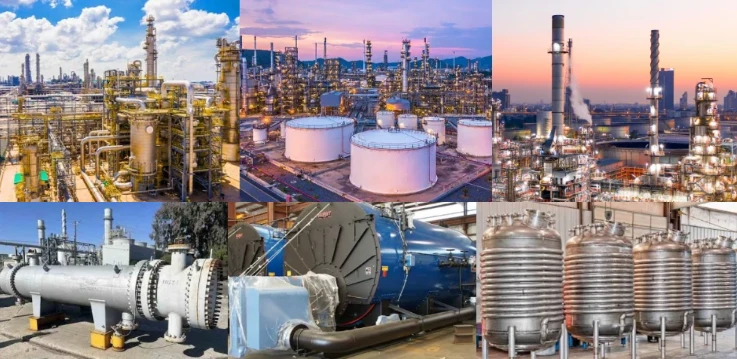
16Mo3 (1.5415) steel is primarily used in applications involving elevated temperatures and pressure, where its molybdenum-enhanced creep resistance provides a decisive advantage over carbon steel.
Key Application Areas
- Pressure vessels: Drums, shells, and heads for reactors and separators operating at elevated temperatures
- Steam boilers: Boiler drums, water walls, superheater tubes, and reheater components
- Heat exchangers: Shell-and-tube and plate-type units in refineries and petrochemical plants
- Piping systems: Vaporizer ducts, collector ducts, and process piping in oil, gas, and chemical industries
- Flanges and fittings: Welding-neck flanges, butt-welding pipe fittings, and forged components
- Refinery equipment: Catalytic cracking units, distillation columns, and heat transfer equipment
The steel's maximum continuous service temperature of 530°C makes it suitable for intermediate elevated-temperature service where higher-alloy Cr-Mo steels (such as 13CrMo4-5 / 1.7335) would be unnecessarily expensive. For applications above 530°C, higher chromium-molybdenum grades should be considered.
Building a Pressure Vessel or Boiler Project?
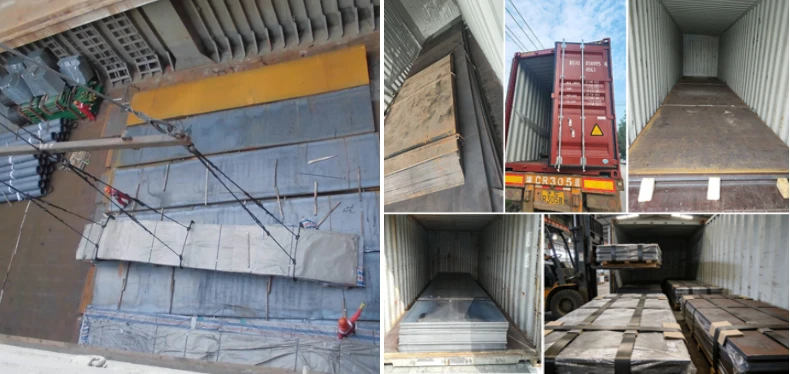
16Mo3 steel is available in plates (3-250mm), seamless pipes, welded tubes, forgings, and bars. Send your project requirements for a tailored quotation.
FAQ
What is the ASTM equivalent of 16Mo3 (1.5415)?
The ASTM equivalent of 16Mo3 is ASTM A204 Grade A and ASTM A204 Grade B. Other international equivalents include JIS STBA12 (Japan), DIN 15Mo3 (Germany), AFNOR 15D3 (France), and BS 1503-243B (United Kingdom). All share the same steel number 1.5415.
What is the maximum operating temperature of 16Mo3 steel?
16Mo3 steel has a maximum temperature for continuous use of 530°C. It is commonly used in pressure vessel and steam boiler construction for vaporizer ducts, collector ducts, heat exchangers, and welding-neck flanges. For applications above 530°C, higher-alloy Cr-Mo steels such as 13CrMo4-5 (1.7335) should be considered.
What does 16Mo3 +N mean?
The "+N" designation indicates that the 16Mo3 steel has been normalized - heated to approximately 900-950°C and air-cooled. This is the standard delivery condition for most 16Mo3 pressure vessel plates and tubes. Normalizing produces a uniform ferrite-pearlite microstructure that delivers the specified yield strength, tensile strength, and impact toughness.
Can 16Mo3 steel be welded?
Yes, 16Mo3 is weldable, but proper procedures are essential. Preheating (150-250°C for thicker sections), low-hydrogen consumables with matching Mo content, and post-weld heat treatment (530-580°C) are recommended. A qualified welding procedure specification (WPS) should be used, particularly for pressure-bearing applications. The carbon equivalent typically ranges from 0.38 to 0.48.
What products are available in 16Mo3 steel?
16Mo3 steel is available as plates (EN 10028-2, 3-250mm thick), seamless tubes (EN 10216-2), welded tubes (EN 10217-2/5), forgings (EN 10222-2), butt-welding fittings (EN 10253-2), and steel bars (EN 10273). Each product form has its own dimensional standards and tolerance specifications.


