

What is S960Q material?
S960Q is a European standard (EN 10025-6) high-strength structural steel, known for its exceptional strength (minimum yield strength of 960 MPa) achieved through quenching and tempering (the 'Q'), making it ideal for heavy-duty applications like construction, mining, and transport where weight savings and durability are crucial, offering excellent toughness and good weldability.

s960q steel plates are of ideal size and open thickness to satisfy the requirements of consumers . The s960q steel plates and profiles for patrons everywhere the planet are amazing. additionally to all or any s960q steel plates aren't only available available , they will even be dig sizes and shapes that fit your architectural and structural needs, and that we will work for everybody to supply you with a top quality system with unlimited guarantees and regular inspections. These plates come from the simplest quality steel manufacturers within the world, and like all our suppliers, these manufacturers are tested and evaluated in our procurement meetings. S960Q is a powerful steel (960 MPa) that gives a basic combination of great strength and value also as first-class load performance.This is usually the standard case of stacking on a structure that's usually lighter. S960QL may be a quenched and tempered high-strength steel , which provides the fabric a tremendous quality. S960QL is a basic steel audit with clearer quality characteristics without affecting the compliance of S890QL with the EN 10025 criteria associated with their respective quality. Standard applications got to support structure.
Applications: Ideal for weight-critical components in heavy machinery, mobile cranes, mining trucks, and high-performance structures.
What temperature is S960Q?
S960Q is a high-strength steel designed for performance in specific temperature ranges, notably maintaining impact toughness down to at least -20°C (or even -40°C for the 'L' variant), with a quenching and tempering (Q) process giving it strength, but it's processed and used within certain temperature limits, generally not exceeding 300°C for sustained loads, and requires preheating for welding at lower ambient temperatures.
Is S960Q high speed steel?
No, S960Q is not a high-speed steel (HSS) for cutting tools; it's an ultra-high-strength quenched and tempered structural steel (HSS) used for heavy-duty construction, cranes, and vehicle frames, known for exceptional strength and toughness, not high-speed cutting, which uses grades like M2 or M42. The "S" in S960Q stands for structural steel, and "960" signifies its minimum yield strength of 960 MPa, making it ideal for weight-critical, load-bearing applications. l.
What is the composition of S960Q?
S960Q is a high-strength, low-alloy structural steel (EN 10025-6 standard) known for its excellent strength and toughness, quenched and tempered for delivery, with key elements including controlled Carbon (max 0.2%), Silicon (max 0.8%), Manganese (max 1.7%), and minimal Phosphorus (max 0.025%) and Sulfur (max 0.015%), plus alloying elements like Chromium, Molybdenum, Vanadium, and Niobium for enhanced properties, designed for heavy-duty, lightweight load-bearing structures.
Chemical composition % of steel S960Q (1.8941): EN 10025-6-2004
| C | Si | Mn | Ni | P | S | Cr | Mo | V | N | Nb | Ti | Cu | Zr | B | CEV |
| max 0.2 | max 0.8 | max 1.7 | max 2 | max 0.025 | max 0.015 | max 1.5 | max 0.7 | max 0.12 | max 0.015 | max 0.06 | max 0.05 | max 0.5 | max 0.15 | max 0.005 | max 0.82 |
Mechanical properties of steel S960Q (1.8941)
| Nominal thickness (mm): | 3 - 50 |
| Rm - Tensile strength (MPa) | 980-1150 |
| Nominal thickness (mm): | 3 - 50 |
| ReH - Minimum yield strength (MPa) | 960 |
| KV - Impact energy (J) longitud., | 0° 40 |
-20° 30 |
| A - Min. elongation Lo = 5,65 √ So (%) | 10 |
Notch Impact Energy
|
Grade |
Sample Orientation |
@ 0°C |
@-20°C |
@-40°C |
@-60°C |
|
S960Q |
Longitudinal |
40 J |
30 J |
- |
–– |
|
Traverse |
30 J |
27 J |
- |
–– |
1What is S960Q equivalent to?
S960Q is a European (EN 10025-6) high-strength structural steel (minimum yield strength 960 MPa), equivalent to German TStE960V, French E960T/S960T, and branded grades like Dillinger's DILLIMAX 965 B/TStE960V, Strenx 960, or Alform 960 x-treme, etc., while S960QL/QL1 are tougher versions. It's used where high strength-to-weight is needed, like cranes, heavy machinery, and bridges, with ASTM equivalents often cited as high-strength grades like HPS 100W or ASTM A709 Gr. 100.
2What is the hardness of S960Q steel?
S960Q steel, a high-strength quenched and tempered structural steel, typically has a hardness around 340 HV10 (Vickers) in its base metal condition, but hardness can significantly increase in the heat-affected zone (HAZ) after welding, reaching over 400 HV10, with some reports showing values up to 441 HV10 due to its bainitic-martensitic microstructure.
3What welding rod for S960Q ?
For welding S960Q, an ultra-high-strength fine-grained steel, you need a matching high-strength filler metal, typically an ER 120S-1 (for TIG) or an equivalent low-alloy wire with NiCrMo additions, designed to match its yield strength of up to 960 MPa and provide excellent low-temperature impact toughness and ductility, with proper heat input control being critical.
4What are the typical application fields of S960Q?
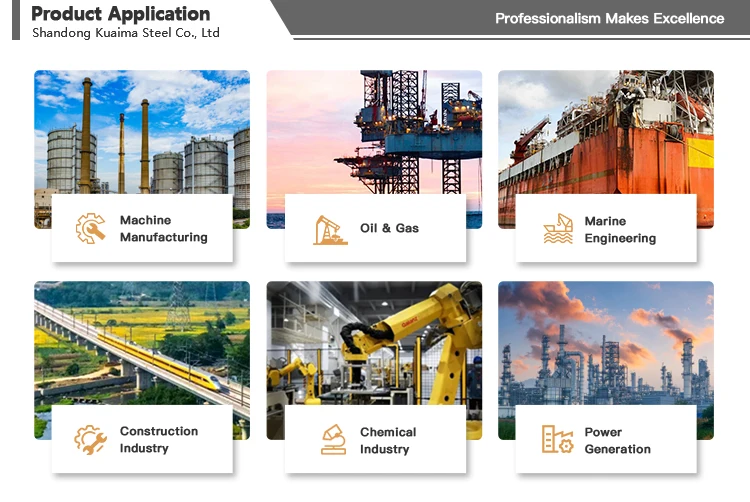
S960Q (a high-strength quenched and tempered steel) is primarily used in applications demanding extreme strength, toughness, and durability, such as heavy machinery (cranes, excavators, mining equipment), major construction (high-rise buildings, bridges, offshore platforms), and transportation (truck chassis, trailers, railway components) for weight reduction and improved performance, as well as in specialized industrial structures like those in the chemical, oil & gas, and nuclear sectors.
5What precautions should be taken when welding S960Q?
When welding S960Q (a high-strength steel), key precautions involve controlling heat input to prevent loss of mechanical properties, ensuring proper pre- and post-weld heat treatment, selecting compatible filler materials, meticulously controlling cooling rates (t8/5 < 10-15s for thicker plates), and maintaining general welding safety (ventilation, PPE, fire watch).
6What is the P number of S960Q?
S960Q is a high-strength structural steel, and while it doesn't have a standard P-Number like some ASME materials, its chemical composition (low carbon, low phosphorus) places it in a category where its welding characteristics are well-defined, often grouped with similar high-strength low-alloy (HSLA) steels for procedure qualification, potentially under a broad P-Number group (like P1 or P15) depending on the specific code interpretation (ASME IX), but generally requiring specific consideration for its high strength, often in Group 1 or similar for welding.
7Is S960Q carbon steel?
Yes, S960Q is a type of high-strength low-alloy (HSLA) steel, often described as a carbon and low-alloy steel, that meets the European standard EN 10025-6, known for its high yield strength (960 MPa) and excellent mechanical properties, making it ideal for demanding structural applications. While it contains carbon (like all steels), its performance comes from controlled alloying and a quenched & tempered (Q) heat treatment, not just high carbon content like traditional carbon steels.
Contact us at info@gneesteels.com for pricing, technical support, or customized solutions. We are always ready to support your project.


