

What is the hardness of ASME SA387 Grade 22 Class 1 steel?
ASME SA387 Grade 22 Class 1 steel is typically supplied in an annealed condition, and while specific hardness (like Brinell or Rockwell) isn't always a primary requirement in the core spec, it's generally soft enough for good formability, often around 241 HB (Brinell) maximum for Class 2, with Class 1 being similar or softer, focusing more on yield strength (30 ksi min) and tensile strength (60-85 ksi) for boiler/pressure vessel applications, with hardness varying slightly by manufacturer and condition.

ASME SA387 Grade 22 Class 1 is a chromium-molybdenum alloy steel plate for high-temperature pressure vessels, known for its excellent heat and oxidation resistance, commonly used in oil, gas, and petrochemical industries for boilers, heat exchangers, and piping. Key features include specific chemical composition (around 2.25% Cr, 1% Mo) and lower tensile strength (415-585 MPa) and yield strength (min 205 MPa) compared to Class 2, with good weldability.
Key Characteristics
Material: A chromium-molybdenum (Cr-Mo) alloy steel.
Application: Designed for elevated temperatures, common in refineries, petrochemical plants, and power generation.
Performance: Offers excellent oxidation and corrosion resistance, suitable for sour gas (H2S) environments.
Chemical Composition (Typical for Grade 22)
Chromium (Cr): 1.88 - 2.62%
Molybdenum (Mo): 0.85 - 1.15% (increases strength at high temps)
Carbon (C): Max 0.15%
Supply & Processing
Typically supplied in the normalized and tempered condition.
Available as plates for fabrication of pressure vessels, heat exchangers, and pipelines.
Production Size: Thickness: 4mm- 400mm; Width: 1000mm- 4000mm; Length: 4000mm- 12000mm.
Production ability:10000 Tons Per Month.
Production Way: Hot Rolled, Annealing, Normalizing, Tempering.
Applications:
Refineries, chemical plants, and power generation facilities.
Heat exchangers, condensers, and pipelines.
Oil and gas processing equipment, including offshore drilling.
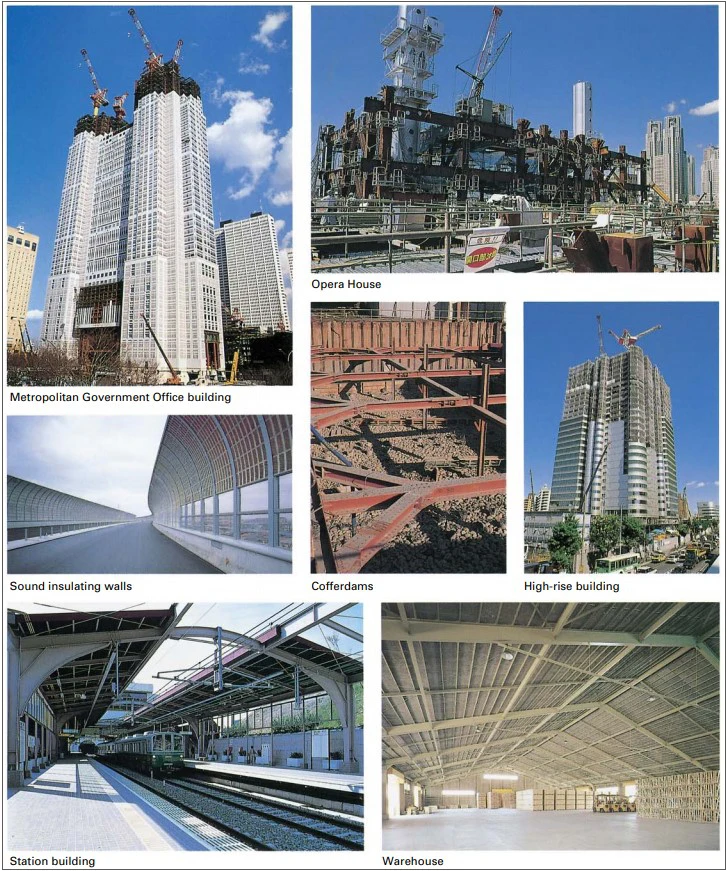
Techanical Details:
Heat Treatment: Normalized, Quenched, Tempered, HIC, Impact Test,..( Optional if not provided in rules)
What is ASME SA387 Grade 22 Class 1 high speed steel?
ASME SA387 Grade 22 Class 1 isn't high-speed steel; it's a Chromium-Molybdenum (Cr-Mo) alloy steel plate for high-temperature pressure vessels and boilers, offering excellent heat/corrosion resistance due to its 2.00-2.50% Chromium and 0.90-1.10% Molybdenum content, with Class 1 denoting specific, lower tensile/yield strength requirements compared to Class 2.
What is ASME SA387 Grade 22 Class 1 equivalent to?
ASME SA387 Grade 22 Class 1 is equivalent to ASTM A387 Grade 22 Class 1 (same material, different standard) and internationally to EN 10CrMo9-10, DIN 10CrMo9-10, and BS 622-515B, all of which are chromium-molybdenum alloy steels designed for high-temperature pressure vessel applications with slightly lower tensile strength requirements than Class 2.
What precautions should be taken when welding ASME SA387 Grade 22 Class 1?
When welding ASME SA387 Grade 22 Class 1, key precautions involve preheating to prevent cracking, using appropriate consumables (low hydrogen), controlling heat input with stringer beads, ensuring proper ventilation and PPE, and potentially performing Post-Weld Heat Treatment (PWHT) or interpass temperature control to manage hydrogen and avoid temper embrittlement, especially for thicker sections.
ASTM A387/ ASME SA387 GR 22 CLASS 1 / 2 Plate Specification :
| Standard | ASTM A387 / ASME SA 387 |
|---|---|
| Width | 1000mm-4500mm |
| Thickness | 5mm-150mm |
| Length | 3000mm-18000mm |
| Impact tested | -52° C |
| Material | Alloy Steel |
| Process of Manufacturing | Hot-Rolled (HR) |
Equivalents for ASME SA387 Grade 22 Alloy Steel Plates
| BS | EN | ASTM/ASME | DIN |
| 622-515B | 10 CRMO910 | SA387-22-1 | 10 CRMO910 |
Specifications for ASME SA387 Grade 22 Alloy Steel Plates
| Designation | Nominal Chromium Content (%) |
Nominal Molybdenum Content (%) |
| SA387 Grade 22 | 2.25% | 1.00% |
Alloy Steel ASTM A387 GR 22 CL. 1 / 2 Plates Chemical Composition :
| Grade | C | Mn | P | S | Si | Cr | Mo |
| Alloy Steel Gr.22 | 0.04 – 0.15 | 0.25 – 0.66 | 0.035 | 0.035 | 0.5 max | 1.88 – 2.62 | 0.85 – 1.15 |
Tensile Requirements for ASME SA387 Grade 22 Alloy Steel Plates Class 1 Plates
| Designation: | Requirement: | Grade 22 |
| SA387 Grade 22 | Tensile strength, ksi [MPA] | 75 to 100 [515 to 690] |
| Yield strength, min, ksi [MPa]/(0.2% offset) | 45 [310] | |
| Elongation in 8 in. [200mm], min % | ... | |
| Elongation in 2 in. [50mm], min, % | 18 | |
| Reduction of area, min % | 45 (measured on round specimen) 40 (measured on flat specimen) |
1. What are the typical application fields of ASME SA387 Grade 22 Class 1?
ASME SA387 Grade 22 Class 1 is a chromium-molybdenum alloy steel primarily used for pressure vessels and boilers in high-temperature, high-pressure industrial environments like petrochemical, oil & gas, and power plants, serving as components for heat exchangers, piping, storage tanks, and reactors due to its excellent strength and resistance to creep, oxidation, and corrosion.
2. What temperature is ASME SA387 Grade 22 Class 1?
ASME SA387 Grade 22 Class 1 is a chromium-molybdenum alloy steel used for high-temperature pressure vessels, designed to withstand elevated temperatures (often over 1000°F / 538°C) while maintaining strength, with its specified minimum tempering temperature being 1250°F (675°C) for proper heat treatment, though actual service temperatures can vary greatly depending on the application, with benefits like resistance to high-temp embrittlement.
3. What is the composition of ASME SA387 Grade 22 Class 1 ?
ASME SA387 Grade 22 Class 1 is a chromium-molybdenum alloy steel for pressure vessels, characterized by roughly 2.25% Chromium (Cr) and 1.00% Molybdenum (Mo), with maximum limits for Carbon (C), Manganese (Mn), Phosphorus (P), Sulfur (S), and Silicon (Si), designed for high-temperature service with good corrosion resistance. Key composition includes Carbon (0.05-0.15%), Manganese (0.30-0.60%), Silicon (<= 0.50%), Phosphorus (<= 0.035%), Sulfur (<= 0.035%), Chromium (2.00-2.50%), and Molybdenum (0.90-1.10%).
4. What welding rod for ASME SA387 Grade 22 Class 1 ?
For welding ASME SA387 Grade 22 Class 1 (2.25% Cr, 1% Mo), you need matching or slightly over-alloyed filler metals, typically AWS A5.5 E9018-B3 (SMAW) or equivalent low-alloy flux-cored (FCAW) or gas-shielded (GMAW) consumables like AWS A5.28 ER90S-B3, ensuring post-weld heat treatment (PWHT) to prevent temper embrittlement and hydrogen cracking.
5. Is ASME SA387 Grade 22 Class 1 carbon steel?
No, ASME SA387 Grade 22 Class 1 is not plain carbon steel; it's a chromium-molybdenum alloy steel, specifically a low alloy steel, used for high-temperature pressure vessels, featuring added chromium (around 2.25%) and molybdenum for strength and corrosion resistance, distinguishing it from standard carbon steels.
6. What is the hardness of ASME SA387 Grade 22 Class 1 steel?
ASME SA387 Grade 22 Class 1 steel is typically supplied in an annealed condition, and while specific hardness (like Brinell or Rockwell) isn't always a primary requirement in the core spec, it's generally soft enough for good formability, often around 241 HB (Brinell) maximum for Class 2, with Class 1 being similar or softer, focusing more on yield strength (30 ksi min) and tensile strength (60-85 ksi) for boiler/pressure vessel applications, with hardness varying slightly by manufacturer and condition.
7. What is the P number of ASME SA387 Grade 22 Class 1?
For ASME SA387 Grade 22 Class 1, the material falls into P-Number 5A in the ASME Boiler & Pressure Vessel Code (BPVC) Section IX, grouping it with other 2.25% Chromium-1% Molybdenum steels for elevated temperature service, which allows for qualification based on similar material groups.
If you have project requirements for ASME SA387 Grade 22 Class 1 , we welcome your inquiry. GNEE maintains a large inventory of commonly used high strength steel grades for your selection.For detailed mechanical properties, chemical composition, and technical data, as well as free samples, please contact our factory immediately. We offer competitive prices, stable quality, and professional service. Email:info@gneesteels.com


