

What is the hardness of ASTM A553 TYPE 1?
ASTM A553 Type 1(9% nickel alloy steel) is primarily designed for high strength, toughness, and cryogenic service (down to -196∘C or −320∘F ), rather than high hardness, resulting in a quenched and tempered structure that is strong yet ductile. While specific hardness values are not typically mandated in the specification, it generally falls within a range that ensures toughness.
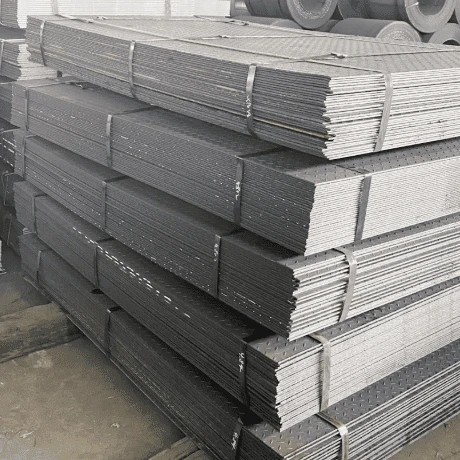
ASTM A553 Type 1 material is a specialized ferritic steel that undergoes a complex double-normalization and tempering (or quenching and tempering) process. This heat treatment ensures that the 9% Nickel is evenly distributed, creating a microstructure that prevents crack propagation in high-stress environments.
Key Characteristics:
Nickel-Rich Matrix: The 9% Nickel content stabilizes the structure against brittle transition.
Fine Grain Structure: Achieved through rigorous heat treatment, enhancing both strength and toughness.
Weldability: Despite the high alloy content, it can be welded using specific Nickel-based consumables (like Inconel) to ensure the seams match the plate's performance.
Grade Designation:
ASTM A553: Standard for Q&T Ni-alloy pressure vessel plates.
Type 1: 9% Nickel variant, the most common choice for cryogenic tanks.
Comparison
ASTM A553 Type 1 vs A537 Class 1:
Strength: A553 Type 1 has a higher yield strength compared to A537 Class 1, offering better resistance to pressure.
Temperature Resistance: A553 Type 1 performs better in low-temperature conditions than A537 Class 1, which is often used in moderately high temperatures.
Application: A553 Type 1 is typically chosen for cryogenic tanks and high-pressure reactors, while A537 Class 1 is more commonly used for general pressure vessel applications.
Common Applications
Cryogenic storage tanks for liquefied gases
High-pressure reactor vessels in nuclear plants
Offshore platforms for oil and gas production
Pressure vessels in chemical plants
Heavy-duty piping systems that require both strength and toughness

Can ASTM A553 Type 1 steel be welded?
Yes, ASTM A553 Type 1 steel can be welded using conventional welding methods, including MIG, TIG, and stick welding. Preheating may be required for thicker sections to avoid cracking, and post-weld heat treatment (PWHT) is often necessary to relieve residual stresses and ensure desired mechanical properties. Using proper filler materials compatible with the alloy's composition is also essential to achieve strong, durable welds in high-temperature environments.
How does ASTM A553 Type 1 perform at high temperatures?
ASTM A553 Type 1 performs excellently at high temperatures, with its resistance to thermal oxidation and creep being one of its most valuable features. The steel retains its strength and mechanical properties even in environments above 500°F (260°C), making it suitable for applications like boilers, heat exchangers, and pressure vessels where high temperatures are constantly present. This high-temperature stability is due to the alloying elements, especially chromium and molybdenum, that improve thermal resistance.
What are the advantages of ASTM A553 Type 1 over carbon steels?
ASTM A553 Type 1 offers several advantages over carbon steels, including higher strength, better thermal stability, and superior resistance to oxidation and corrosion. While carbon steels may fail or degrade in high-temperature environments, A553 Type 1 maintains its mechanical properties under heat, making it more suitable for applications like pressure vessels, boilers, and heat exchangers. Its higher alloy content also improves wear resistance, ensuring longer service life in demanding environments.
| CHEMICAL COMPOSITION OF ASTM A553 TYPE 1 | |
| Carbon (C) | 0.13% |
| Manganese (Mn) | 0.9% |
| Phosphorus (P) | 0.035% |
| Sulfur (S) | 0.040% |
| Silicon (Si) | 0.15-0.30% |
| Nickel (Ni) | 8.50-9.50% |
| Iron (Fe) |
Base Metal |
A553 Type I pressure vessel steel Mechanical properties
| Class | Tensile strength Rm MPa | Yield strength ReH MPa min | Elongation A% min in 50mm |
| A553 Type I | 690-820 | 585 | 20 |
1What is the impact toughness of ASTM A553 Type 1?
ASTM A553 Type 1 steel is known for its excellent impact toughness, especially at low temperatures. It can withstand high impact forces without fracturing, making it suitable for applications that require a material to maintain its structural integrity under stress. The steel's high toughness and resistance to brittle fracture at both room and sub-zero temperatures ensure reliability in critical applications, such as pressure vessels and heat exchangers.
2What is the hardness range of ASTM A553 Type 1 steel?
The hardness of ASTM A553 Type 1 typically ranges between 200 and 250 Brinell, depending on the heat treatment process and the specific alloy composition. This hardness range ensures that the material has sufficient resistance to wear, deformation, and mechanical impact while still allowing for fabrication and welding. Its hardness also ensures that the steel can perform well in high-stress environments without compromising its overall toughness and ductility.
3How is ASTM A553 Type 1 different from ASTM A516?
ASTM A516 is a carbon steel designed primarily for low-temperature pressure vessel applications, while ASTM A553 Type 1 is an alloy steel optimized for higher strength and better performance at elevated temperatures. While ASTM A516 is used in environments where temperature ranges are lower, ASTM A553 Type 1 is better suited for high-temperature, high-pressure applications, offering superior resistance to oxidation and thermal creep due to its alloying elements, such as chromium and molybdenum.
4Can ASTM A553 Type 1 be used in corrosive environments?
Yes, ASTM A553 Type 1 steel exhibits good resistance to corrosion, particularly in high-temperature environments. The combination of chromium, nickel, and other alloying elements enhances its ability to withstand oxidation and corrosion in harsh chemical environments. This makes it a good choice for use in industries like petrochemicals, power generation, and oil refining, where exposure to corrosive substances is common, especially at elevated temperatures.
5What are the welding considerations for ASTM A553 Type 1?
When welding ASTM A553 Type 1, proper preheating is often required, particularly for thicker sections, to reduce the risk of cracking. The preheat temperature typically ranges from 300°F (150°C) to 500°F (260°C). Post-weld heat treatment (PWHT) is often necessary to relieve residual stresses and ensure that the welded areas meet the material's mechanical properties. Additionally, using appropriate welding consumables designed for high-temperature alloys is essential to maintain weld integrity.
6What are the typical applications of ASTM A553 Type 1?
ASTM A553 Type 1 is typically used in pressure vessels, heat exchangers, boiler tubes, and other equipment exposed to high temperatures and pressures. Its excellent mechanical properties, such as tensile strength, impact resistance, and resistance to thermal oxidation, make it suitable for critical industrial applications in power plants, petrochemical facilities, and refineries where high-pressure systems are common.
7What is the carbon content of ASTM A553 Type 1?
The carbon content of ASTM A553 Type 1 steel typically ranges from 0.20% to 0.30%. This moderate carbon content ensures a balance between strength and ductility, allowing the material to be both strong enough to withstand high pressures while still being malleable enough for welding and fabrication. The carbon content is carefully controlled to ensure that the material has the necessary mechanical properties for demanding industrial applications.
Contact us at info@gneesteels.com for pricing, technical support, or customized solutions. We are always ready to support your project.


