

HP295 steel is used for high-pressure oxygen and carbon dioxide cylinders because ofits excellent weldability, superior cold-forming abilities, and high strength (minimum yieldstrength > 295 MPa). This low-carbon steel prevents weld cracking and supports deepdrawing, ensuring reliable, safe, and cost-effective production of gas pressurevessels.
While HP295 is most commonly associated with LPG (liquefied petroleum gas) cylinders, its application extends significantly to high-pressure oxygen (O₂) and carbon dioxide (CO₂) cylinders. These applications impose distinct challenges-ranging from the combustion risks of pure oxygen to the pressure stability demands of carbonation systems-that HP295 is uniquely equipped to address.
Why HP295 Works for Multiple Gases
Before examining gas-specific requirements, it is essential to understand the baseline properties that make HP295 suitable for any high-pressure gas cylinder application.
Low Yield Ratio: A Universal Safety Feature
As established in previous analyses, HP295 exhibits a yield ratio of 0.65–0.70 (Yield/Tensile). This low ratio enables leak-before-break behavior-critical for all high-pressure gases, but especially for oxygen and CO₂, where sudden rupture could have catastrophic consequences.
| Safety Parameter | HP295 Value | Why It Matters for O₂ & CO₂ |
|---|---|---|
| Yield Ratio | 0.65–0.70 | Provides visible deformation warning before rupture |
| Elongation | 30–35% | Allows ductile failure mode (tearing vs. fragmentation) |
| Impact Toughness | ≥33 J (typical) | Maintains integrity even at low temperatures (-40°C) |
Stringent Purity Control: Clean Steel for Clean Gases
HP295 is manufactured with strict limits on phosphorus (P ≤ 0.025%) and sulfur (S ≤ 0.015%) . This "clean steel" approach minimizes internal inclusions that could:
- Act as stress risers under cyclic pressurization
- React chemically with stored gases (particularly critical for high-purity oxygen)
- Initiate fatigue cracks over the cylinder's 20+ year service life
Weldability and Uniform Wall Thickness
HP295's low carbon equivalent (Ceq < 0.35%) ensures defect-free longitudinal and circumferential welds. Uniform wall thickness-achieved through precise hot rolling and controlled cooling-ensures even stress distribution regardless of the gas stored.

HP295 for High-Pressure Oxygen Cylinders
The Unique Challenge: Oxygen Compatibility
Oxygen presents a combustion hazard that other gases (e.g., nitrogen, argon) do not. In a high-pressure oxygen environment, almost any contaminant-oil, grease, organic residues, or even certain metal particles-can ignite spontaneously.
HP295 addresses this through:
- Surface Quality Control: The hot-rolled surface of HP295 is manufactured to minimize defects that could trap contaminants or create localized heating zones under rapid pressurization.
- Clean Steel Metallurgy: Low sulfur and phosphorus content reduces the risk of particle shedding that could act as ignition sources.
- Compatibility with Specialized Cleaning: HP295 cylinders intended for medical or diving oxygen undergo oil-free cleaning protocols and are certified to standards such as ISO 11119 and DOT specifications.
Pressure Ratings for Oxygen Service
HP295 oxygen cylinders are typically rated for working pressures up to 200–300 bar (approximately 3000 psi) , with hydrostatic test pressures at 1.5× working pressure (e.g., 300–450 bar).
| Parameter | HP295 Oxygen Cylinder Value |
|---|---|
| Working Pressure (typical) | 150–300 bar (200 bar common) |
| Hydrostatic Test Pressure | 1.5 × Working Pressure |
| Wall Thickness (typical) | 6–12 mm (diameter-dependent) |
| Service Temperature | -40°C to +60°C |
Applications for HP295 Oxygen Cylinders
| Application | Key Requirement | Why HP295 Excels |
|---|---|---|
| Medical Oxygen (Hospitals) | Zero contamination, impact resistance | Clean steel, rugged construction |
| Emergency/Ambulance | Portability + durability | Strength-to-weight balance |
| Diving (SCUBA) | Corrosion resistance, high pressure | Compatible with fresh/salt water environments after coating |
| Welding (Oxy-fuel) | High flow rate stability | Uniform wall thickness ensures consistent delivery |

Medical Oxygen Cylinders
HP295 for Carbon Dioxide (CO₂) Cylinders
The Unique Challenge: Pressure Stability and Purity
CO₂ cylinders operate differently from oxygen cylinders because CO₂ is stored as a liquid-vapor equilibrium at room temperature. The vapor pressure of CO₂ at 20°C is approximately 57 bar (≈850 psi) -significantly lower than oxygen but still requiring robust containment.
The key challenges for CO₂ storage are:
- Consistent Pressure Delivery: Carbonation systems (e.g., for soda dispensers or breweries) require stable outlet pressure to achieve uniform CO₂ absorption.
- Flavor Neutrality: Any metallic contamination or leaching can alter the taste of beverages.
- Moisture Control: Internal corrosion can occur if moisture is present, leading to cylinder degradation over time.
Applications for HP295 CO₂ Cylinders
| Application | Key Requirement | Why HP295 Excels |
|---|---|---|
| Beverage Carbonation (Soda, Beer) | Flavor neutrality, consistent pressure | Non-reactive interior, uniform wall thickness |
| Modified Atmosphere Packaging (MAP) | High purity, no contamination | Clean steel, compatible with food-grade certification |
| CO₂ Fire Extinguishers | Rapid discharge, corrosion resistance | Impact-resistant construction, durable coatings |
| Industrial CO₂ (Welding shielding gas) | Stable flow rate | Consistent internal geometry |
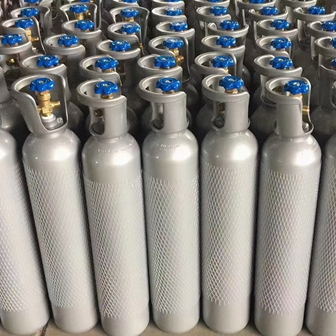
Carbon Dioxide Cylinder
why HP295 is chosen
Superior Weldability & Safety: HP295 is engineered to produce high-strengthwelded joints, essential for holding high-pressure gas without leaks. Its low carboncontent helps avoid brittle cracks in the welded heat-affected zone (HAZ).
Excellent Formability: The material has high ductility and elongation, allowing it to bedeep-drawn or stamped into the precise shape of cylinder bodies and heads withoutcracking or thinning.
High Strength to Weight Ratio: It provides enough structural strength (yield strength> 295 MPa, tensile strength 440 ~ 560 MPa) to satisfy regulatory safety standardsfor pressure vessels.
Temperature Adaptability: HP295 is highly stable in environments ranging from-40°C to 60°C, making it suitable for high-pressure storage in various climates.
Quality and Reliability: As a steel designed for pressure vessels (GB/T 6653), itensures consistent material quality for mass manufacturing, reducing production nIsks.

Comparison: Oxygen vs CO₂ Requirements for HP295
| Aspect | Oxygen Cylinders | CO₂ Cylinders |
|---|---|---|
| Primary Hazard | Combustion (contamination risk) | Pressure stability + corrosion |
| Working Pressure | 150–300 bar | 50–85 bar |
| Critical Material Property | Cleanliness, impact resistance | Uniform wall thickness, non-reactivity |
| Cleaning Requirement | Oil-free, specialized protocol | Standard industrial cleaning |
| Typical Applications | Medical, diving, welding | Beverage carbonation, fire extinguishers, MAP |
| Certification Standards | ISO 11119, DOT, medical device regulations | Food-grade certification, DOT |
For most O₂ and CO₂ applications, HP295 provides the optimal balance of cost, formability, and safety. HP345 may be specified for higher-pressure applications (>300 bar), while stainless steel is reserved for specialized corrosive or ultra-high-purity environments.
Conclusion
HP295 steel is used for high-pressure oxygen and carbon dioxide cylinders because it delivers the right balance of properties that more specialized materials cannot match:
For Oxygen: HP295's clean metallurgy, impact resistance, and compatibility with oil-free cleaning protocols make it a safe, cost-effective choice for medical and industrial oxygen service. Its low yield ratio provides critical leak-before-break safety in fire scenarios.
For CO₂: HP295's uniform wall thickness ensures stable pressure delivery essential for carbonation systems, while its non-reactive interior preserves flavor neutrality for beverage applications. Its durability withstands the rigors of commercial handling.

GNEE is committed to delivering high-quality HP295 steel with competitive pricing and professional service. Contact us today to get a quote and expert support-choose HP295 steel for safer and more efficient compressed gas cylinder manufacturing!
What is the delivery time for HP295 gas cylinder steel orders?
HP295 gas cylinder steel delivery time is usually 15–30 days.
Do you have stock of HP295 gas cylinder steel?
Yes, we maintain stock for common HP295 gas cylinder steel sizes.
Can you supply large volume HP295 gas cylinder steel orders?
Yes, we have strong capacity for bulk supply.
Is long-term supply of HP295 gas cylinder steel stable?
Yes, GNEE ensures stable supply for long-term cooperation.
What is the MOQ for HP295 gas cylinder steel?
MOQ is flexible depending on specifications.
What factors affect HP295 gas cylinder steel price?
Raw material cost, thickness, and order quantity affect price.


