

Products Description
Both HP265 and HP295 comply with the GB 6653 national standard; they are specialized grades of hot-rolled steel plate specifically designed for the manufacture of welded gas cylinders.
In this designation, "HP" stands for "steel for welded gas cylinders," while the numerical suffix indicates the steel's minimum yield strength value (in MPa). HP265 possesses a yield strength of no less than 265 MPa; as a lower-strength grade within this series, it exhibits excellent plasticity, stamping formability, and weldability, making it particularly suitable for small, low-pressure, or gas cylinder products requiring complex forming processes.
HP295 features a yield strength of no less than 295 MPa-slightly higher than that of HP265-and strikes a balance between good formability and structural safety. With its more balanced comprehensive mechanical properties, it currently stands as the most widely utilized and highest-volume mainstream grade in the welded gas cylinder sector.
It is extensively employed in the production of domestic LPG cylinders, standard acetylene cylinders, and various medium-to-low-pressure standard welded gas cylinders. The core distinctions between the two grades lie in their strength levels, applicable pressure environments, and product positioning; together, they collectively fulfill the safety requirements for the manufacture and usage of gas cylinders across a diverse range of specifications.
HP265 vs HP295 Comparison Table
Comparison of Mechanical Properties
| Item | HP265 | HP295 |
|---|---|---|
| Yield Strength (MPa) | ≥265 | ≥295 |
| Tensile Strength (MPa) | 410–520 | 440–560 |
| Elongation (%) | ≥21–27 | ≥20–26 |
| Strength Grade | Medium | Higher |
| Safety Margin | General | Higher |
HP295 offers an increase in strength of approximately 10–15%, making it better suited for high-pressure or thin-walled designs.
Comparison of Chemical Composition
| Element | HP265 | HP295 |
|---|---|---|
| C | ≤0.18 | ≤0.18–0.20 |
| Mn | ~0.80 | ~1.00 |
| Si | ~0.10 | ~0.10–0.35 |
| P/S | Lower impurities | Strictly controlled as well |
| Purity | High | Higher |
HP295 has a higher Mn content → Increased strength.
Looking for a reliable supplier of HP265 or HP295 gas cylinder steel? Contact GNEE today for expert advice, competitive pricing, and fast delivery-let us help you choose the best solution for your project.
Advantages of HP265 & HP295 for LPG Cylinders
Advantages of HP265 Steel for LPG Cylinders
HP265 is a low-to-medium strength welded cylinder steel grade with excellent formability and ductility, making it highly suitable for small and lightweight LPG cylinders.
Its lower yield strength allows for easier stamping, deep drawing, and shaping during cylinder manufacturing, reducing production difficulty and equipment load. The material offers stable welding performance and good impact toughness at room temperature, ensuring reliable joint quality in cylinder fabrication.
With moderate mechanical properties and controlled chemical composition, HP265 provides sufficient safety performance for low-pressure LPG applications, while delivering better cost efficiency for small-volume, light-duty cylinder production.

Advantages of HP265 & HP295 for LPG Cylinders
Advantages of HP295 Steel for LPG Cylinders
HP295 is the mainstream and most widely applied steel grade for standard LPG cylinders, offering a well-balanced combination of strength, ductility, and safety.
With higher yield and tensile strength than HP265, it provides enhanced structural rigidity and greater safety margin, making it ideal for medium-pressure household and commercial LPG cylinders. The optimized chemical composition (higher manganese and controlled silicon) improves strength without sacrificing weldability and formability, ensuring stable production and long-term service reliability.
HP295 delivers better resistance to deformation and fatigue under normal operating pressure, meeting national and industrial safety standards for general-purpose LPG cylinders. It is recognized globally as the most cost-effective and dependable material for mass-produced LPG cylinders.
Situations & Considerations for Choosing HP265 vs HP295
When to Choose HP265
HP265 is typically selected for low-pressure, small-capacity LPG cylinders where excellent formability and cost efficiency are prioritized. It is more suitable for lightweight, thin-gauge cylinder designs that require deep drawing and easy stamping during production.
This grade is preferred when the working pressure is relatively low, the cylinder size is small, and the structural load is not severe. It is also chosen for applications where manufacturing formability plays a key role in reducing production difficulty and improving yield rates, while meeting basic safety requirements for low-pressure gas storage.
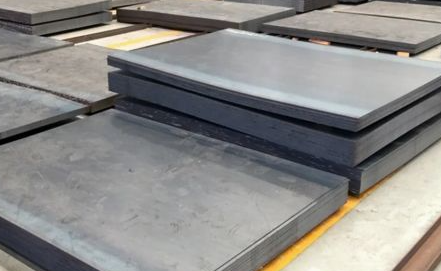
When to Choose HP295
HP295 is the standard choice for general-purpose, medium-pressure LPG cylinders such as household and commercial bottled gas cylinders. It is selected when higher structural strength, better safety margin, and stronger resistance to deformation are required.
This grade is preferred for mainstream cylinder specifications with standard working pressure, larger volume, or longer service life. It is also the optimal selection for mass production due to its balanced mechanical properties, reliable weldability, and compliance with strict national and international safety standards for pressure vessels. HP295 becomes the preferred option when overall safety, durability, and versatility are the main concerns.
Packaging & Transportation Services for HP265 & HP295 Steel Plates
Packaging Services
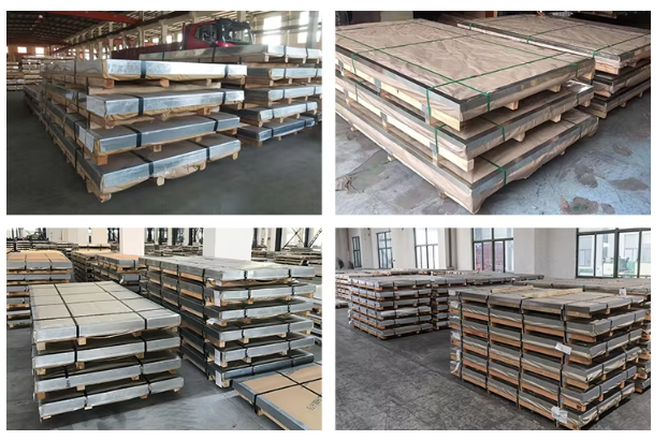
Standard anti-rust packaging with rust-proof paper, PE film and moisture-proof bags to avoid surface oxidation during long-distance delivery.
Edge and corner protection to prevent scratches, deformation and damage during handling and transit.
Steel plate stacking with interlayer separators, firmly strapped with steel strips for stability.
Clear external marking including steel grade, specification, heat number, quantity and GB 6653 standard for easy identification.
Fumigated wooden pallets or packaging available for export to meet ISPM 15 requirements.
Transportation Services
Professional land transportation by flat-bed trucks or enclosed vans with reliable fixing and rainproof measures.
Sea transportation via full containers (FCL) or less-than-container loads (LCL) for overseas orders.
Safe loading, unloading and cargo supervision to reduce collision and deformation risks.
Real-time logistics tracking for customers to monitor the whole transportation process.
Door-to-port or door-to-door delivery service according to customer requirements.
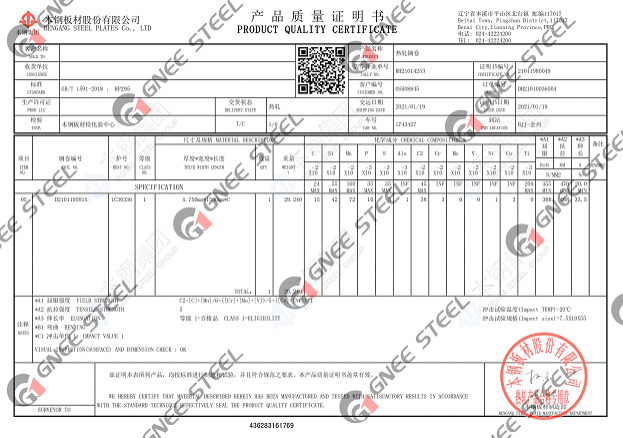
certification
As a professional steel manufacturer, GNEE supplies HP295 and a wide range of gas cylinder steels, helping global clients select the most suitable material for their applications.
Can HP265 substitute for HP295?
Yes, but the safety margin is reduced; therefore, it is not recommended for use in high-pressure gas cylinders.
Is HP295 more difficult to process?
It presents a slight challenge, but it still retains excellent cold-forming properties.
Is HP295 more expensive?
It is typically 5%–12% more expensive; however, the overall cost can be reduced by utilizing thinner material.
Do both comply with international standards?
Yes, both comply with the GB6653 standard and are equivalent to corresponding JIS and EN standards.
Which is more suitable for long-term use?
HP295, due to its superior strength and fatigue resistance.
Is HP265 safe?
It is completely safe when used within its specified design parameters and is widely utilized in gas cylinders for civil applications.
HP295 has a higher carbon equivalent; will this negatively affect the quality of cylinder welding (specifically Submerged Arc Welding/MAG welding)?
Absolutely not. For both HP265 and HP295, the carbon content is strictly controlled to remain below 0.20%, classifying them as high-quality low-carbon steels. HP295 achieves its enhanced strength through a fine-tuning of its manganese content; it fully meets the requirements for automated circumferential and longitudinal seam welding, and it boasts an exceptionally high pass rate in X-ray weld inspections.


