

Products Description
In the pressure vessel industry, the selection of materials directly determines a gas cylinder's safety factor, service life, and economic efficiency. With the surging demand for industrial gases-particularly LPG, refrigerants, and specialized toxic gases-traditional HP295 and HP325 steels are increasingly unable to meet the dual requirements of lightweight design and high safety standards.
HP345 steel-recognized under the current national standard GB/T 6653 (formerly GB6653-1994) and regarded within the industry as one of the highest-grade steels commonly used for welded cylinders-is rapidly becoming the preferred choice for manufacturers of high-end gas cylinders.
The Core Advantages of HP345: High Strength and Low Yield-to-Tensile Ratio
For gas cylinders, the most dangerous mode of failure is brittle fracture. HP345 not only offers superior strength, but its unique characteristic-a low yield-to-tensile ratio-serves as the critical safeguard for safety.
High Yield Strength: Yield Strength (R) > 345 MPa; Tensile Strength (Rm) 510–620 MPa.
Value: Compared to HP295 (RcL ≥ 295 MPa), HP345 allows for the design of thinner cylinder walls. For a given cylinder volume, this reduces steel consumption by 15%–20%, thereby achieving cylinder lightweighting and lowering logistics and transportation costs.
Low Yield-to-Tensile Ratio: For high-quality HP345 products, the yield-to-tensile ratio is typically controlled at ≤ 0.75, or even lower.
Value: A lower yield-to-tensile ratio indicates that the steel possesses a substantial reserve of plasticity. Under overpressure conditions, the steel will undergo significant plastic deformation (bulging) prior to rupture, rather than bursting instantaneously; this provides a valuable buffer period for safe pressure relief.
| Item | Specification |
|---|---|
| Chemical Composition (wt%, max) | |
| Carbon (C) | ≤0.22 |
| Manganese (Mn) | ≤1.50 |
| Silicon (Si) | ≤0.50 |
| Phosphorus (P) | ≤0.025 |
| Sulfur (S) | ≤0.020 |
| Aluminum (Alt) | ≥0.020 |
Low-Carbon + High-Manganese Design: This ensures the steel's toughness and weldability (characterized by low susceptibility to cold cracking), while simultaneously enhancing strength through solid-solution strengthening.
Vanadium-Titanium Microalloying: This constitutes the "cutting-edge technology" behind HP345. Through precipitation strengthening-specifically the formation of carbonitride precipitates that pin grain boundaries-this process refines the grain structure and boosts strength without compromising ductility.
| Mechanical Properties | |
| Yield Strength (MPa) | ≥335 |
| Tensile Strength (MPa) | 470 – 550 |
| Elongation (A5, %) | ≥18 |
| Impact Test (room temperature) | Good toughness for cylinder service |
| Standard | GB 6653 |
Potential Drawbacks
As a responsible material supplier, we deem it necessary to objectively highlight the processing challenges associated with HP345-thereby demonstrating our professional expertise and assisting clients in mitigating potential risks:
Highly Demanding Rolling Process Requirements:HP345 is extremely sensitive to both final rolling temperatures and coiling temperatures. If the steel mill's controlled rolling and cooling processes lack stability, it can easily result in mixed grain structures or banded microstructures, subsequently leading to cracking during stamping operations.
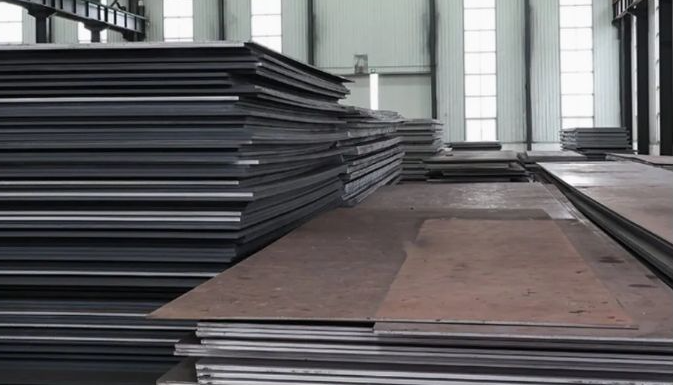
Cold Bending Springback:Due to its high yield strength, the degree of springback observed during coiling and straightening processes is approximately 15% to 20% greater than that of HP295. Consequently, die designs must incorporate a specific allowance for springback; otherwise, dimensional accuracy cannot be guaranteed.
Welding Parameter Adjustment:Although the material exhibits excellent weldability, its relatively high manganese (Mn) content necessitates the use of compatible welding consumables (e.g., H08MnSiA). Furthermore, heat input levels must be precisely controlled to prevent softening within the heat-affected zone (HAZ).
Application Analysis of HP345 Steel
- High-Pressure LPG Cylinders:Suitable for large-capacity, heavy-duty LPG cylinders that require higher structural rigidity and deformation resistance.
- CNG Cylinders:Widely used in welded-type CNG cylinders for vehicles, stationary storage and related gas equipment.
- Industrial Gas Cylinders:Applicable to industrial cylinders for oxygen, nitrogen, argon, compressed air and other high-pressure industrial gases.
- Export-Oriented Gas Cylinders:HP345 complies with GB 6653 standard and meets the technical requirements of many international buyers for high-strength cylinder materials.High purity and stable mechanical properties make it suitable for export cylinders that require strict quality certification.


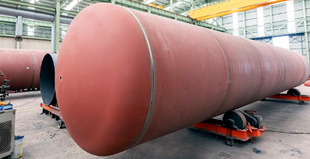
Application Analysis of HP345 Steel
How to Determine If HP345 Is the Right Choice?
✔ Recommended for HP345:
- High-pressure gas cylinders (> 20 MPa)
- Export to European and North American markets
- Requirements for lightweight design
- Automated production lines
- Brand upgrading
✔ Not Recommended for HP345:
- Low-pressure LPG cylinders
- Cost-sensitive projects
- Simple production processes

How much can the thickness be reduced by using HP345 to replace HP295?
According to the thin-wall stress formula, under identical diameter and pressure conditions, thickness is inversely proportional to the allowable stress. The allowable stress for HP345 is typically set at 115 MPa (using a safety factor of 3), whereas for HP295, it is set at 98.3 MPa. Theoretically, the wall thickness can be reduced by approximately 15%. For instance, if a plate thickness of 3.0 mm was originally required, switching to HP345 would allow for the use of a 2.5 mm plate.
Can HP345 be used to manufacture "large-volume seamless gas cylinders"?
No, it cannot. Please note that the "H" in HP345 stands for "Welded," indicating that this material is specifically intended for welded gas cylinders (which are fabricated by rolling and welding steel plates). For large-volume seamless gas cylinders, chromium-molybdenum steel (such as 4130X or 30CrMo) should be used instead. HP345 primarily corresponds to welded steel cylinders governed by the DOT-4BA and 4BW standards.
Does HP345 become brittle at low temperatures?
Thanks to modern micro-alloying techniques and grain refinement processes (typically achieving a grain size finer than Grade 10), HP345 exhibits excellent low-temperature impact toughness. We can provide impact energy test reports-conducted at temperatures as low as -20°C or even -40°C-upon customer request, thereby ensuring that the material will not suffer from brittle fracture when used outdoors in frigid regions.
How much stronger is HP345 compared to HP295?
Yield strength is increased by approximately 15–20%.
Is HP345 safer?
Yes; it is particularly well-suited for high-pressure environments.
Can the wall thickness of HP345 be reduced?
Yes; it can typically be reduced by 10–20%.
Is welding HP345 difficult?
No, it is not difficult, but process parameters must be optimized.
Is HP345 suitable for all types of gas cylinders?
No; it is not suitable for low-pressure applications or cost-sensitive projects


