

P245NB steel is a non-alloy steel that is primarily used for pressure vessels and other applications requiring high strength and good welding properties. This material is a part of the EN 10120 standard, which specifies the requirements for flat products made of weldable non-alloy and alloy steels used for pressure vessels.
Standard: EN 10120 (Steel sheet and strip for welded gas cylinders)
Material Number (W.Nr.): 1.0111
Designation Meaning:
- P: Pressure
- 245: Minimum yield strength 245 MPa
- N: Normalized
- B: Fine grain (ensures weld toughness)
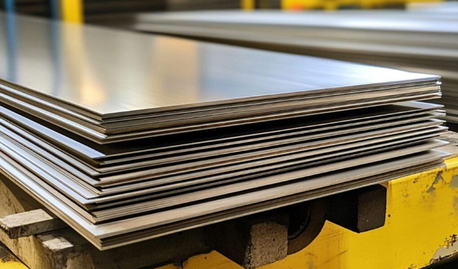
P245NB steel
Mechanical Strength & Yield of P245NB steel
The "245" in its name represents its minimum yield strength. This is the baseline for engineers when calculating the safety limits of a pressure vessel.
- Yield Strength (≥245 MPa): It provides sufficient resistance to permanent deformation under pressure.
- Tensile Strength (390–530 MPa): This is the maximum stress the steel can withstand before breaking, providing a safe "buffer" range between the yield point and total failure.
- Elongation: 22% (minimum), which indicates good ductility and formability
- Impact Strength: -20°C or better, ensuring performance even in colder conditions
- Hardness: Typically less than 200 HB, which reflects its moderate hardness suitable for welding and forming.
These mechanical properties ensure that P245NB steel can handle significant stress and pressure without compromising its structural integrity, making it ideal for use in demanding industrial environments.
Heat Resistance and Durability of P245NB steel
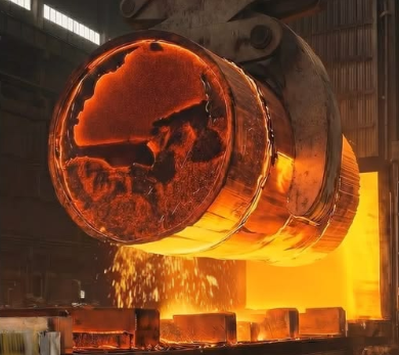
One of the most important properties of P245NB steel is its resistance to heat. This steel is used in applications that require the material to withstand high temperatures without losing its strength or durability. The alloy can withstand temperatures up to 300°C for extended periods, making it suitable for high-temperature applications like pressure vessels, heat exchangers, and boiler parts.
The ability to maintain its strength at elevated temperatures is also crucial in preventing the steel from deforming or losing its mechanical properties when exposed to fluctuating thermal conditions.
Weldability of P245NB steel
P245NB steel is renowned for its excellent weldability, which makes it an attractive choice for pressure vessel and boiler manufacturers. The low carbon content and appropriate alloying elements ensure that the steel performs well in welded joints, offering both strength and reliability.
This feature makes P245NB suitable for welding by common methods, such as electric arc welding, gas welding, and resistance welding. However, as with most steels, preheating or post-weld heat treatment may be necessary to prevent cracking in certain high-stress areas.
|
Welding Method |
Typical Current Type |
Heat Input Range (kJ/mm) |
Recommended Welding Consumables (Example) |
Remarks |
|---|---|---|---|---|
|
Shielded Metal Arc Welding (SMAW) |
DC+ |
0.8–1.8 |
EN 499: E 42 0 B 42 |
Suitable for on-site maintenance and complex joints |
|
Gas Metal Arc Welding (GMAW) |
DC+ |
0.6–1.5 |
EN 440: G 42 2 M |
Ar+18%CO₂ mixed gas is recommended |
|
Submerged Arc Welding (SAW) |
AC / DC+ |
1.0–2.5 |
EN 756: S 42 2 AB |
Suitable for long straight welds with high efficiency |
|
Resistance Welding (RW) |
- |
- |
- |
Suitable for spot welding or seam welding of thin plates (≤4mm) |
Corrosion Resistance of P245NB steel
P245NB carbon-manganese steel exhibits basic atmospheric corrosion resistance under typical service conditions, but its core performance advantages focus on mechanical strength and weldability rather than corrosion resistance in harsh or aggressive media.
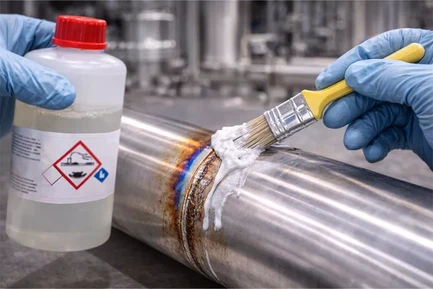
In environments involving long-term exposure to corrosive chemicals, high humidity, salt spray, or acidic/alkaline industrial atmospheres, supplementary anti-corrosion treatments are recommended. These may include organic coatings, metallic plating, or passivation treatments to effectively extend service life and prevent surface oxidation or rusting.
Nevertheless, P245NB maintains moderate resistance to general atmospheric corrosion and performs reliably in conventional industrial settings.
Under normal operating conditions involving air, mild moisture, and non‑aggressive pollutants, the material can maintain structural integrity and surface stability without obvious corrosion degradation.
Corrosion Resistance of P245NB steel
Applications of P245NB Steel
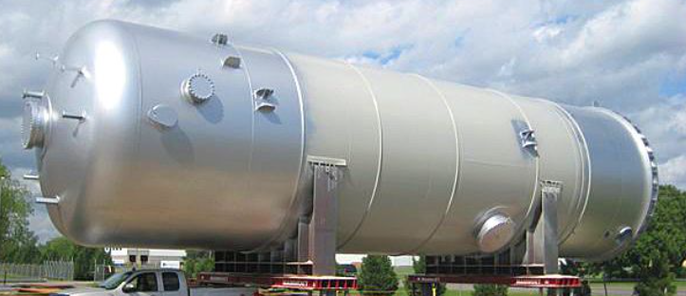
P245NB is primarily used in the construction of pressure vessels, particularly for the power generation, chemical, and petrochemical industries. The following are common applications for this versatile steel:
- Pressure Vessels: Used for storing gases, liquids, and chemicals under pressure.
- Boilers and Heat Exchangers: Key components in steam generation and heat transfer systems.
- Storage Tanks: Used in tanks that require high-pressure resistance.
- Chemical Process Equipment: Suitable for systems where high-temperature and pressure conditions are present.
Its ability to withstand pressure, temperature variations, and mechanical stress while maintaining excellent weldability makes it ideal for these applications.
Advantages and Limitations of P245NB Steel
Advantages of P245NB Steel
- Strength and Durability: Offers a balance of strength and toughness, making it suitable for heavy-duty applications.
- Excellent Weldability: This steel is highly adaptable to welding, ensuring reliable joints in manufacturing.
- Cost-Effective: As a low-alloy steel, P245NB provides a good balance of performance and affordability.
- Good Formability: Despite its strength, P245NB can be easily shaped and formed to meet specific application needs.
Limitations of P245NB Steel
While P245NB offers many benefits, there are some limitations to consider:
- Moderate Corrosion Resistance: While it can handle mild environments, it may need additional protection for use in harsher conditions.
- Temperature Limitations: P245NB is not suited for applications involving extremely high temperatures (above 300°C) or cryogenic environments.
- Not Ideal for Highly Aggressive Chemicals: In environments with highly corrosive substances, other alloys with enhanced resistance may be required.
At GNEE, we assist our clients in selecting the optimal grade based on their specific vessel design and safety requirements. Our technical team has decades of experience in the steel industry, ensuring you receive the most reliable advice.
What is the yield strength of P245NB?
The minimum yield strength (ReH) of P245NB is 245 MPa, and the actual yield strength usually ranges between 245-355 MPa, which is moderate and suitable for cold forming and pressure-bearing applications.
What is the tensile strength range of P245NB?
The tensile strength (Rm) of P245NB is specified as 360-450 MPa in the EN 10120 standard, which ensures that the material has sufficient strength to bear the pressure of gas cylinders.
What is the elongation percentage of P245NB?
The elongation after fracture (A₅) of P245NB varies with the thickness of the steel plate: ≥26% when the thickness t<3mm, and ≥34% when t≥3mm, which reflects its excellent ductility and cold formability.
Does P245NB have fine-grain microstructure?
Yes, P245NB has a stable fine-grain microstructure. It achieves fine-grain refinement through the addition of microalloying elements (Al, Nb, Ti) and normalized heat treatment, with a grain size of grade 6 or finer.
What is the impact energy value of P245NB at low temperature?
According to the EN 10120 standard, the impact energy (KV) of P245NB at -20℃ is not less than 27J. The actual measured value is usually above 32J, which ensures its good low-temperature toughness.
What is the typical hardness of P245NB?
The typical Brinell hardness (HB) of P245NB in the delivery state is 130-170HB, which is moderate, ensuring both strength and machinability.
What is the carbon equivalent (CEV) of P245NB?
The carbon equivalent (CEV) of P245NB is ≤0.38%, which is lower than 0.40%, indicating that it has excellent weldability and no preheating is required during welding under normal temperature conditions.


