

HP345 steel has emerged as the preferred material for high-pressure, fatigue-resistant welded gas cylinders due to its unique combination of high strength (≥345 MPa yield) , excellent weldability, superior toughness, and proven fatigue performance. Unlike lower-grade alternatives such as HP295, HP345 enables manufacturers to produce lighter, stronger, and safer cylinders that withstand repeated pressurization cycles without failure. This analysis examines the technical rationale, comparative advantages, and real-world applications that establish HP345 as the industry standard for demanding gas storage applications.

In the manufacturing of welded gas cylinders, especially those designed for medium to high-pressure applications, material selection directly determines safety, durability, and lifecycle cost. Among various steel grades, HP345 steel plate has become a preferred choice due to its superior balance of strength, toughness, weldability, and fatigue resistance.
High Strength Ensures Structural Safety Under Pressure
| Property | HP345 Value |
|---|---|
| Yield Strength (ReL) | ≥ 345 MPa |
| Tensile Strength (Rm) | 510 – 640 MPa |
| Elongation | ≥ 21% |
Why It Matters:
Gas cylinders operate under internal pressure stress
Higher yield strength means:
- Better resistance to deformation
- Lower risk of bulging or rupture
- Ability to withstand higher design pressures
Fatigue Performance Advantages of HP345
HP345 welding gas cylinder steel is specially developed for high-cycle fatigue scenarios, with inherent material advantages that lay a solid foundation for its excellent fatigue resistance:
Stable, Fine-Grained Microstructure: Through controlled rolling and accelerated cooling (TMCP) process, HP345 achieves a uniform, refined ferrite-pearlite (or bainite) microstructure. Fine grains not only improve the overall strength of the steel, but also effectively disperse stress concentration, inhibit the nucleation and expansion of microcracks at grain boundaries, and significantly enhance the material's ability to resist cyclic loading.
Ultra-Low Impurity Content (P, S): HP345 strictly controls harmful elements such as phosphorus (P) and sulfur (S) through advanced smelting processes (such as LF refining and VD vacuum degassing). Sulfur is easy to form sulfide inclusions, which become the source of fatigue cracks under alternating stress; phosphorus will reduce the toughness of the steel and accelerate crack propagation. The ultra-low impurity content fundamentally eliminates the hidden danger of early fatigue failure.
Uniform and Consistent Mechanical Properties: The whole plate of HP345 has uniform strength, toughness and plasticity, no performance difference in the head, cylinder body and weld zone, avoiding local stress concentration and premature failure caused by uneven material properties, ensuring that the cylinder can maintain stable performance under long-term cyclic loading.
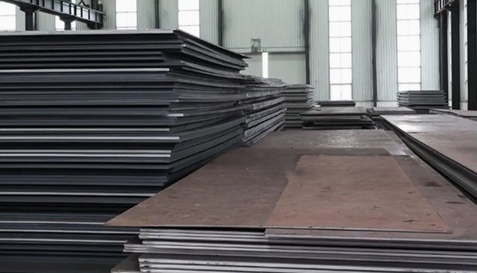
Excellent Weldability for Cylinder Integrity of HP345 steel
Weld quality is the most critical safety factor in gas cylinder manufacturing. Gas cylinders operate under extreme high-pressure conditions, and their welded seams are inherently the weakest structural points of the entire vessel. Any welding defect, crack, or performance degradation in the heat-affected zone (HAZ) can directly lead to catastrophic failure, leakage, or explosion. HP345 welding gas cylinder steel is engineered with a weld-friendly chemical composition and microstructure, delivering industry-leading weldability to guarantee the long-term structural integrity of gas cylinders.
Chemical Design for Superior Welding Performance
HP345's weldability advantage originates from its precision-controlled chemical composition, which is optimized specifically for high-pressure cylinder welding applications:
| Factor | Technical Advantage | In-Depth Explanation |
|---|---|---|
| Low Carbon (≤0.20%) | Reduces crack sensitivity | Carbon is the primary element that increases steel hardenability and cold cracking risk during welding. By strictly limiting carbon content to ≤0.20%, HP345 minimizes the formation of brittle martensite in the weld and heat-affected zone (HAZ), eliminating the root cause of cold cracking and ensuring the ductility and toughness of the welded joint. |
| Controlled CE (Carbon Equivalent) | Improves weld stability |
Carbon Equivalent (CE) is a core indicator for evaluating steel weldability. HP345 strictly controls CE to a low, stable range through balanced alloy design, ensuring consistent welding performance across different production batches. This controlled CE prevents unpredictable hardening and cracking during welding, enabling stable, repeatable welding processes for mass cylinder production. |
| Micro-alloying | Enhances HAZ toughness |
HP345 adds trace amounts of micro-alloying elements (such as Nb, V, Ti) that form fine, dispersed carbonitride precipitates. These precipitates effectively refine the grain structure in the heat-affected zone (HAZ) during welding, inhibiting grain coarsening at high temperatures. This significantly improves the impact toughness and fatigue resistance of the HAZ, eliminating the "weak link" between the base metal and weld seam. |
Tangible Welding Benefits for Cylinder Manufacturing of HP345 steel
The optimized chemical design of HP345 translates into direct, practical advantages for cylinder production and long-term safety:
Compatibility with Multiple Welding Processes
HP345 is fully compatible with all mainstream industrial welding processes used in cylinder manufacturing, including:
- MIG / TIG Welding: Ideal for precision welding of cylinder heads, valve seats, and thin-walled components, ensuring smooth, defect-free weld seams with excellent appearance and performance.
- Submerged Arc Welding (SAW): Perfect for high-efficiency, high-quality longitudinal and circumferential welding of cylinder bodies, enabling deep penetration, high speed, and stable weld quality for large-scale production.
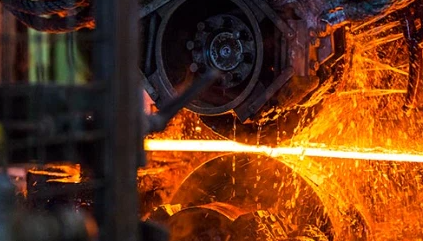
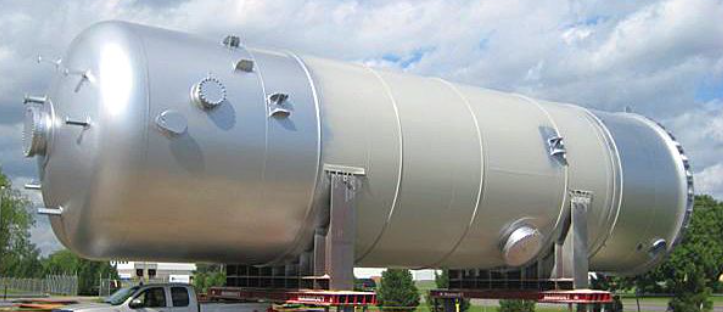
Typical Application Scenarios of HP345 steel
HP345 is especially suitable for:
- High-pressure LPG cylinders
- Industrial gas storage cylinders
- Transportable pressure vessels
- Energy and petrochemical equipment
Why Choose GNEE as Your Supplier?
18+ years manufacturing experience
Full certification support (EN, JIS, GB standards)
Custom sizes, thickness, and surface treatment
Fast delivery and global logistics
Strict quality inspection (chemical + mechanical testing)
We don't just sell steel-we provide complete gas cylinder material solutions.
Contact now to get the HP345 steel votrt
Is HP345 suitable for all gas cylinders?
It is best suited for medium to high-pressure cylinders. For lower-pressure applications, HP295 may be more cost-effective.
Why is fatigue resistance important in gas cylinders?
Because cylinders undergo repeated filling cycles, fatigue resistance prevents cracks and ensures long-term safety.
Does HP345 require special welding processes?
No. It supports standard welding methods with good weld stability and low defect rates.
Can HP345 be used in cold climates?
Yes. Its excellent low-temperature toughness ensures safe performance even at -20°C or lower.
Is HP345 more cost-effective than lower-grade steels?
Yes, in the long run. Its durability and reduced failure rates lower overall lifecycle costs.


