

HP345 steel is a preferred high-strength material for pressure vessels and gas cylinders primarily due to its optimized chemical composition, excellent mechanical properties (especially a minimum yield strength of 345 MPa), superior weldability, and strict compliance with safety standards.
In the manufacturing of pressure vessels, material selection directly determines operational safety, service life and economic efficiency.HP345, designed and produced in accordance with GB 6653, has become the globally preferred material for safe and reliable pressure vessels due to its balanced mechanical properties, excellent weldability, strict quality control and strong adaptability to complex working conditions.
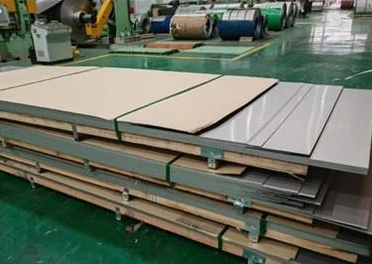
High strength ensures the manufacture of HP345 pressure vessels
The "345" in HP345 stands for its minimum yield strength of 345 MPa, and its tensile strength ranges from 510 to 620 MPa.
- Pressure Resistance: This high strength allows the steel to safely contain high internal pressure (e.g., in LPG or oxygen cylinders) without bulging, deforming, or rupturing.
- Weight Efficiency: Compared to lower-strength steels (like HP235/265), HP345 can use thinner plates to achieve the same pressure rating. This reduces the overall weight of the cylinder, making it easier to transport and handle while maintaining safety.
HP345's high strength enables lightweighting-a critical economic and operational advantage. For a given design pressure, cylinders manufactured from HP345 can have thinner walls than those made from HP295 or HP265, resulting in:
10-15% weight reduction in finished cylinders
Lower raw material costs per cylinder
Improved transport efficiency (more cylinders per shipment)
Optimized Chemical Composition of HP345 pressure vessels
HP345 achieves its high strength through a carefully balanced low-carbon, manganese-based chemistry enhanced with micro-alloying elements. The compositional design prioritizes strength without compromising other critical properties like weldability and toughness.
| Element | Limit (Max %) | Function |
|---|---|---|
| Carbon (C) | ≤ 0.20% | Low carbon ensures good toughness and weldability, preventing brittle fractures. |
| Manganese (Mn) | ≤ 1.50% | Primary element for solid-solution strengthening, significantly increasing strength without losing ductility. |
| Silicon (Si) | ≤ 0.35% | Mild strengthening; kept low to preserve formability. |
| Phosphorus (P) | ≤ 0.035% | Impurity; strictly limited to prevent brittleness. |
| Sulfur (S) | ≤ 0.035% | Impurity; strictly limited to prevent hot cracking during welding. |
| Aluminum (Als) | ≥ 0.015% | Refines grain size, improving toughness and impact resistance. |
| Microalloys (Ti/Nb) | Trace | Precipitation hardening to boost strength while maintaining fine grain structure. |
Excellent Toughness & Formability of HP345 pressure vessels
HP345 steel boasts excellent toughness and formability, which are critical for its application in pressure vessels and gas cylinders. In terms of impact resistance, it meets GB/T 6653 standards, requiring a minimum 27J Charpy V-notch impact energy at room temperature (20℃); actual test data often reaches 35-50J, effectively preventing sudden brittle failure under shock, collision or dynamic loads during transportation and use. For low-temperature adaptability, it maintains ≥27J impact energy at -20℃, suitable for harsh working environments.
In cold bending performance, it passes a 180° cold bend test without cracking, with key parameters as shown in the table below. This ensures smooth forming of steel plates into cylindrical shells, a core process in gas cylinder manufacturing, avoiding cracks during bending and ensuring structural integrity.
|
Test Item |
Standard Requirement |
Actual Performance |
|---|---|---|
|
Charpy V-notch Impact Energy |
≥27J (20℃) |
35-50J (20℃) |
|
180° Cold Bend Test |
D=2a, no cracking |
No cracks, good forming |
Superior Weldability of HP345 pressure vessels
Superior Weldability is another key advantage of HP345 steel for pressure vessels and gas cylinders, as reliable welding joints are vital to prevent leakage. Its low carbon equivalent (Ceq ≤ 0.45%) design effectively minimizes the risk of cold cracking in the heat-affected zone (HAZ) during welding, avoiding structural defects.
It is fully compatible with common welding processes, and the weld joints maintain high strength. Key welding performance parameters are shown in the table below, ensuring stable and leak-proof joints for pressure-containing equipment.

Purity & Quality Control of HP345 pressure vessels
HP345 steel's reliable performance in pressure vessels and gas cylinders. It is produced via converter or electric furnace combined with secondary refining (such as LF refining), which effectively reduces non-metallic inclusions and harmful gases (O, N, H), ensuring high material purity.
Strict internal quality control is implemented for grain size and banded structure, guaranteeing uniform mechanical properties of the steel plate. Key quality control parameters are shown in the table below, avoiding weak points and ensuring the safety of finished products.
|
Quality Index |
Standard Requirement |
Actual Control Range |
|
Grain Size |
≥ Grade 6 |
Grade 6-8 |
|
Non-metallic Inclusions |
≤ Grade 2.0 (A/B/C/D) |
Grade 1.0-1.5 (A/B/C/D) |
|
Hydrogen Content |
≤ 2.0 ppm |
1.2-1.8 ppm |
Cost-Effective and Sustainable Performance of HP345
- Beyond safety and reliability, HP345 provides significant economic benefits:
- Higher strength reduces material consumption and vessel weight.
- Stable processing performance lowers manufacturing rejection rates.
- Long service life reduces replacement and maintenance costs.
- Consistent quality supports large-scale industrial production.

Summary
HP345 steel is the material of choice because it delivers a unique combination of high strength (345 MPa yield), excellent ductility, superior weldability, and high toughness, all while being manufactured to the strictest quality standards for pressure equipment. This balance ensures gas cylinders and pressure vessels are safe, durable, lightweight, and cost-effective to produce.
Why was GNEE selected as the manufacturer for pressure vessels and gas cylinders?
Reliable Quality Assurance
- Strict compliance with GB/T 6653
- Full traceability and inspection reports
- Third-party certification available
Strong Supply and Customization
- Wide range of grades: HP265, HP295, HP345
- Custom sizes and specifications
- Stable inventory and fast delivery
Global Export Experience
We have supplied gas cylinder steel to clients in Asia, the Middle East, Africa, and South America, supporting both OEM manufacturers and large-scale distributors.
Contact now to get gas cylinder steel plates Quote
What production process is used for HP345?
HP345 adopts the advanced TMCP (Thermo-Mechanical Control Process), combining controlled rolling and post-rolling laminar cooling.
What is the finish rolling temperature of HP345?
The finish rolling of HP345 is completed within the austenite recrystallization zone, typically controlled at 850–950℃.
Which standard does HP345 comply with?
HP345 complies with GB 6653 (Welded gas cylinder steel plates and strips) and relevant pressure vessel safety specifications.
Can HP345 provide a Mill Test Certificate (MTC)?
Yes. Reputable manufacturers provide MTC for HP345, including impact values, grain size, impurity content, and other key parameters.
What is HP345 mainly used for?
HP345 is a dedicated welded gas cylinder steel, mainly used for manufacturing LPG cylinders, oxygen cylinders, fire extinguishers, and other high-pressure welded gas cylinders.
How to select HP345's toughness based on application environment?
For mild climates (above 0℃), use standard toughness; for cold regions (-20℃ or lower), select enhanced low-temperature toughness; for severe cold environments, choose -40℃ impact-certified HP345.
What should be paid attention to when purchasing HP345?
Focus on impurity content (P≤0.025%, S≤0.012%), yield ratio (≤0.76), MTC certification, and supplier's production capacity of TMCP process.


