

S690QL is a high-strength quenched and tempered steel - and its price depends on far more than just the grade name on the drawing.
Understanding what drives S690QL plate pricing will help you compare quotations accurately, avoid costly surprises, and get the right material at the best value for your project.
Quick Answer: USD 600 – 1,500 / MT (FOB China)
S690QL steel plate prices typically range from USD 600 to 1,500 per metric ton FOB China, depending on thickness, quantity, additional testing requirements, and market conditions. But this is just a reference range - read on to understand exactly what goes into the price of your specific order.
The Anatomy of an S690QL Steel Plate Price
Before diving into individual cost factors, it is helpful to understand the six layers that make up a steel plate quotation:
| Price Component | What It Covers | Typical Share of Total |
|---|---|---|
| Raw material base | Steel slab/billet, alloying elements (Ni, Mo, Cr, Mn) | 60 – 75% |
| Rolling & heat treatment | Rolling passes, quenching, tempering, mill overhead | 10 – 15% |
| Grade & testing extras | QL premium vs Q, UT test, impact testing, Z-direction | 5 – 15% |
| Trading / service margin | Inventory holding, quality inspection, documentation | 3 – 10% |
| Packaging & marking | Rust prevention, strapping, labeling | 1 – 3% |
| Freight & delivery | Inland transport, ocean freight, insurance (if CIF/CFR) | 5 – 15% |
S690QL Steel Plate Price Trend 2026
To give you a sense of how S690QL pricing has moved through 2026, the table below shows monthly FOB China price ranges for standard S690QL plate (20–40 mm, Q+T, EN 10204 3.1, standard UT). These are indicative mid-market reference prices compiled from mill quotations, trading company data, and industry reports.
The 2026 market has followed a classic seasonal pattern: prices strengthened through spring as construction activity picked up, softened during the summer slowdown, and began recovering in Q4 as infrastructure projects accelerated.
| Month (2026) | Low Price (USD/MT) | High Price (USD/MT) | Average (USD/MT) | MoM Change | Key Drivers |
|---|---|---|---|---|---|
| January | 770 | 820 | 795 | - | Post-holiday restocking, stable raw material costs |
| February | 760 | 810 | 785 | -1.3% | Chinese New Year lull, reduced mill output |
| March | 770 | 820 | 795 | +1.3% | Post-CNY demand recovery, infrastructure orders |
| April | 790 | 840 | 815 | +2.5% | Spring construction peak, alloy price increases |
| May | 810 | 860 | 835 | +2.5% | Year-high demand, tight Q+T mill capacity |
| June | 800 | 850 | 825 | -1.2% | Seasonal demand easing, rain season in south China |
| July | 780 | 830 | 805 | -2.4% | Summer slowdown, high temperatures limit construction |
| August | 760 | 810 | 785 | -2.5% | Summer lull continues, scrap prices soften |
| September | 770 | 820 | 795 | +1.3% | Autumn recovery begins, pre-National Day buying |
| October | 790 | 840 | 815 | +2.5% | Q4 infrastructure push, export demand strengthening |
Note: Prices are reference averages for standard S690QL plate (20–40 mm thickness, Q+T, EN 10204 3.1, standard UT inspection) FOB China main port. Actual prices may vary based on exact specifications, order quantity, mill selection, and market conditions at time of quotation.
2026 Price Trend Visualized
The chart below shows the monthly average S690QL plate price trend from January through October 2026, with the shaded band representing the monthly high-low range.

What the 2026 Price Trend Tells Us
Several key observations stand out from the 2026 S690QL price data:
- Spring peak in May: Prices reached their highest point of the year in May (avg $835/MT), driven by peak construction season demand and tight Q+T mill capacity.
- Summer trough in August: The lowest average prices occurred in February and August (avg $785/MT), coinciding with the Chinese New Year holiday and summer heat-induced construction slowdowns.
- Total range: ~$50/MT: The spread between the year's high and low averages is about $50 per metric ton - roughly 6% of the average price. This is a relatively moderate range for high-alloy Q+T steels.
- Q4 recovery underway: October's $815/MT average confirms a Q4 recovery trend, supported by infrastructure project acceleration and strengthening export demand.
Planning your procurement? Understanding seasonal price patterns can help you time orders for better pricing. For Q4 2026 and Q1 2027 delivery planning, contact our team for a forward-looking market outlook and personalized procurement strategy.
12 Key Factors That Determine S690QL Plate Price
1. Grade Level: S690Q vs S690QL vs S690QL1
All three grades share the same 690 MPa yield strength, but they differ in low-temperature impact toughness requirements - and this creates a clear price ladder. The tougher the grade, the more stringent the alloying and heat treatment control, and the higher the cost.
| Grade | Impact Test Temp | Price Relative to S690Q |
|---|---|---|
| S690Q | -20°C | Baseline (100%) |
| S690QL | -40°C | ~15% premium |
| S690QL1 | -60°C | 25 – 30% premium |
The price difference reflects tighter chemical composition controls (lower phosphorus and sulfur, higher nickel content), more precise quenching and tempering parameters, and additional low-temperature testing.
2. Thickness
Thickness is one of the most direct cost drivers for S690QL plate. Thicker plates require more rolling passes, longer heat treatment cycles, and more energy to process. Very thick plates (above 100 mm) also have limited mill availability, which tightens supply and pushes prices up.
| Thickness Range | Typical FOB Price Range (USD/MT) |
|---|---|
| 6 – 20 mm | 650 – 850 |
| 20 – 40 mm | 650 – 900 |
| 40 – 80 mm | 700 – 950 |
| 80 – 120 mm | 800 – 1,100 |
| Custom heavy plate (+ full UT) | 1,000 – 1,500 |
Note: Prices are indicative FOB China reference ranges for S690QL grade with standard EN 10204 3.1 certification. Actual pricing may vary based on market conditions and full specification.
3. Order Quantity
Quantity has a significant effect on unit price. Small orders carry a higher per-ton cost because the mill still has to set up the heat, schedule rolling, and manage logistics. Orders large enough to fill a full heat or rolling schedule get optimized pricing.
| Order Quantity | Unit Price Trend |
|---|---|
| 1 – 25 tons (trial / small order) | Highest per-ton rate |
| 25 – 100 tons (standard order) | Standard pricing |
| 100 – 500 tons (project order) | 8 – 12% discount vs small order |
| 500 – 1,000+ tons (large project) | 15 – 20% discount vs small order |
💰 Looking for the best price on S690QL plate for your project?
Send us your full specification - grade, thickness, dimensions, quantity, testing requirements - and we will provide a transparent, competitive quotation within 24 hours. No hidden fees, no surprises.
Get a Free Detailed Quote →

4. Alloy Content & Raw Material Prices
S690QL is a high-alloy steel containing significant amounts of nickel (up to 2.0%), molybdenum (up to 0.70%), chromium (up to 1.50%), and microalloying elements (niobium, vanadium, titanium). The prices of these alloy elements fluctuate on global commodity markets and directly impact the base material cost:
- Nickel - the largest alloy cost driver for low-temperature toughness grades
- Molybdenum - critical for hardenability and temper resistance
- Chromium - contributes to hardenability and corrosion resistance
- Steel slab / billet - the base raw material, tied to iron ore and scrap prices
Raw materials account for 60–75% of the total FOB price, so movements in commodity markets can shift S690QL pricing significantly over time.
5. Heat Treatment: Why Quenched & Tempered Costs More
S690QL is always delivered in the quenched and tempered (Q+T) condition - a multi-step, energy-intensive process that differentiates it from lower-strength normalized or TMCP steels:
- Quenching: rapid water cooling after austenitizing - requires dedicated quenching equipment and precise temperature control
- Tempering: reheating to relieve stress and optimize toughness - another furnace cycle with energy and time costs
The Q+T process is why S690QL costs significantly more than S355 or even S460 grade plates of the same thickness.
6. Testing & Inspection Requirements
Every additional test adds measurable cost per ton. Standard S690QL comes with tensile testing and Charpy V-notch impact testing per EN 10025-6, but many projects require extras:
| Additional Test / Inspection | Estimated Cost Add (USD/MT) |
|---|---|
| Ultrasonic testing (UT) - Class 1 / 2 / 3 | + 10 – 25 |
| Z-direction testing (Z15 / Z25 / Z35) | + 15 – 40 |
| HIC / SSC testing (sour service) | Significant - also requires special steelmaking |
| Third-party witness testing (TPI) | + 15 – 30 + inspector daily fees |
| Additional Charpy at extra temperatures | + 5 – 15 per test condition |

7. Certification Type
The standard certificate for S690QL plate is EN 10204 3.1, which is a mill-issued inspection certificate and is included in the base price. Some projects require EN 10204 3.2 certification, which involves independent third-party or classification society verification and adds cost. Classification society approvals (ABS, DNV, LR, BV, RINA) also carry additional inspection and documentation fees.
8. Plate Dimensions: Width & Length
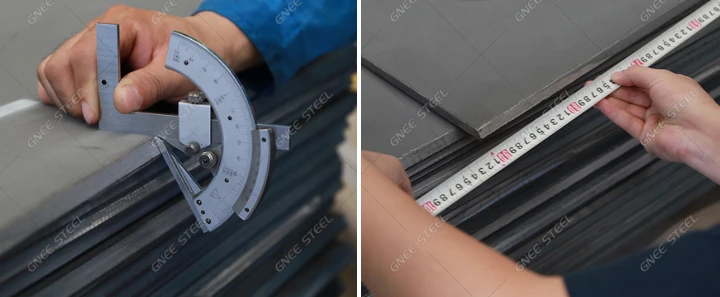
Standard plate widths range from 1,500 mm to 2,500 mm, and standard lengths from 6,000 mm to 12,000 mm. Custom widths, very wide plates, or extra-long plates may require special rolling setups or have limited mill availability, which can add 5–15% to the price. Non-standard dimensions also increase cutting waste and may impact per-piece pricing for cut-to-length orders.
9. Surface Treatment & Tolerance Class
| Surface / Tolerance Option | Cost Add (USD/MT) |
|---|---|
| Shot blasting (SA 2.5) + shop primer | + 40 – 80 |
| Cut-to-size / profile cutting | + 20 – 50 |
| HRPO (hot rolled pickled & oiled) | + 30 – 60 |
| EN 10029 Class C tolerance (vs Class A) | + 5 – 20 |
10. Delivery Terms & Logistics
Always compare quotations on the same Incoterms basis. The lowest EXW or FOB price is not necessarily the lowest landed cost at your facility. Consider:
- EXW (Ex-Works): lowest quoted price, but you handle everything
- FOB (Free On Board): best term for comparing suppliers on an equal basis
- CFR / CIF: includes ocean freight and insurance - easier but less transparent
Ocean freight and inland transport can add 5–15% to the total cost depending on destination port and volume.
11. Market Conditions
Steel plate prices are dynamic and respond to:
- Raw material indices (iron ore, steel scrap, slab prices)
- Alloy commodity prices (nickel, molybdenum, manganese)
- Mill capacity utilization and order backlogs
- Energy costs (rolling and heat treatment are energy-intensive)
- Trade policies and tariffs (can add 10–20% or more)
- Standard quote validity ranges from 7–15 days in volatile markets to 30 days in more stable periods.
12. Value-Added Processing
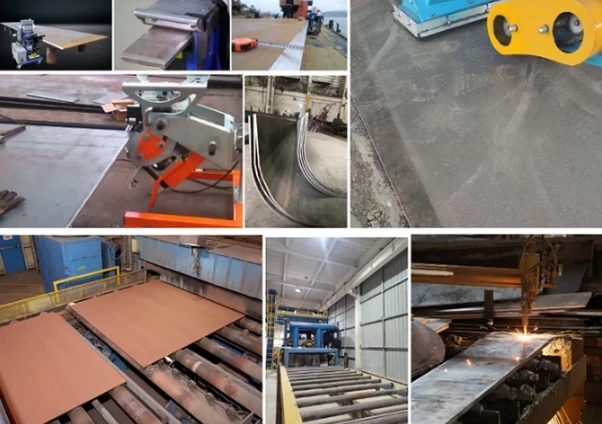
If you need the plate processed before delivery - CNC cutting, beveling, drilling, bending, or painting - each additional step adds labor, equipment time, and material loss. While processing adds to the upfront cost, it can reduce your total landed cost by eliminating in-house processing steps and reducing scrap.
Pro tip: Always compare total landed cost, not just unit price. A slightly higher FOB price from a supplier who can provide cut-to-size parts with UT testing and 3.2 certification may actually cost less than sourcing from multiple vendors and handling processing yoursel
How to Get an Accurate S690QL Quote?
To get the most accurate and comparable quotations, include all of the following information in your RFQ:
Full grade designation (e.g., S690QL, not just "high strength steel")
- Standard reference (EN 10025-6)
- Thickness range required (specify exact thicknesses, not just ranges)
- Width and length requirements (or cut-to-size dimensions)
- Total quantity and quantity per thickness / size
- Delivery condition (Q+T - already implied for S690QL)
- Impact toughness class confirmation (Q / QL / QL1)
- Additional testing requirements (UT, Z-direction, HIC, etc.)
- Certificate type (EN 10204 3.1 or 3.2)
- Surface treatment or processing requirements
- Thickness tolerance class (EN 10029 Class A / B / C)
- Destination port / delivery address
- Required delivery timeline
The price of S690QL steel plate is not a single number - it is the sum of many variables that reflect exactly what you are buying. The cheapest quote is not always the best value if it skips critical testing, uses a lower toughness grade, or has hidden logistics costs.
By understanding the 12 factors above, you can write better RFQs, compare quotations more accurately, and make informed decisions that balance cost, quality, and delivery for your project.
🚀 Ready to get a real price for your S690QL plate requirement?
Skip the guesswork. Send us your complete specification using our RFQ checklist above, and you will receive a detailed, itemized quotation within 24 working hours. We stock S690QL plates from 6 mm to 120 mm and can arrange custom rolling for project-specific requirements.
Request Your Custom Quote Now →

FAQ
Why is S690QL more expensive than S355 steel plate?
S690QL contains significantly more alloying elements (nickel, molybdenum, chromium) and requires quenched and tempered heat treatment - both of which add cost compared to S355, which can be delivered in as-rolled or normalized condition. The higher strength-to-weight ratio, however, often means less total steel is needed for a project, offsetting the higher per-ton cost.
How long are S690QL quotes valid?
Quote validity depends on market conditions. In stable markets, quotes are typically valid for 30 days. In volatile periods (when raw material prices are moving rapidly), validity may be as short as 7–15 days. Always confirm validity period when you receive a quote.
Are there cheaper alternatives to S690QL?
If your project does not require -40°C toughness, S690Q (tested at -20°C) is about 15% less expensive. For applications where even lower strength is acceptable, S460NL or S500MC can be cost-effective alternatives. However, the higher strength of S690QL enables weight reduction - so always evaluate total project cost, not just per-ton plate price.


