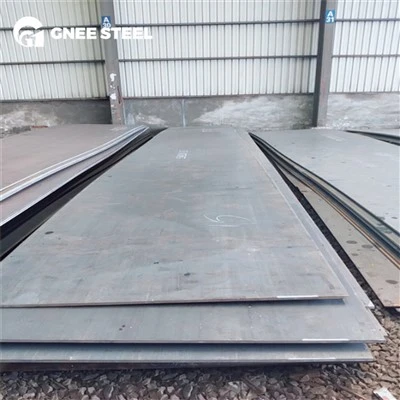
Hey there! As a supplier of GB Pressure Vessel Plate, I've been in the thick of it, dealing with different production batches day in and day out. And let me tell you, there are some pretty interesting differences between these batches.
First off, let's talk about the chemical composition. Each production batch might have slight variations in the chemical makeup of the GB Pressure Vessel Plate. For instance, elements like carbon, manganese, silicon, and sulfur can vary a bit. These differences can have a big impact on the plate's properties. Carbon, for example, affects the strength and hardness of the plate. A batch with a slightly higher carbon content might be stronger but could also be more brittle.
- Manganese is another key element. It helps improve the strength and toughness of the steel. In some batches, the manganese level might be a bit higher, making the plate more resistant to wear and tear. Silicon is used to deoxidize the steel during the manufacturing process. If the silicon content varies between batches, it can affect the plate's ability to withstand high temperatures and pressures.
- Sulfur is generally considered an impurity in steel. A lower sulfur content is usually better as it can improve the weldability and ductility of the plate. So, different production batches might have different sulfur levels, which can influence how well the plate can be welded and formed.
Now, let's move on to the mechanical properties.
- The strength and hardness of the GB Pressure Vessel Plate can vary from batch to batch. Tensile strength, yield strength, and elongation are important mechanical properties to consider. A batch with a higher tensile strength can withstand more stress before breaking. Yield strength indicates the point at which the material starts to deform plastically.
- Elongation measures how much the plate can stretch before it breaks. Different production processes and heat treatments can lead to variations in these mechanical properties. For example, if a batch is heat-treated differently, it can have a significant impact on its strength and ductility.
Surface quality is another area where differences can occur between production batches.
The surface finish of the plate can vary. Some batches might have a smoother surface, while others could have a slightly rougher texture. This can affect the plate's corrosion resistance and its appearance. A smoother surface is generally more resistant to corrosion as it has fewer crevices where moisture and other corrosive agents can accumulate.
In terms of dimensions, there can also be differences between batches.
The thickness, width, and length of the GB Pressure Vessel Plate might vary slightly. These dimensional variations can be due to factors such as the accuracy of the manufacturing equipment and the tolerances allowed in the production process.

Now, let's take a look at some specific types of GB Pressure Vessel Plate. The GB Q345 Pressure Vessel Plate is a popular choice. It has good strength and weldability. However, different production batches of this plate might have slightly different properties. For example, one batch might have a better balance between strength and ductility compared to another.
The GB Q345R Q245R Pressure Vessel Steel Plate is also widely used. It's known for its good toughness and resistance to corrosion. But again, the properties can vary between batches. Some batches might have a higher level of corrosion resistance due to differences in the chemical composition or surface treatment.


The 12Cr2Mo1R Steel For Pressure Vessel is a high - alloy steel used in high - pressure applications. Different production batches of this steel can have variations in its high - temperature performance. Some batches might be more resistant to creep and fatigue at high temperatures.
So, as you can see, there are many differences between different production batches of GB Pressure Vessel Plate. These differences can have a significant impact on the performance and suitability of the plate for different applications.
If you're in the market for GB Pressure Vessel Plate, it's important to work with a reliable supplier. We, as a supplier, understand these differences and can help you choose the right batch for your specific needs. Whether you need a plate with high strength, good weldability, or excellent corrosion resistance, we've got you covered.
If you're interested in purchasing GB Pressure Vessel Plate, don't hesitate to reach out. We're here to answer all your questions and provide you with the best quality products at competitive prices. Let's have a chat and see how we can meet your requirements.
References:
- Steel Industry Handbook
- Pressure Vessel Design and Manufacturing Standards