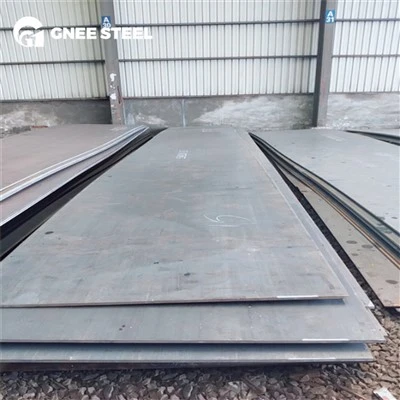
Hey there! As a supplier of GB Low Alloy Steel Plate, I'm super stoked to share with you all about the bending process of these plates. It's a topic that's not only fascinating but also crucial for anyone working with this type of steel.

First off, let's understand what GB Low Alloy Steel Plate is. These plates are made from low - alloy steel that conforms to the Chinese national standards (GB). They're known for their high strength, good toughness, and excellent weldability. They're used in a wide range of applications, from construction to machinery manufacturing.
Pre - bending Preparation
Before we start the bending process, there are a few things we need to do. First, we have to check the quality of the steel plate. We look for any surface defects like cracks, scratches, or unevenness. If there are any issues, it could affect the bending quality and the final performance of the product.
We also need to determine the correct bending radius. This is super important because it affects how the plate will bend and whether it will crack or not. The bending radius depends on several factors, such as the thickness of the plate, the type of steel, and the bending method we're going to use.
Another crucial step is to clean the surface of the steel plate. Any dirt, oil, or rust on the surface can cause problems during the bending process. We use special cleaning agents to make sure the plate is clean and ready for bending.

Bending Methods
There are several methods for bending GB Low Alloy Steel Plates, and each has its own pros and cons.
Roll Bending
Roll bending is one of the most common methods. In this process, the steel plate is passed through a set of rollers. The rollers apply pressure to the plate, gradually bending it into the desired shape. Roll bending is great for making cylindrical or conical shapes. It's a relatively simple and efficient method, but it might not be suitable for complex shapes.
For example, if you're making a large - diameter pipe using Q690D Low Alloy Steel Plate, roll bending would be a good choice. The plate can be fed through the rollers, and with the right settings, you can get a smooth and accurate bend.
Press Bending
Press bending involves using a press machine to apply force to the steel plate. The plate is placed between a die and a punch, and the press applies pressure to bend the plate. This method is more suitable for making sharp bends and complex shapes.
Let's say you're making a part with a 90 - degree bend using Q500D Low Alloy Steel Plate. Press bending can give you a precise and clean bend. However, it requires more precise tooling and setup compared to roll bending.
Rotary Draw Bending
Rotary draw bending is often used for making tubes and pipes. In this process, the steel plate is bent around a mandrel while being pulled through a die. This method can produce very accurate bends with a high - quality finish.
If you're working on a project that requires a lot of small - diameter bends, like in some machine parts made from GB Q460C Low Alloy Steel Plate, rotary draw bending would be a great option.
Bending Parameters
During the bending process, we need to pay close attention to several parameters.
Bending Force
The bending force is the amount of force required to bend the steel plate. It depends on the thickness and strength of the plate, as well as the bending radius. If the bending force is too low, the plate won't bend properly. If it's too high, it can cause the plate to crack or deform.
Bending Speed
The bending speed also matters. A too - fast bending speed can cause the plate to crack, especially if it's a thick or high - strength plate. On the other hand, a too - slow speed can be inefficient. We usually adjust the bending speed based on the type of steel and the bending method.
Temperature
Temperature can have a big impact on the bending process. For some low - alloy steels, bending at a higher temperature can make the plate more ductile and easier to bend. However, we need to be careful not to overheat the plate, as it can affect the mechanical properties of the steel.
Post - bending Treatment
After the bending process, we usually perform some post - bending treatments.
Heat Treatment
Heat treatment can help relieve the internal stresses in the bent plate. It can also improve the mechanical properties of the steel, such as its strength and toughness. We might use processes like annealing or tempering, depending on the specific requirements of the product.
Surface Treatment
We also need to do some surface treatment to protect the bent plate from corrosion. This can involve painting, galvanizing, or applying a protective coating.
Quality Control
Quality control is an essential part of the bending process. We use various methods to ensure that the bent plates meet the required standards.
Visual Inspection
We visually inspect the bent plates for any surface defects, such as cracks, wrinkles, or unevenness. Any defective plates are rejected or re - worked.
Dimensional Inspection
We measure the dimensions of the bent plates to make sure they meet the design requirements. This includes checking the bending radius, angle, and length.
Mechanical Testing
We might also perform mechanical tests, such as tensile tests and hardness tests, to ensure that the mechanical properties of the bent plates are within the acceptable range.
Why Choose Our GB Low Alloy Steel Plates
If you're in the market for GB Low Alloy Steel Plates, we've got some great reasons for you to choose us. Our plates are made from high - quality materials and are produced using advanced manufacturing processes. We have strict quality control measures in place to ensure that every plate meets the highest standards.
Whether you need Q690D Low Alloy Steel Plate, Q500D Low Alloy Steel Plate, or GB Q460C Low Alloy Steel Plate, we can provide you with the right product for your needs. And if you have any questions about the bending process or need help with your project, our team of experts is always here to assist you.
If you're interested in purchasing our GB Low Alloy Steel Plates, don't hesitate to get in touch with us. We're more than happy to discuss your requirements and provide you with a quote. Let's work together to make your project a success!
References
- "Steel Plate Fabrication Handbook"
- "Low - Alloy Steel: Properties and Applications"