

Hey there! As a supplier of ASTM Low Alloy Steel Plate, I've seen firsthand how alloying elements can really shake things up when it comes to the performance of these plates. So, let's dive into what these effects are and why they matter.
The Basics of ASTM Low Alloy Steel Plate
First off, ASTM Low Alloy Steel Plates are a big deal in the industry. They're used in all sorts of applications, from construction to manufacturing, because they offer a great balance of strength, toughness, and weldability. But what makes them so special? Well, it's all about the alloying elements that are added to the base steel.
Common Alloying Elements and Their Effects
Manganese (Mn)
Manganese is one of the most commonly used alloying elements in low alloy steel plates. It's like the unsung hero that helps improve the strength and hardness of the steel. When you add manganese to the mix, it forms solid solutions with iron, which helps to strengthen the crystal structure of the steel. This means that the steel can withstand more stress without deforming or breaking.
For example, in our A514 Grade P Low Alloy Steel Plate, manganese plays a crucial role in giving it the high strength and toughness that it's known for. This makes it ideal for applications where you need a steel plate that can handle heavy loads, like in bridge construction or heavy machinery.
Chromium (Cr)
Chromium is another important alloying element. It's well - known for its ability to improve the corrosion resistance of the steel. When chromium is added to the steel, it forms a thin, protective oxide layer on the surface. This layer acts as a barrier, preventing oxygen and moisture from reaching the steel underneath and causing rust.
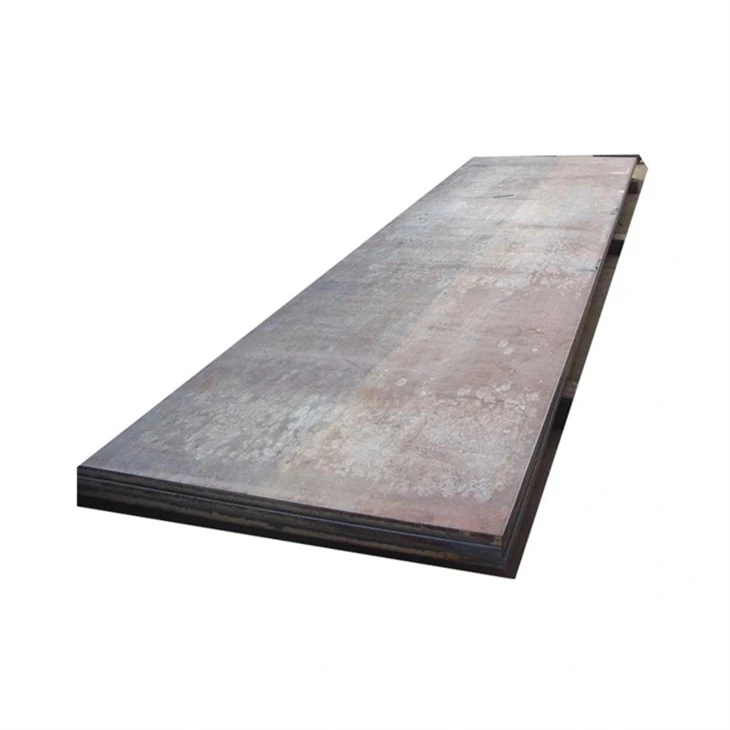

Our A656 Grade 80 Low Alloy Steel Plate benefits from the addition of chromium. In environments where the steel is exposed to harsh chemicals or weather conditions, the chromium helps to keep the plate in good shape for a longer time. This is especially important in industries like offshore oil and gas, where corrosion can be a major problem.
Nickel (Ni)
Nickel is great for improving the toughness and ductility of the steel. It helps the steel to bend and stretch without cracking, which is really important in applications where the steel might be subjected to impact or shock loads.
In our A633 Grade C Low Alloy Steel Plate, nickel is added to enhance its low - temperature toughness. This makes it suitable for use in cold environments, like in Arctic construction projects or refrigerated storage facilities.
Molybdenum (Mo)
Molybdenum is often added to improve the hardenability and creep resistance of the steel. Hardenability refers to how easily the steel can be hardened through heat treatment. Molybdenum helps the steel to form a more uniform and fine - grained structure during heat treatment, which results in better strength and toughness.
Creep resistance is important in applications where the steel is exposed to high temperatures and constant stress over a long period of time. For example, in power plants or high - temperature manufacturing processes, molybdenum - containing low alloy steel plates can maintain their shape and strength, preventing failures.
Interaction Between Alloying Elements
It's not just about the individual effects of each alloying element. The interaction between them also plays a huge role. Sometimes, two or more alloying elements can work together to produce even better results than they would on their own.
For instance, when chromium and nickel are combined, they can provide excellent corrosion resistance and high - temperature strength. This combination is often used in applications where the steel needs to perform well in both corrosive and high - temperature environments, like in chemical processing plants.
Impact on Manufacturing Processes
The alloying elements also have an impact on the manufacturing processes of ASTM Low Alloy Steel Plates. For example, some alloying elements can affect the weldability of the steel. If the steel contains too much of certain elements, it might be more difficult to weld, which can increase the cost and time of manufacturing.
However, by carefully controlling the composition of the alloying elements, we can ensure that the steel plates have good weldability. This means that our customers can use our plates in their manufacturing processes without having to worry too much about welding issues.
Cost Considerations
Of course, adding alloying elements to the steel comes at a cost. Some elements, like nickel and molybdenum, are more expensive than others. But the benefits that they bring, such as improved performance and longer service life, often outweigh the additional cost.
When choosing an ASTM Low Alloy Steel Plate, it's important to consider the specific requirements of your application. If you need a plate with high corrosion resistance, then the extra cost of adding chromium might be worth it. On the other hand, if you're working on a budget - sensitive project, you might need to find a balance between the performance and the cost of the alloying elements.
Why Choose Our ASTM Low Alloy Steel Plates
As a supplier, we take pride in offering high - quality ASTM Low Alloy Steel Plates. We carefully select the alloying elements and control the manufacturing process to ensure that our plates meet the highest standards.
Whether you need a plate with high strength, excellent corrosion resistance, or good low - temperature toughness, we've got you covered. Our A514 Grade P Low Alloy Steel Plate, A656 Grade 80 Low Alloy Steel Plate, and A633 Grade C Low Alloy Steel Plate are just a few examples of our top - notch products.
If you're in the market for ASTM Low Alloy Steel Plates, don't hesitate to reach out. We're here to help you find the right plate for your needs and answer any questions you might have. Whether it's about the alloying elements, the manufacturing process, or the application of the plates, we've got the expertise to guide you through the process. Let's start a conversation and see how we can work together to make your project a success.
References
- "Steels: Processing, Structure, and Performance" by George Krauss
- "Metallurgy for the Non - Metallurgist" by John D. Verhoeven
- ASTM International Standards for Low Alloy Steel Plates


