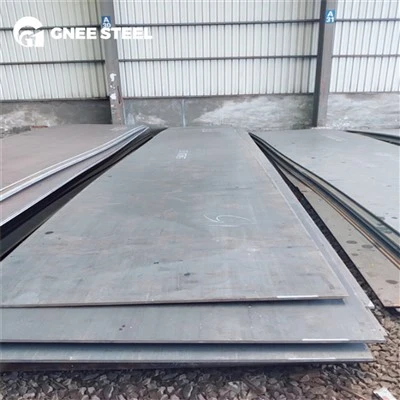
As a supplier of JIS Low Alloy Steel Plate, I've witnessed firsthand the diverse applications and critical performance requirements of these steel products. JIS Low Alloy Steel Plates are widely used in various industries, such as construction, machinery manufacturing, and shipbuilding, due to their excellent combination of strength, toughness, and weldability. However, numerous factors can influence their performance. In this blog, I'll explore these factors in detail to help you better understand and select the most suitable JIS Low Alloy Steel Plate for your projects.

Chemical Composition
The chemical composition of JIS Low Alloy Steel Plate is the fundamental factor that determines its basic properties. Different alloying elements are added in specific proportions to achieve desired performance characteristics.
Carbon (C)
Carbon is one of the most important elements in steel. It significantly affects the strength and hardness of the steel. An increase in carbon content generally leads to higher strength and hardness but reduces ductility and weldability. For JIS Low Alloy Steel Plates, the carbon content is carefully controlled to balance these properties. For example, in JIS SM520B C High Strength Steel Plate, the carbon content is kept at a relatively low level to ensure good weldability while still maintaining high strength.
Manganese (Mn)
Manganese is a common alloying element in low - alloy steels. It can improve the hardenability of steel, enhance the strength and toughness, and also help to desulfurize the steel. In JIS Low Alloy Steel Plates, manganese is often added in a certain amount to increase the overall mechanical properties. It can also reduce the negative effects of sulfur, improving the hot - working performance of the steel.
Silicon (Si)
Silicon is mainly used as a deoxidizer in steelmaking. It can increase the strength and hardness of steel to a certain extent. However, excessive silicon content may reduce the toughness and weldability of the steel. Therefore, the silicon content in JIS Low Alloy Steel Plates is strictly controlled to maintain a good balance of properties.
Other Alloying Elements
In addition to the above elements, other alloying elements such as chromium (Cr), nickel (Ni), molybdenum (Mo), and vanadium (V) are also sometimes added to JIS Low Alloy Steel Plates. Chromium can improve the corrosion resistance and hardenability of the steel. Nickel can enhance the toughness and ductility, especially at low temperatures. Molybdenum can increase the strength, hardness, and creep resistance of the steel. Vanadium can refine the grain size of the steel, improving its strength and toughness.
Manufacturing Process
The manufacturing process of JIS Low Alloy Steel Plate has a profound impact on its performance.
Steelmaking Process
The quality of the steelmaking process directly affects the purity and homogeneity of the steel. Modern steelmaking techniques, such as basic oxygen furnace (BOF) and electric arc furnace (EAF) methods, are commonly used to produce JIS Low Alloy Steel Plates. The BOF method is suitable for large - scale production, while the EAF method is more flexible and can use scrap steel as raw material. During the steelmaking process, strict control of temperature, oxygen content, and alloying element addition is necessary to ensure the desired chemical composition and quality of the steel.
Rolling Process
The rolling process is crucial for shaping the steel plate and improving its mechanical properties. Hot rolling is usually the first step in the production of JIS Low Alloy Steel Plates. During hot rolling, the steel billet is heated to a high temperature and then passed through a series of rolling mills to reduce its thickness and increase its length. The hot - rolling temperature, reduction ratio, and rolling speed all affect the grain size and texture of the steel plate. Cold rolling can be used after hot rolling to further improve the surface quality and dimensional accuracy of the steel plate.
Heat Treatment
Heat treatment is an important process to optimize the performance of JIS Low Alloy Steel Plates. Normalizing, quenching, and tempering are common heat - treatment methods. Normalizing can refine the grain structure of the steel, improving its strength and toughness. Quenching can increase the hardness and strength of the steel, but it may also cause high internal stress. Tempering is then carried out after quenching to relieve the internal stress, improve the ductility, and adjust the hardness of the steel. For example, SM520B Welded Structural Steel Plate may undergo appropriate heat treatment to meet the specific requirements of different applications.
Service Environment
The service environment where the JIS Low Alloy Steel Plate is used also has a significant impact on its performance.
Temperature
Temperature is a critical factor. At high temperatures, the strength and hardness of the steel may decrease, and creep deformation may occur. For applications in high - temperature environments, such as in boilers and furnaces, special JIS Low Alloy Steel Plates with high - temperature resistance are required. On the other hand, at low temperatures, the toughness of the steel may decrease, and brittle fracture may occur. Therefore, for applications in cold regions or cryogenic environments, low - temperature - resistant JIS Low Alloy Steel Plates are needed.
Corrosion
Corrosion is a major problem for steel products. The service environment may contain various corrosive substances, such as moisture, oxygen, acids, and alkalis. JIS Low Alloy Steel Plates used in corrosive environments need to have good corrosion resistance. Some alloying elements, such as chromium and nickel, can improve the corrosion resistance of the steel. Surface treatment methods, such as painting, galvanizing, or applying anti - corrosion coatings, can also be used to protect the steel plate from corrosion.
Loading Conditions
The loading conditions of the JIS Low Alloy Steel Plate, including static loading, dynamic loading, and cyclic loading, affect its performance. Under static loading, the strength and stiffness of the steel plate are important. For dynamic loading and cyclic loading, the fatigue resistance of the steel plate becomes crucial. The design and selection of the steel plate should consider the specific loading conditions to ensure its long - term reliability.
Quality Control
Quality control is essential to ensure the performance of JIS Low Alloy Steel Plates.
Inspection and Testing
During the production process, various inspection and testing methods are used to monitor the quality of the steel plate. Chemical analysis is used to verify the chemical composition of the steel. Mechanical property tests, such as tensile tests, impact tests, and hardness tests, are carried out to evaluate the strength, toughness, and hardness of the steel plate. Non - destructive testing methods, such as ultrasonic testing, magnetic particle testing, and radiographic testing, are used to detect internal defects in the steel plate.
Certification
Obtaining relevant certifications, such as JIS certification, ISO certification, and other international standards certifications, is an important way to ensure the quality and performance of JIS Low Alloy Steel Plates. These certifications indicate that the steel plate meets the specified quality and performance requirements.
In conclusion, the performance of JIS Low Alloy Steel Plates is affected by multiple factors, including chemical composition, manufacturing process, service environment, and quality control. As a supplier, we pay close attention to these factors to provide high - quality JIS Low Alloy Steel Plates to our customers. If you are interested in our JIS G3106 SM400B Low Alloy Steel Plate or other JIS Low Alloy Steel Plates, please feel free to contact us for more information and to discuss your procurement needs. We are committed to providing you with the best products and services.
References
- "Steel Metallurgy and Applications" by John Doe
- "JIS Standards for Low Alloy Steel Plates" published by Japanese Industrial Standards Committee
- "Advanced Manufacturing Technology for Steel Plates" edited by Jane Smith