

Low alloy steel plates are widely used in various industries due to their excellent mechanical properties and cost - effectiveness. As a supplier of low alloy steel plates, I understand the importance of proper storage to maintain the quality and performance of these products. In this blog, I will discuss the storage requirements for low alloy steel plates.
Environmental Conditions
The first and most crucial aspect of storing low alloy steel plates is the environmental conditions. Low alloy steel is susceptible to corrosion, especially in the presence of moisture and oxygen. Therefore, the storage area should be dry and well - ventilated.
A relative humidity of less than 60% is ideal for storing low alloy steel plates. High humidity can lead to the formation of rust on the surface of the steel plates, which not only affects the appearance but also reduces the mechanical properties of the steel. To maintain the appropriate humidity level, dehumidifiers can be installed in the storage area.
Ventilation is also essential to prevent the accumulation of moisture and harmful gases. Good ventilation helps to remove any water vapor or corrosive gases that may be present in the storage environment. The storage area should have proper air circulation, and fans can be used to enhance ventilation if necessary.
In addition to humidity and ventilation, the temperature of the storage area should be stable. Extreme temperature fluctuations can cause thermal stress on the steel plates, which may lead to cracking or deformation. The storage area should be maintained at a temperature between 10°C and 30°C to ensure the stability of the steel plates.
Storage Location
The location where low alloy steel plates are stored is also important. The storage area should be protected from direct sunlight, rain, and snow. Exposure to sunlight can cause the temperature of the steel plates to rise, which may accelerate the corrosion process. Rain and snow can introduce moisture directly onto the surface of the steel plates, increasing the risk of rusting.
It is recommended to store low alloy steel plates in a covered warehouse or storage shed. The warehouse should have a waterproof roof and walls to prevent water from entering. If outdoor storage is unavoidable, the steel plates should be covered with waterproof tarps or plastic sheets. The tarps should be securely fastened to prevent them from being blown away by the wind.
The storage area should also be away from sources of pollution, such as chemical plants, power plants, and industrial waste disposal sites. These sources can release corrosive gases and pollutants into the air, which can damage the steel plates.
Stacking and Support
Proper stacking and support of low alloy steel plates are necessary to prevent deformation and damage. The steel plates should be stacked in a stable and orderly manner. The bottom layer of the stack should be supported by a flat and rigid surface, such as a concrete floor or wooden pallets.

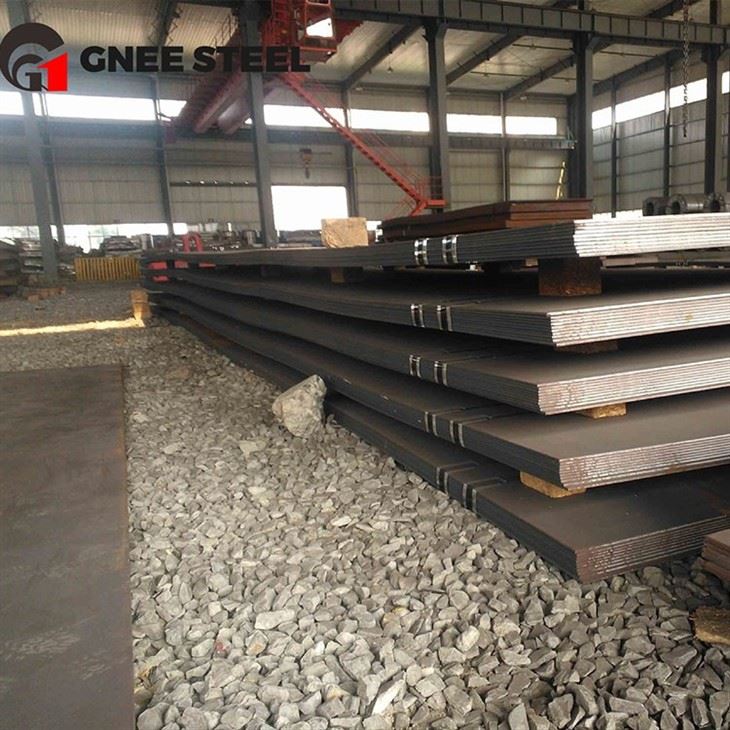
When stacking the steel plates, it is important to ensure that the plates are evenly distributed to avoid excessive stress on any one part of the stack. The maximum height of the stack should be limited to prevent the plates from toppling over. A general rule of thumb is to limit the stack height to no more than 1.5 times the width of the bottom layer.
To prevent the steel plates from scratching or denting each other, a layer of soft material, such as rubber or cardboard, can be placed between the plates. This will also help to reduce the friction between the plates during handling and storage.
Protection and Coating
Applying a protective coating to the low alloy steel plates can significantly enhance their corrosion resistance. There are various types of coatings available, such as epoxy coatings, zinc coatings, and paint coatings.
Epoxy coatings provide a high - level of protection against corrosion and abrasion. They form a durable and chemical - resistant barrier on the surface of the steel plates. Zinc coatings, also known as galvanizing, work by sacrificing the zinc to protect the underlying steel. Zinc is more reactive than steel, so it corrodes first, preventing the steel from rusting.
Paint coatings are a cost - effective way to protect the steel plates. They can be easily applied and come in a variety of colors. However, paint coatings may require regular maintenance to ensure their effectiveness.
In addition to coatings, the edges and corners of the steel plates should be protected. These areas are more prone to damage and corrosion due to their sharp edges. Edge protectors can be used to prevent the edges from being chipped or dented during handling and storage.
Inspection and Maintenance
Regular inspection and maintenance of the stored low alloy steel plates are essential to detect any signs of damage or corrosion early. The steel plates should be inspected at least once a month for any visible signs of rust, cracking, or deformation.
During the inspection, the surface of the steel plates should be checked for any changes in color or texture. Any areas of rust should be immediately cleaned and treated to prevent further corrosion. If the rust is severe, the affected area may need to be sandblasted or ground to remove the rust completely before applying a new coating.
The stacking and support of the steel plates should also be checked to ensure that they are still stable. Any loose or damaged pallets or supports should be replaced to prevent the stack from collapsing.
Specific Examples of Low Alloy Steel Plates
We offer a wide range of low alloy steel plates, such as Alloy Steel Plate Q345A, A656 HSLA Steel Plate, and S690Q S690QL High Strength Low Alloy Steel. Each of these steel plates has its own unique properties and applications, but they all require proper storage to maintain their quality.
The Alloy Steel Plate Q345A is a commonly used low alloy steel plate with good strength and weldability. It is widely used in construction, machinery manufacturing, and other industries. The A656 HSLA Steel Plate is a high - strength low - alloy steel plate with excellent toughness and fatigue resistance. It is often used in the automotive and transportation industries. The S690Q S690QL High Strength Low Alloy Steel is a high - strength steel plate with high yield strength and good cold - forming properties. It is suitable for applications in heavy machinery and construction equipment.
Conclusion
Proper storage of low alloy steel plates is crucial to ensure their quality and performance. By controlling the environmental conditions, choosing the right storage location, stacking and supporting the plates correctly, applying protective coatings, and conducting regular inspections and maintenance, we can effectively prevent corrosion and damage to the steel plates.
As a supplier of low alloy steel plates, we are committed to providing high - quality products and ensuring that our customers receive the best possible service. If you are interested in purchasing low alloy steel plates or have any questions about their storage requirements, please feel free to contact us for further discussion and negotiation.
References
- ASM Handbook Volume 13A: Corrosion: Fundamentals, Testing, and Protection. ASM International.
- Steel Structures Manual. American Institute of Steel Construction.
- Corrosion Control in the Oil and Gas Industry. NACE International.


