

What is the impact resistance of JIS Corten Steel Plate?
As a supplier of JIS Corten Steel Plate, I've had numerous inquiries regarding its various properties, with impact resistance being a particularly crucial aspect. In this blog, I aim to delve into the impact resistance of JIS Corten Steel Plate, exploring its significance, influencing factors, and practical applications.
Understanding Impact Resistance
Impact resistance refers to a material's ability to withstand sudden forces or impacts without undergoing significant deformation or failure. When a JIS Corten Steel Plate is subjected to an impact, it needs to absorb the energy from that impact and distribute it across its structure to prevent cracks or fractures. This property is of utmost importance in many industries, especially those where the steel plates are exposed to dynamic loads, such as construction, transportation, and heavy machinery.
Factors Affecting the Impact Resistance of JIS Corten Steel Plate
Chemical Composition
The chemical composition of JIS Corten Steel Plate plays a vital role in determining its impact resistance. This type of steel typically contains elements such as copper, chromium, nickel, and phosphorus. Copper enhances the corrosion resistance and also contributes to the overall strength of the steel, which in turn affects its ability to resist impacts. Chromium forms a passive oxide layer on the surface, protecting the steel from corrosion and helping maintain its structural integrity during impact. Nickel improves the toughness of the steel, making it more resistant to cracking under impact. Phosphorus increases the strength and hardness of the steel, which can enhance its impact resistance.
Microstructure
The microstructure of the steel is another key factor. A fine-grained microstructure generally leads to better impact resistance. During the manufacturing process, the cooling rate and heat treatment can be controlled to achieve a desirable microstructure. For example, a quenching and tempering process can refine the grain size and improve the toughness of the JIS Corten Steel Plate, thereby enhancing its ability to withstand impacts.

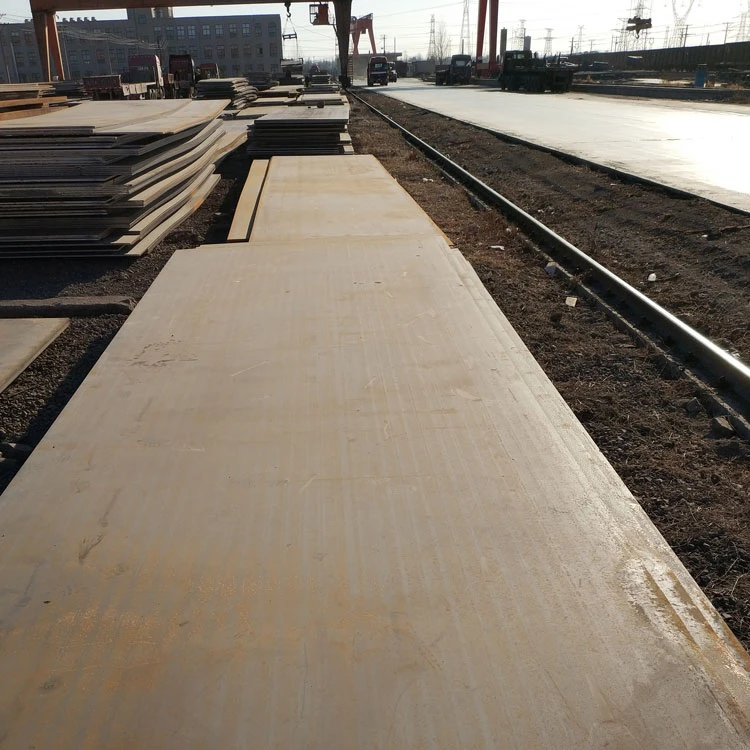
Thickness and Shape
The thickness and shape of the JIS Corten Steel Plate also influence its impact resistance. Thicker plates generally have higher impact resistance as they can absorb more energy. However, the relationship between thickness and impact resistance is not always linear, as other factors such as the distribution of stress within the plate also come into play. The shape of the plate can affect how the impact energy is distributed. For instance, plates with rounded edges or smooth surfaces may have better impact resistance compared to those with sharp corners, as sharp corners can act as stress concentrators and increase the likelihood of cracking.
Testing the Impact Resistance of JIS Corten Steel Plate
There are several standard tests used to evaluate the impact resistance of JIS Corten Steel Plate. One of the most common tests is the Charpy impact test. In this test, a notched specimen of the steel plate is struck by a pendulum, and the energy absorbed during the fracture is measured. The higher the energy absorbed, the better the impact resistance of the steel. Another test is the Izod impact test, which is similar to the Charpy test but uses a different specimen configuration. These tests provide valuable information about the steel's ability to withstand sudden impacts at different temperatures.
Practical Applications and the Role of Impact Resistance
Construction
In the construction industry, JIS Corten Steel Plate is widely used in building structures, bridges, and high - rise buildings. The impact resistance of the steel is crucial in ensuring the safety and durability of these structures. For example, in areas prone to earthquakes or high - wind conditions, the steel plates need to be able to withstand sudden impacts and dynamic loads. A bridge made of JIS Corten Steel Plate with good impact resistance can better withstand the forces exerted by traffic, wind, and seismic activity. You can find high - quality SPA - H Weather Resistance Steel Plate suitable for construction applications on our website.
Transportation
In the transportation sector, JIS Corten Steel Plate is used in the manufacturing of vehicles such as trucks, trains, and ships. These vehicles are often exposed to impacts during normal operation, such as collisions with other objects or sudden stops. The impact resistance of the steel helps to protect the vehicle's structure and the safety of its occupants. For example, the body of a truck made of JIS Corten Steel Plate with high impact resistance can better withstand minor collisions and reduce the risk of severe damage. Hot - Rolled SPA - H Weathering Steel Coils are also a popular choice for transportation applications due to their excellent properties.
Heavy Machinery
Heavy machinery, such as cranes, excavators, and mining equipment, is subject to high - impact loads during operation. JIS Corten Steel Plate with good impact resistance is used to manufacture the critical components of these machines. For example, the boom of a crane needs to be able to withstand the weight of the load and the dynamic forces during lifting and movement. Using steel plates with high impact resistance can extend the service life of the machinery and reduce the risk of failures. Corten Steel JIS G3125 SPA - H For Bridegs Sculpture can also be adapted for some heavy - machinery applications where both strength and impact resistance are required.
Conclusion
The impact resistance of JIS Corten Steel Plate is a critical property that determines its suitability for a wide range of applications. By understanding the factors that affect impact resistance, such as chemical composition, microstructure, thickness, and shape, we can ensure that the steel plates meet the specific requirements of different industries. Through proper testing and quality control, we can provide high - quality JIS Corten Steel Plate with excellent impact resistance.
If you are in the market for JIS Corten Steel Plate and need a reliable supplier, feel free to contact us for more information and to discuss your specific requirements. We are committed to providing the best - quality products and services to meet your needs.
References
- ASM Handbook Committee. (2005). ASM Handbook Volume 1: Properties and Selection: Irons, Steels, and High - Performance Alloys. ASM International.
- Bhadeshia, H. K. D. H., & Honeycombe, R. W. K. (2006). Steels: Microstructure and Properties. Elsevier Butterworth - Heinemann.
- Degarmo, E. P., Black, J. T., & Kohser, R. A. (2003). Materials and Processes in Manufacturing. John Wiley & Sons.


