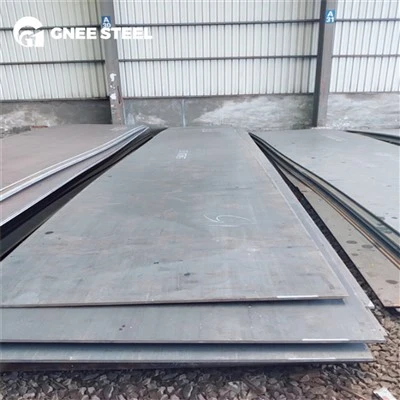
As a supplier of ASTM Alloy Steel Plate, I've witnessed firsthand the intricate relationship between low - alloy content and the properties of these plates. Low - alloy steel, by definition, contains a relatively small amount of alloying elements compared to high - alloy steels. These alloying elements, which typically include elements such as chromium, nickel, molybdenum, and vanadium, are added in small quantities to enhance specific properties of the steel.
1. Strength and Hardness
One of the most significant impacts of low - alloy content on ASTM Alloy Steel Plates is on their strength and hardness. Alloying elements can increase the strength of the steel through various mechanisms. For example, elements like manganese and silicon can dissolve in the iron matrix, strengthening it through solid - solution strengthening. This process involves the alloying atoms fitting into the crystal lattice of the iron, disrupting the regular arrangement of atoms and making it more difficult for dislocations to move. As a result, the steel becomes stronger and harder.
In the case of ASTM 4140 Alloy Steel Plate, the addition of chromium and molybdenum in relatively low amounts significantly enhances its strength and hardenability. Chromium forms carbides in the steel, which are hard and help to increase the overall hardness. Molybdenum, on the other hand, improves the hardenability of the steel, allowing it to achieve a more uniform hardness throughout the cross - section when heat - treated. This makes ASTM 4140 ideal for applications where high strength and toughness are required, such as in the manufacturing of shafts, gears, and structural components.

2. Toughness
Toughness is another important property affected by low - alloy content. Toughness refers to the ability of the steel to absorb energy and deform plastically before fracturing. Low - alloying elements can improve toughness by refining the grain structure of the steel. For instance, vanadium is often added in small amounts to ASTM Alloy Steel Plates. Vanadium forms fine carbides and nitrides during the steel - making process, which act as pinning points for grain boundaries. This restricts the growth of grains during heat treatment, resulting in a finer grain structure.
A finer grain structure generally leads to improved toughness because it provides more grain boundaries for dislocations to interact with. Dislocations are less likely to move long distances and cause sudden fractures in a steel with a fine - grained structure. ASTM 20Mn2 Structural Alloy Steel Plate benefits from this effect. The addition of manganese and a small amount of other alloying elements helps to refine the grain structure, enhancing its toughness and making it suitable for structural applications where it may be subjected to impact loads.
3. Corrosion Resistance
Low - alloy content can also have an impact on the corrosion resistance of ASTM Alloy Steel Plates. Some alloying elements, such as chromium and nickel, can form a passive oxide layer on the surface of the steel, which protects it from corrosion. In low - alloy steels, even a small amount of these elements can provide a significant improvement in corrosion resistance.
Chromium, for example, reacts with oxygen in the air to form a thin, adherent chromium oxide layer on the steel surface. This layer acts as a barrier, preventing further oxidation and corrosion of the underlying steel. Although the amount of chromium in low - alloy steels is much less than in stainless steels, it still offers better corrosion resistance compared to plain carbon steels. ASTM 1045 Alloy Steel Plate may have a small amount of alloying elements that contribute to a modest increase in corrosion resistance, making it more suitable for applications in mildly corrosive environments compared to pure carbon steel.
4. Weldability
Weldability is a crucial property for ASTM Alloy Steel Plates, especially in construction and manufacturing applications where the plates need to be joined together. Low - alloy content can have both positive and negative effects on weldability.
On one hand, some alloying elements can improve the weldability by reducing the risk of cracking. For example, a small amount of titanium can be added to the steel. Titanium forms fine titanium carbides and nitrides, which can help to prevent the formation of large - scale brittle phases during welding. These fine particles can also act as nucleation sites for the formation of a more uniform and fine - grained weld metal, improving the overall quality of the weld.
On the other hand, certain alloying elements can increase the hardenability of the steel, which may lead to the formation of hard and brittle martensite in the heat - affected zone (HAZ) during welding. This can increase the risk of cracking in the HAZ. However, with proper welding procedures and pre - and post - weld heat treatments, the negative effects of low - alloy content on weldability can be minimized.
5. Machinability
Machinability is an important consideration for ASTM Alloy Steel Plates, as they often need to be machined into various shapes and sizes. Low - alloy content can influence machinability in several ways.
Some alloying elements can improve machinability by forming inclusions that act as chip breakers. For example, sulfur is sometimes added in small amounts to steel. Sulfur forms manganese sulfide (MnS) inclusions, which help to break the chips into smaller pieces during machining. This reduces the cutting forces and improves the surface finish of the machined parts.
However, other alloying elements can have a negative impact on machinability. For instance, hard carbides formed by elements like chromium and vanadium can increase the wear on cutting tools, reducing their lifespan and increasing the cost of machining. Therefore, a balance needs to be struck when adding alloying elements to optimize both the mechanical properties and the machinability of the ASTM Alloy Steel Plates.
Conclusion
In conclusion, the low - alloy content in ASTM Alloy Steel Plates has a profound impact on their properties, including strength, hardness, toughness, corrosion resistance, weldability, and machinability. Each alloying element plays a specific role, and the careful selection and control of the low - alloy content are essential to achieve the desired combination of properties for different applications.
As a supplier of ASTM Alloy Steel Plates, we understand the importance of these properties and work closely with our customers to provide the right steel products for their specific needs. Whether you are in the automotive, construction, or manufacturing industry, we can offer high - quality ASTM Alloy Steel Plates with the appropriate low - alloy content to meet your requirements. If you are interested in purchasing our ASTM Alloy Steel Plates or have any questions about their properties and applications, please feel free to contact us for further discussion and negotiation.
References
- ASM Handbook, Volume 1: Properties and Selection: Irons, Steels, and High - Performance Alloys.
- Metals Handbook Desk Edition, 3rd Edition.
- Welding Metallurgy and Weldability of Stainless Steels by John C. Lippold and David J. Kotecki.