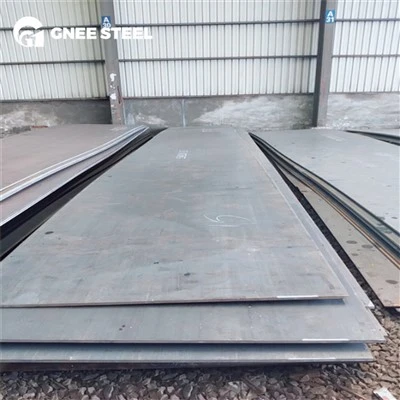
Hey there! As a supplier of JIS Alloy Steel Plates, I've seen firsthand how crucial it is to pick the right steel plate for a specific application. It can make or break a project, so I'm here to share some tips on how you can make that choice.
Understanding Your Application
First things first, you need to have a clear understanding of what you'll be using the steel plate for. Different applications have different requirements, and these requirements will guide your choice.
Structural Applications
If you're working on a structural project, like building a bridge or a high - rise building, you'll need a steel plate with high strength and good weldability. For example, JIS G3103 SB410 SB450 Structural Steel Plate is a great option. These plates are designed to provide reliable structural support. They have the right balance of strength and ductility, which means they can handle the stresses and strains of the structure without failing.
Another option for structural work is JIS G3106 SM400A B C Welded Structural Steel Plate. This steel is known for its excellent weldability, which is super important when you're putting together large - scale structures. It can be easily welded into the desired shape and size, reducing construction time and costs.
Pressure Vessel Applications
When it comes to pressure vessels, such as those used in the chemical or oil and gas industries, you need a steel plate that can withstand high pressures and resist corrosion. JIS G3115 SPV235 SPV315 Structural Plate is a popular choice. These plates are designed to have high pressure - resistance and good corrosion - resistance properties. They can safely contain fluids and gases under high pressure without leaking or failing.

Considering the Chemical Composition
The chemical composition of the steel plate plays a huge role in its performance. Different elements are added to the steel to give it specific properties.
Carbon Content
Carbon is one of the most important elements in steel. A higher carbon content generally means higher strength but lower ductility. For applications where high strength is the main concern, like in some heavy - duty machinery, you might choose a steel plate with a relatively high carbon content. However, if you need the steel to be more flexible and easier to form, a lower carbon content would be better.
Alloying Elements
Alloying elements such as manganese, chromium, and nickel are also added to the steel to enhance its properties. Manganese, for example, improves the strength and hardenability of the steel. Chromium enhances corrosion resistance, while nickel improves toughness and ductility. Depending on your application, you'll need to consider the right combination of these alloying elements.
Evaluating the Mechanical Properties
Mechanical properties are another key factor in choosing the right steel plate. These properties tell you how the steel will perform under different conditions.
Tensile Strength
Tensile strength is the maximum stress that a material can withstand while being stretched or pulled before breaking. It's an important property for applications where the steel will be subjected to pulling forces, such as in cables or suspension systems. You'll want to choose a steel plate with a high enough tensile strength to handle the expected loads.
Yield Strength
Yield strength is the stress at which a material begins to deform plastically. In other words, it's the point where the steel will start to change shape permanently. For applications where the structure needs to maintain its shape under load, like in a building framework, a high yield strength is essential.
Elongation
Elongation is a measure of how much a material can stretch before breaking. A higher elongation value means the steel is more ductile and can be formed into different shapes without cracking. This is important for applications where the steel needs to be bent or shaped, such as in automotive parts manufacturing.

Looking at the Manufacturing Process
The way the steel plate is manufactured can also affect its quality and performance.
Rolling Process
Most JIS Alloy Steel Plates are made through a rolling process. Hot - rolling is a common method where the steel is heated above its recrystallization temperature and then rolled into the desired thickness. Hot - rolled plates are generally more ductile and have a more uniform grain structure. Cold - rolling, on the other hand, is done at room temperature and can produce plates with a smoother surface finish and more precise dimensions.
Heat Treatment
Heat treatment can further enhance the mechanical properties of the steel plate. Processes like annealing, quenching, and tempering can be used to adjust the hardness, strength, and ductility of the steel. Depending on your application, you may need a steel plate that has undergone a specific heat - treatment process.
Considering the Cost
Cost is always a factor in any project. While you don't want to compromise on quality, you also need to make sure you're getting a good deal.
Market Price
The market price of JIS Alloy Steel Plates can vary depending on factors such as the type of steel, its thickness, and the quantity you're buying. It's a good idea to compare prices from different suppliers to get the best value for your money.
Long - Term Costs
Don't just look at the upfront cost. Consider the long - term costs as well. A higher - quality steel plate may cost more initially but could last longer and require less maintenance, saving you money in the long run.
Making the Right Choice
Now that you've considered all these factors, how do you actually make the right choice? Here's a step - by - step guide:
- Define Your Requirements: Clearly outline the requirements of your application, including strength, corrosion resistance, and formability.
- Research the Options: Look into different types of JIS Alloy Steel Plates and their properties. Check out the links I provided earlier for more information on specific products.
- Get Samples: If possible, get samples of the steel plates you're considering. This will allow you to test their properties and see if they meet your needs.
- Consult with Experts: Don't be afraid to reach out to experts, like me. We have the knowledge and experience to help you make the best choice.
If you're interested in purchasing JIS Alloy Steel Plates for your project, I'd love to have a chat with you. We can discuss your specific requirements and find the perfect steel plate for your application. Just let me know what you need, and we'll work together to get you the best solution.
References
- "Metallurgy of Steel: Principles and Applications"
- - A comprehensive guide on the properties and manufacturing processes of steel.
- "Handbook of Structural Steel Design"
- - A useful resource for understanding the requirements of structural steel applications.
- Standards documents from the Japanese Industrial Standards (JIS) organization, which provide detailed specifications for JIS Alloy Steel Plates.