Hey there! I'm a supplier of shipbuilding steel plates, and today I wanna chat about how to optimize the production process of these bad boys. Shipbuilding steel plates are super important in the maritime industry. They're used to build all sorts of vessels, from small fishing boats to massive cargo ships. So, getting the production process right is crucial for quality and efficiency.

First off, let's talk about raw materials. The quality of the raw materials we use directly impacts the final product. We need to source high - grade iron ore, scrap metal, and other alloying elements. When it comes to choosing suppliers for these raw materials, we gotta do our homework. We look for suppliers with a good reputation for quality and reliability. For instance, we want iron ore with a high iron content and low levels of impurities. This way, we can ensure that our steel plates have the right chemical composition and mechanical properties.
Once we've got our raw materials, the next step is melting. We use electric arc furnaces or basic oxygen furnaces to turn the raw materials into molten steel. In an electric arc furnace, electricity is used to create an arc between electrodes, which generates enough heat to melt the scrap metal. This method is great because it's energy - efficient and can handle a wide range of scrap materials. On the other hand, basic oxygen furnaces use pure oxygen to oxidize the impurities in the molten steel. This process is faster and can produce large quantities of steel at once.
After melting, we need to refine the molten steel. This is where we remove any remaining impurities and adjust the chemical composition. We use various techniques like ladle refining and vacuum degassing. Ladle refining involves adding alloys and fluxes to the molten steel in a ladle to remove sulfur, phosphorus, and other unwanted elements. Vacuum degassing, as the name suggests, uses a vacuum to remove dissolved gases like hydrogen and nitrogen from the steel. These gases can cause defects in the steel plates, so getting rid of them is essential.
Now, let's move on to casting. There are two main methods of casting shipbuilding steel plates: continuous casting and ingot casting. Continuous casting is the more modern and widely used method. In this process, the molten steel is poured into a water - cooled mold, and a continuous strand of solidified steel is pulled out. This method is efficient and can produce long lengths of steel with a uniform cross - section. Ingot casting, on the other hand, involves pouring the molten steel into individual molds to form ingots. These ingots are then reheated and rolled into plates. While ingot casting is an older method, it's still used for some high - quality or specialty steel plates.
Once the steel has been cast, it's time for rolling. Rolling is the process of reducing the thickness of the steel and giving it the desired shape. We use hot rolling and cold rolling techniques. Hot rolling is done at high temperatures, usually above the recrystallization temperature of the steel. This makes the steel more malleable and easier to shape. Cold rolling, on the other hand, is done at room temperature. It's used to improve the surface finish and dimensional accuracy of the steel plates. After rolling, we may also perform heat treatment to further improve the mechanical properties of the plates.
Quality control is a big deal throughout the production process. We use a variety of inspection methods to ensure that our shipbuilding steel plates meet the required standards. Non - destructive testing methods like ultrasonic testing, magnetic particle testing, and radiographic testing are used to detect internal and surface defects. We also perform mechanical testing to check the strength, ductility, and toughness of the plates.
Another aspect of optimizing the production process is reducing waste and improving efficiency. We can do this by implementing lean manufacturing principles. For example, we can minimize the time between different production steps to reduce the waiting time of the steel. We can also improve the layout of our production facilities to reduce the distance that the steel has to travel.
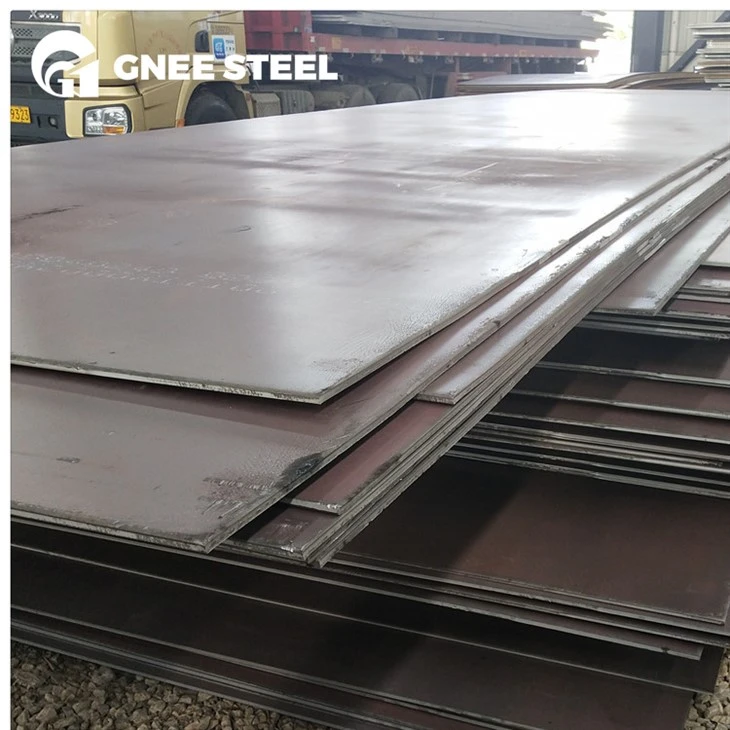
Now, let's talk about some of the products we offer. We have the AH36 DH36 Shipbuilding Steel Plate Marine Sheet. These plates are widely used in shipbuilding because of their excellent strength and toughness. They can withstand the harsh marine environment, including saltwater corrosion and mechanical stress.
We also have the A1018 Grade 80 HSLA Steel Plate. High - strength low - alloy (HSLA) steel plates like these are great for building large ships. They offer high strength while still being relatively lightweight, which can help to improve the fuel efficiency of the vessels.
And then there's the API Spec 2H Shipbuilding Steel Plate. These plates are designed to meet the requirements of the American Petroleum Institute (API) for offshore structures. They have high resistance to corrosion and fatigue, making them suitable for use in harsh offshore environments.
In conclusion, optimizing the production process of shipbuilding steel plates involves a combination of using high - quality raw materials, choosing the right production methods, implementing quality control measures, and reducing waste. By doing all these things, we can produce high - quality steel plates that meet the needs of the shipbuilding industry.
If you're in the market for shipbuilding steel plates, I'd love to have a chat with you. Whether you're building a small boat or a large commercial vessel, we've got the right steel plates for you. Feel free to reach out and let's start a conversation about your requirements.
References:
- "Steel Production Technology" by some well - known steel industry experts
- Industry reports on shipbuilding steel plate production