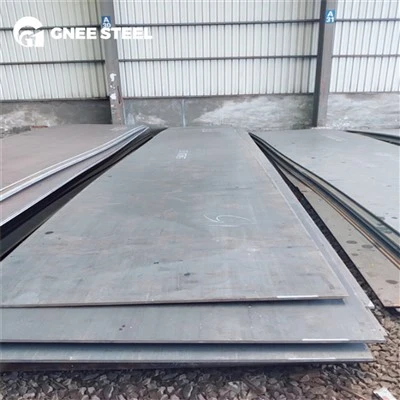
Hey there! As a supplier of SNCM815 Alloy Steel Plate, I often get asked about the best ways to weld this particular type of steel. So, I thought I'd put together this blog post to share some tips and tricks on how to weld SNCM815 Alloy Steel Plate like a pro.
First things first, let's talk a bit about SNCM815 Alloy Steel Plate. It's a high - strength alloy steel that contains nickel, chromium, and molybdenum. These elements give it excellent mechanical properties, such as high tensile strength and good toughness. This makes it suitable for a wide range of applications, from automotive parts to machinery components.
Pre - welding Preparations
Before you start welding SNCM815 Alloy Steel Plate, you need to do some proper preparations.

Cleaning the Plate
The surface of the steel plate must be clean. Any dirt, rust, oil, or paint on the surface can cause welding defects. You can use a wire brush, sandpaper, or a chemical cleaner to remove these contaminants. Make sure to clean the area around the weld joint as well, usually about 1 - 2 inches from the joint.
Edge Preparation
The edge of the plate needs to be prepared according to the welding method and joint design you're going to use. For example, if you're using a butt joint, you may need to bevel the edges of the plates. This helps to ensure proper penetration and fusion during welding.
Pre - heating
SNCM815 Alloy Steel Plate usually requires pre - heating before welding. Pre - heating helps to reduce the cooling rate of the weld metal and the heat - affected zone (HAZ). This can prevent the formation of hard and brittle microstructures, which can lead to cracking. The pre - heating temperature typically ranges from 150°C to 250°C, depending on the thickness of the plate and the welding conditions. You can use a torch or an induction heater for pre - heating.
Selecting the Right Welding Method
There are several welding methods you can choose from when welding SNCM815 Alloy Steel Plate. Here are some common ones:
Shielded Metal Arc Welding (SMAW)
SMAW is a popular and versatile welding method. It uses a consumable electrode coated with flux. The flux provides a shielding gas to protect the weld pool from atmospheric contamination. For SNCM815 Alloy Steel Plate, you need to select an electrode that is compatible with the steel's composition. A low - hydrogen electrode is often a good choice as it can reduce the risk of hydrogen cracking.
Gas Metal Arc Welding (GMAW)
GMAW, also known as MIG welding, uses a continuous solid wire electrode and a shielding gas. This method offers high welding speed and good weld quality. When using GMAW to weld SNCM815 Alloy Steel Plate, you need to select the appropriate shielding gas. A mixture of argon and carbon dioxide is commonly used.
Gas Tungsten Arc Welding (GTAW)
GTAW, or TIG welding, uses a non - consumable tungsten electrode and a shielding gas. It provides precise control over the weld pool and is suitable for welding thin sections or when high - quality welds are required. For SNCM815 Alloy Steel Plate, you can use a filler metal that matches the composition of the base metal.

Welding Parameters
The welding parameters are crucial for achieving a good weld. Here are some key parameters to consider:
Current and Voltage
The welding current and voltage depend on the welding method, electrode or wire size, and the thickness of the plate. Generally, a higher current is required for thicker plates. However, you need to find the right balance to avoid excessive heat input, which can lead to distortion and other defects.
Welding Speed
The welding speed affects the bead shape, penetration, and heat input. A too - slow welding speed can result in excessive heat input and a wide bead, while a too - fast speed can lead to lack of fusion and incomplete penetration. You need to adjust the welding speed based on the welding method and the joint design.
Travel Angle and Work Angle
The travel angle and work angle also play an important role in welding. The travel angle is the angle between the electrode or torch and the direction of welding. The work angle is the angle between the electrode or torch and the surface of the plate. These angles need to be adjusted according to the welding method and the joint design.
Post - welding Treatment
After welding, you need to perform some post - welding treatments to ensure the quality of the weld.
Post - heating
Similar to pre - heating, post - heating can help to reduce the residual stress and promote the diffusion of hydrogen out of the weld metal and the HAZ. The post - heating temperature is usually slightly lower than the pre - heating temperature, and it should be maintained for a certain period of time.

Heat Treatment
Depending on the application requirements, you may need to perform a heat treatment on the welded joint. This can improve the mechanical properties of the weld, such as hardness and toughness. Common heat treatment methods include annealing, normalizing, and quenching and tempering.
Inspection
Finally, you need to inspect the welded joint to ensure that it meets the quality requirements. You can use visual inspection, non - destructive testing methods (such as ultrasonic testing, magnetic particle testing, or radiographic testing), or destructive testing methods (such as tensile testing or hardness testing).
Other Related Alloy Steel Products
If you're interested in other types of alloy steel plates, we also supply JIS SCM440 Alloy Steel Plate, JIS G3115 SPV235 SPV315 Structural Plate, and JIS S15CK Alloy Steel Sheet. These products also have their own unique properties and applications, and we can provide you with detailed information and technical support.
Conclusion
Welding SNCM815 Alloy Steel Plate requires proper pre - welding preparations, the right welding method, appropriate welding parameters, and post - welding treatments. By following these steps, you can achieve high - quality welds and ensure the performance of the welded components.
If you're in the market for SNCM815 Alloy Steel Plate or any of our other alloy steel products, feel free to reach out to us for a quote or to discuss your specific requirements. We're here to help you find the best solutions for your projects.
References
- AWS Welding Handbook, American Welding Society
- Steel Construction Manual, American Institute of Steel Construction