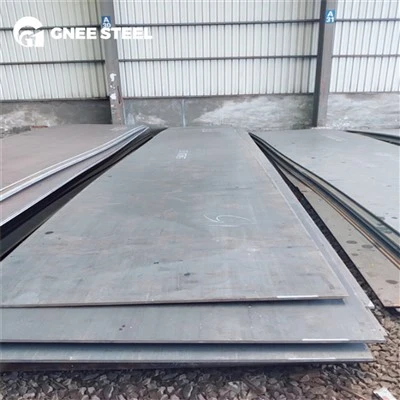
As a supplier of JIS Pressure Vessel Plate, I am often asked about the machining parameters for these specialized plates. In this blog post, I will delve into the key machining parameters that are crucial for working with JIS Pressure Vessel Plates, ensuring optimal performance and quality in the manufacturing process.
Understanding JIS Pressure Vessel Plates
JIS Pressure Vessel Plates are designed to meet the stringent requirements of pressure vessel applications in various industries, including oil and gas, chemical processing, and power generation. These plates are manufactured according to Japanese Industrial Standards (JIS) to ensure high strength, toughness, and resistance to corrosion and fatigue. Some of the commonly used JIS Pressure Vessel Plates include SPV410 SPV450 Steel Plate For Pressure Vessels, SPV 490 PVQ Steel Plate, and SEV295 Pressure Vessel Plates.


Machining Parameters for JIS Pressure Vessel Plates
Cutting Parameters
- Cutting Speed: The cutting speed is a critical parameter that affects the surface finish, tool life, and cutting forces during machining. For JIS Pressure Vessel Plates, the cutting speed depends on the type of material, tool material, and cutting conditions. Generally, a higher cutting speed can improve the machining efficiency, but it may also lead to increased tool wear and reduced surface quality. For example, when using carbide tools to cut SPV410 steel plate, a cutting speed of 100 - 150 m/min is recommended.
- Feed Rate: The feed rate determines the amount of material removed per revolution or per tooth of the cutting tool. A higher feed rate can increase the material removal rate, but it may also cause poor surface finish and increased cutting forces. When machining JIS Pressure Vessel Plates, the feed rate should be selected based on the cutting speed, tool geometry, and workpiece material. For instance, a feed rate of 0.1 - 0.3 mm/rev is suitable for turning SPV450 steel plate with a carbide tool.
- Depth of Cut: The depth of cut refers to the thickness of the material removed in a single pass of the cutting tool. It has a significant impact on the cutting forces, power consumption, and tool life. When machining JIS Pressure Vessel Plates, a larger depth of cut can increase the material removal rate, but it may also require higher cutting forces and more powerful machining equipment. A depth of cut of 2 - 5 mm is commonly used for rough machining of SPV490 PVQ steel plate.
Welding Parameters
- Welding Current: The welding current is a key parameter that affects the penetration, bead shape, and quality of the weld. For JIS Pressure Vessel Plates, the welding current should be selected based on the thickness of the plates, the type of welding process, and the electrode diameter. A higher welding current can increase the penetration and deposition rate, but it may also cause excessive heat input and distortion. For example, when using shielded metal arc welding (SMAW) to weld SEV295 Pressure Vessel Plates with a 3.2 mm diameter electrode, a welding current of 100 - 120 A is appropriate.
- Welding Voltage: The welding voltage determines the arc length and the stability of the welding arc. It has a direct influence on the bead width and the appearance of the weld. A higher welding voltage can result in a wider bead and a more stable arc, but it may also lead to increased spatter and reduced penetration. When welding JIS Pressure Vessel Plates, the welding voltage should be adjusted according to the welding current and the type of welding process. For instance, a welding voltage of 22 - 24 V is commonly used for gas metal arc welding (GMAW) of SPV410 steel plate.
- Welding Speed: The welding speed affects the heat input, bead shape, and mechanical properties of the weld. A higher welding speed can reduce the heat input and minimize the distortion, but it may also cause insufficient fusion and poor bead quality. When welding JIS Pressure Vessel Plates, the welding speed should be selected based on the welding current, voltage, and the thickness of the plates. For example, a welding speed of 20 - 30 cm/min is suitable for submerged arc welding (SAW) of SPV450 steel plate.
Heat Treatment Parameters
- Heating Rate: The heating rate is an important parameter that affects the microstructure and mechanical properties of the JIS Pressure Vessel Plates during heat treatment. A slow heating rate can ensure uniform heating and minimize the thermal stress, while a fast heating rate can reduce the processing time but may cause uneven heating and cracking. When heat treating SPV490 PVQ steel plate, a heating rate of 100 - 150 °C/h is recommended.
- Soaking Time: The soaking time is the period during which the JIS Pressure Vessel Plates are held at the desired heat treatment temperature. It allows the microstructure to transform and the mechanical properties to be optimized. The soaking time depends on the thickness of the plates, the type of heat treatment process, and the desired properties. For example, when annealing SEV295 Pressure Vessel Plates, a soaking time of 1 - 2 hours at 650 - 700 °C is appropriate.
- Cooling Rate: The cooling rate has a significant impact on the microstructure and mechanical properties of the JIS Pressure Vessel Plates after heat treatment. A slow cooling rate can result in a coarse-grained microstructure and lower strength, while a fast cooling rate can produce a fine-grained microstructure and higher strength. When quenching SPV410 steel plate, a cooling rate of 50 - 100 °C/s is commonly used.
Importance of Machining Parameters
Proper selection of machining parameters is crucial for ensuring the quality and performance of JIS Pressure Vessel Plates. Incorrect machining parameters can lead to various problems, such as poor surface finish, reduced mechanical properties, increased tool wear, and welding defects. By optimizing the machining parameters, manufacturers can improve the productivity, reduce the production cost, and enhance the reliability of the pressure vessels.
Conclusion
In conclusion, the machining parameters for JIS Pressure Vessel Plates play a vital role in the manufacturing process. Cutting parameters, welding parameters, and heat treatment parameters need to be carefully selected and controlled to ensure the quality and performance of the pressure vessel plates. As a supplier of JIS Pressure Vessel Plates, we are committed to providing high-quality products and technical support to our customers. If you are interested in purchasing JIS Pressure Vessel Plates or have any questions about machining parameters, please feel free to contact us for further discussion and negotiation.
References
- Japanese Industrial Standards (JIS) for Pressure Vessel Plates
- Machining Handbook for Steel Materials
- Welding Technology for Pressure Vessels