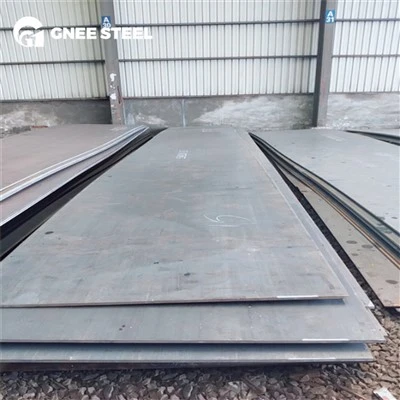
Welding GB Corten steel plates is a crucial process that requires careful consideration and proper techniques. As a supplier of GB Corten steel plates, I understand the importance of providing accurate information on how to weld these plates effectively. In this blog post, I will share some essential tips and guidelines on welding GB Corten steel plates.

Understanding GB Corten Steel Plate
GB Corten steel, also known as weathering steel, is a group of steel alloys that were developed to eliminate the need for painting and form a stable rust - like appearance over time when exposed to the elements. These steel plates are widely used in various applications such as bridges, buildings, and vehicles due to their excellent corrosion resistance and high strength.
Preparation Before Welding
- Material Inspection
Before starting the welding process, it is essential to inspect the GB Corten steel plates thoroughly. Check for any surface defects, such as cracks, scratches, or impurities. These defects can affect the quality of the weld and lead to potential problems in the final product. Ensure that the plates meet the required standards and specifications.
- Cleaning the Surface
Clean the surface of the steel plates to remove any dirt, oil, rust, or other contaminants. Use a wire brush, grinder, or chemical cleaners to achieve a clean and smooth surface. A clean surface is crucial for proper weld penetration and adhesion.
- Edge Preparation
Proper edge preparation is necessary for a successful weld. Depending on the thickness of the plates and the welding method, you may need to bevel the edges. Beveling helps to increase the weld area and improves the strength of the joint.
Welding Methods for GB Corten Steel Plate
Shielded Metal Arc Welding (SMAW)
SMAW, also known as stick welding, is a common method for welding GB Corten steel plates. It is relatively simple and can be used in various environments. When using SMAW, select the appropriate electrode. Electrodes with a high nickel content are often recommended for welding weathering steel as they can help to improve the corrosion resistance of the weld.
Gas Metal Arc Welding (GMAW)
GMAW, or MIG welding, is another popular method for welding GB Corten steel. It offers high welding speeds and good control over the weld bead. Use a shielding gas, such as a mixture of argon and carbon dioxide, to protect the weld from oxidation. The filler wire used should be compatible with the base metal to ensure a strong and durable weld.
Flux - Cored Arc Welding (FCAW)
FCAW is suitable for thick - walled GB Corten steel plates. It provides high deposition rates and good penetration. The flux in the wire helps to protect the weld from atmospheric contamination. However, it is important to select the right flux - cored wire for the specific application.
Welding Parameters
Current and Voltage
The appropriate current and voltage settings depend on the thickness of the steel plates, the welding method, and the electrode or filler wire used. For thinner plates, lower current and voltage settings are required to prevent over - heating and distortion. Thicker plates may need higher current and voltage to achieve proper penetration.
Welding Speed
Maintaining a consistent welding speed is crucial. A too - slow speed can lead to excessive heat input, causing distortion and a weak weld. A too - fast speed may result in incomplete fusion. Find the optimal welding speed based on the welding method and the thickness of the plates.
Electrode Angle
The electrode angle plays an important role in the quality of the weld. For SMAW, a 70 - 80 - degree angle is typically recommended. In GMAW and FCAW, the electrode angle should be adjusted according to the direction of welding and the joint configuration.
Post - Weld Treatment
Cooling
After welding, allow the weld to cool slowly. Rapid cooling can cause cracking and reduce the strength of the weld. You can use insulation materials to slow down the cooling process.
Cleaning and Inspection
Clean the weld area to remove any slag, spatter, or other residues. Inspect the weld for any defects, such as porosity, cracks, or incomplete fusion. Non - destructive testing methods, such as ultrasonic testing or magnetic particle testing, can be used to detect internal defects.
Corrosion Protection
Although GB Corten steel has inherent corrosion resistance, applying a protective coating to the weld area can further enhance its durability. Choose a coating that is compatible with the weathering steel and provides long - term protection.
Product Recommendations
As a GB Corten steel plate supplier, I would like to recommend some of our high - quality products. If you are looking for weathering steel plates for vehicles, you can check out our Q265GNH Weathering Steel Plate For Vehicles. For a reliable choice in high - strength weathering steel, our A Reliable Choice GB/T Q550NH Weathering Steel is an excellent option. And for those in need of a reliable mid - strength weathering steel, the The Reliable Choice GB/T Q295NH Weathering Steel is a great choice.
Contact for Purchase
If you are interested in purchasing GB Corten steel plates or have any questions about welding them, feel free to contact us. Our team of experts is ready to provide you with detailed information and assist you in your procurement process.
References
- AWS D1.1/D1.1M:2020, Structural Welding Code - Steel
- ASTM A588/A588M - 20, Standard Specification for High - Strength Low - Alloy Structural Steel with 50 ksi [345 MPa] Minimum Yield Point, Weathering
- ASME Boiler and Pressure Vessel Code, Section IX, Welding and Brazing Qualifications